









Sign up for our newsletter

Posse Scholarships Awarded to Friendship Charter Students

Washington Informer
January 8, 2013

Three students from Friendship Public Charter School have been awarded Posse Scholarships. This year’s winnersn — Kendra Spruill, Phillip Pride, and Kirk Murphy — will receive full four-year tuition scholarships from colleges that partner with the Posse Foundation.

Spruill will attend Bucknell University in Lewisburg, Pa., while Pride and Murphy are will enroll at Sewanee: The University of the South, located in Tennessee.

Since 1989, the Foundation has identified, recruited and trained 4,237 public high school students with extraordinary academic and leadership potential to become Posse Scholars. Posse Scholars graduate at a rate of 90 percent and make a visible difference on campus and throughout their professional careers.

In 2011, the Foundation received more than 14,000 nominations for 560 scholarship slots nationally.

Yes, Effective Teaching Can Be Identified

“Good Teachers Linked to Test Success”
by Stephanie Banchero
Wall Street Journal
January 9, 2013

A study found that effective teachers can boost the test scores of students who had struggled under low-performing instructors, marking a new salvo in the national debate over teacher performance.

The three-year study by the Bill & Melinda Gates Foundation, published Tuesday, is the first large-scale research to show, using random student assignment, that some teachers can produce test-score gains regardless of the past performance of their students, according to foundation officials.

Tom Kane, a professor at Harvard’s Graduate School of Education and leader of the research project, said the data provide the best evidence yet that some teachers can “cause student achievement to happen, and this is a really big deal.”

Education officials increasingly emphasize the need to evaluate, pay and fire teachers based on performance. More than two dozen states have passed laws to evaluate teachers, in part, on test scores, prodded by the Obama administration’s Race to the Top education initiative, which offered money to states that began the process.

The Gates Foundation said its study found that a combination of student surveys of teacher quality, well-crafted observations of classroom teaching and test scores is the best predictor of teacher effectiveness. Mr. Kane said combining all three is the best predictor of teacher quality.

Critics say the Gates effort is flawed because it begins in part with the assumption that test scores are a good measure of teacher effectiveness, and then seeks to prove it by using test scores. Some teachers unions and parents say tests are a crude measure of teacher effectiveness.

Jay P. Green, a professor of education policy at the University of Arkansas, called the Gates research a “political document and not a research document.” He said the research doesn’t support that classroom observations are a strong predictor of quality teaching.

“But the Gates Foundation knows that teachers and others are resistant to a system that is based too heavily on student test scores, so they combined them with other measures to find something that was more agreeable to them,” he said.

Critics of the study also say the formulas used to adjust student scores for race and poverty are problematic because they cause teachers’ scores to jump around too much.

The three-year Gates study videotaped 3,000 teachers and their students in Charlotte, N.C.; Dallas; Denver; Hillsborough County, Fla.; Memphis, Tenn.; New York City and Pittsburgh. Dozens of researchers studied the results.

In the most recent update to the study, the Gates Foundation analyzed students’ 2010 test scores for about 1,600 of the 3,000 teachers and ranked the instructors using a formula, known as value added, that adjusts scores based on students’ race, family income and past performance on state exams. The ranking also included scores from student surveys and classroom observations.

The next year, students were randomly assigned to classrooms. The study found that the teachers who were ranked the highest on average produced the highest student achievement the following year. These students also scored well on other exams that measured deeper, conceptual knowledge of math and reading, the report said.

Ryan Kinser, who participated in the study and teaches eighth grade English at Walker Middle School in the Hillsborough district, said he watched videos of himself in the classroom and noticed he “looked wooden” and “talked too much.” Once, he spent 10 minutes teaching his students the meaning of “hierarchy” and saw on the video that students appeared bored, and one remarked, “This is stupid, man.”

“It forced me to reflect and better prepare for my kids,” said Mr. Kinser, who is rated highly effective by his district.

D.C. charter school board objects to Rhee’s report card

by Emma Brown
Washington Post
January 8, 2013

When Michelle Rhee’s Students First lobbying organization released its first state policy “report cards” this week, one of the fiercest critics to emerge was an important policy player from her old backyard: The D.C. Public Charter School Board.

Scott Pearson, the charter board’s executive director, released a strongly worded statement calling Rhee’s report cards error-ridden and fundamentally flawed.

“Ms. Rhee’s service as Chancellor of DC Public Schools was largely characterized by ambivalence towards the DC charter sector. That ambivalence appears to rear its head in this report,” Pearson’s statement said.

“Unfortunately, and despite repeated attempts by PCSB to correct the record with Students First, the Report Card issued for the District of Columbia grossly mischaracterizes the educational policy environment in DC, particularly when it comes to charter schools.”

Students First rated the District fourth in the nation for reform-minded education policies — but that was only good enough for a C+.

Eric Lerum, vice president of national policy for Students First, stood by the organization’s work.

“We understand the PCSB’s concerns and we believe we have taken them into account in our grading of DC’s state policies,”Lerum said. “D.C. should be recognized for having a robust charter movement that encourages growth of high performing charter schools.”

Among the D.C. charter leaders’ complaints: The report dings charters and DCPS for failing to publish standardized school report cards that grade each school on an A through F scale. The charter school board does publish report cards via its “Performance Management Framework,” which grades each school on a 100-point scale and places each school into one of three performance tiers.

Charter leaders were also galled by the high marks — four out of four points — Rhee assigned for “equitable access to facilities.” One of the charter sector’s biggest complaints is that the city has made it overly difficult for charters, which are constantly challenged to find suitable real estate, to move into old public school buildings.

Pearson also objected to the low scores Rhee assigned for “charter school accountability” in the city, pointing to the charter board’s record of closing schools that don’t pass muster. (Just today, the charter board announced that it will vote Thursday on whether to revoke the charter belonging to Imagine Southeast, a chronically low-performing school.)

The Students First report does praise the charter board’s record on school closures and other measures, but says that city law ought to require more accountability — including a requirement that charters come up for renewal every 15 years instead of every 5.

Full statements from Pearson and Lerum are below.

Pearson:

Unfortunately, and despite repeated attempts by PCSB to correct the record with Students First, the Report Card issued for the District of Columbia grossly mischaracterizes the educational policy environment in DC, particularly when it comes to charter schools.

Significantly, the report never mentions that 43% of DC public school students attend charter schools. This is emblematic of the fundamental flaws in this report, where the significant and fast-growing DC charter sector is ignored when ratings are given to the state.

For example, the report grades DC a “0 out of 4” points for “School Report Cards,” ignoring the significant contribution made by PCSB’s School Performance Management Framework, that grades every charter school on a clear and transparent 100-point scale and assigns schools based on that score to Tier 1, 2 or 3 status. The report makes no mention of charter schools in such areas as fiscal transparency, alternative certification, pensions, and teacher pay.

When the report does look specifically at charters, it usually gets it wrong. For example, the report grades DC a “0 out of 4” points for “Charter School Accountability”, ignoring that fact that PCSB was recognized last year by the National Association of Charter School Authorizers for its aggressive policy towards closing low-performing charter schools. Indeed, of the 82 charter schools that have opened in DC since 1998, 25 have closed, a rate of over 30%. Most of these closed under pressure from PCSB. Similarly, the Center for Education Reform, which annually ranks state charter school laws rated DC first in the nation in 2012, noting “[DC] once again took the top spot in the rankings because of their strong independent authorizer [PCSB], charter autonomy and nearly equitable funding.”

The report also erroneously gives the district high marks for “Equitable Access to Facilities”, ignoring the enormous obstacles that Ms. Rhee herself, as DCPS Chancellor, placed to charters gaining access to closed DCPS buildings. The District has made significant improvement in this regard during the tenure of Mayor Vincent Gray and DCPS Chancellor Kaya Henderson, but still has more to do to ensure equitable access to facilities for charters.

Ms. Rhee’s service as Chancellor of DC Public Schools was largely characterized by ambivalence towards the DC charter sector. That ambivalence appears to rear its head in this report, yielding a disconcerting disconnection from the facts on the ground. DC public schools are in fact on the move, evidenced by a growing enrollment and improving accountability and performance, led by a charter sector now educating nearly half of the public school students in the city. It’s a shame that Students First and Ms. Rhee have chosen to avert their eyes from that progress in this misleading “Report Card.”

Lerum:

We share their desire to create high quality options for parents. DC should be recognized for having a robust charter movement that encourages growth of high performing charter schools. The PCSB also has worked to ensure accountability with its Performance Management Framework, despite having a weak state law in place to support that work.

Daily Headlines for January 9, 2013

NEWSWIRE IS BACK! Click here for the latest weekly report on education news and commentary you won’t find anywhere else, spiced with a dash of irreverence, from the nation’s leading voice in school reform.

NATIONAL COVERAGE

Good Teachers Linked to Test Success
Wall Street Journal, January 9, 2013

A study found that effective teachers can boost the test scores of students who had struggled under low-performing instructors, marking a new salvo in the national debate over teacher performance.

Denver Schools, Gates Foundation Identify What Makes Effective Teacher
Denver Post, CO, January 8, 2013

After investing three years and millions of dollars and scrutinizing thousands of teachers, the Bill & Melinda Gates Foundation has determined that, yes, you can measure effective teaching.

The Education of Michelle Rhee
Frontline PBS, January 8, 2013

FRONTLINE examines the legacy of one of America’s most controversial school reformers.

How Home Schooling Threatens Monopoly Education
USA Today, January 8, 2013

“What about home schooling? You know, it’s not just for scary religious people any more.” That’s a line from Buffy The Vampire Slayer, and it should strike fear into the hearts, not of vampires, but of public-school administrators everywhere.

School Choice Won’t Mean All Choices Are Equal
Huffington Post, January 8, 2013

To many in the pundit and policy class, education reform comes down to one idea — school choice.

No Child Left Behind Is Still A Flawed Policy
The Reporter, VA, January 9, 2013

If the No Child Left Behind law were a public school student, it would be halfway through its sophomore year by now and still getting Ds.

FROM THE STATES

CALIFORNIA

No ‘Badge Of Honor’ For Backing Education Status Quo
San Diego Union Tribune, CA, January 8, 2013

It is not exactly news that California is cool to education reform. School districts routinely ignore a 1971 state law that says student performance must be a factor in teacher evaluations. Especially when crafting budgets, many school boards routinely place the interests of teachers and other adult employees above those of students.

Parent Trigger Group Wins Charter School Approval From Adelanto School Board
San Bernardino Sun, CA, January 8, 2013

After 21 months of battling their local school district over the future of a failing elementary school, Adelanto parents definitively won Tuesday night, when the board voted to approve a charter school taking over the campus of the school.

State Schools Chief Urges Cut In Number Of Tests Next Year
Los Angeles Times, CA, January 9, 2013

Supt. of Public Instruction Tom Torlakson says second-graders would not be tested in math and English, and most high school tests would be dropped. L.A. Unified chief expresses reservations.

DISTRICT OF COLUMBIA

Should We Just Let DC Public Schools Expel Anyone?
Greater Greater Washington, DC, January 8, 2013

Charter schools thus get rid of the problem students and often boost their own average test scores in the process. DCPS schools cannot expel elementary students and must convince judges to expel older students. Charters have no such restrictions.

D.C. Charter School Board Objects To Rhee’s Report Card
Washington Post Blog, DC, January 8, 2013

When Michelle Rhee’s Students First lobbying organization released its first state policy “report cards” this week, one of the fiercest critics to emerge was an important policy player from her old backyard: The D.C. Public Charter School Board

How One STEM School Aims to Lower the Achievement Gap
PBS Newshour, January 8, 2013

The achievement gap between low-income and high-income students has been a persistent problem in American public education system. The problem is exacerbated as technology becomes more integral to 21st century professions, and urban American schools struggle to prepare students for this new job market.

IDAHO

Experts Offer Education Reform Ideas in Boise
Idaho Statesman, ID, January 9, 2013

As Idaho lawmakers and educators regroup after repeal of the state’s education reform package, national experts visited Boise Tuesday to offer suggestions for improving education.

ILLINOIS

Chicago Largest Recipient Of Walton Family Foundation Money For Charter Schools
Chicago Sun Times, IL, January 8, 2013

The Walton Family Foundation, the philanthropic arm of Wal-Mart’s founder, gave more money to Chicago to start new charter schools last year than it did to any other city —¬ $3.8 million.

INDIANA

Put Brakes On Vouchers Until High Court Rules
Star Press, IN, January 9, 2013

For instance, lawmakers this week have filed bills to expand the Indiana School Choice Program, informally known as the voucher system. Bills have been filed to waive a requirement that a student attend a public school for at least one year before seeking a voucher to attend a private school — likely to be affiliated with a church.

IOWA

Education Reform Demands Open-Mindedness
Sioux City Journal, IA, January 9, 2013

Iowans, particularly those charged with delivering public education, can take one of two positions with respect to an “F” grade our state’s education policies were given by StudentsFirst.

KENTUCKY

Charter School Legislation Filed For 2013 Session
Bluegrass Institute, KY, January 9, 2013

January 8th proved to be an auspicious day for Kentucky’s 2013 legislative session. That’s because January 8th was the day Rep. Brad Montell, R-Shelbyville filed a bill that might finally bring school choice and real opportunity for those most in need in the commonwealth – underprivileged kids.

Advocates Support Toned-Down Kentucky Charter School Law
WFPL, KY, January 8, 2013

A charter school bill has been filed in the Kentucky House and supporters hope the less aggressive approach will help get it passed this year.

LOUISIANA

Charter School Changes Outlined
The Advocate, LA, January 9, 2013

A meeting held for parents Monday night at Crocker Arts and Technology School promised a brighter future for the students with a new charter operator but left some parents and education activists saddened by the staff upheaval and wary of an educational landscape where they see change as the only constant.

MAINE

Augusta Panel Rejects 4 of 5 Proposals for New Charter Schools
Portland Press Herald, ME, January 8, 2013

Maine’s Charter School Commission has rejected four of the five charter school applications under consideration for 2013, including both proposals for virtual schools.

Baxter Academy Reports 119 Applications In First Week
Portland Daily Sun, ME, January 8, 2013

Baxter Academy for Technology & Science, Maine’s first charter school for science, technology, engineering and math, began enrolling students on Jan. 1, and in just the first week, received 119 applications, reported the new charter school’s executive director, John Jaques.

MISSISSIPPI

Capitol Abuzz About Charter Schools
Desoto Times Tribune, MS, January 8, 2013

The gavel at the State Capitol will sound in the hallowed halls of the State Capitol on Wednesday, and charter schools will be on the lips and minds of most state lawmakers, according to members of DeSoto County’s delegation.

Racial Divide Seen In Mississippi Debate Over Charter Schools, Reform
MSNBC, January 8, 2013

Mississippi lawmaker Kenneth Wayne Jones, a Democrat, briefly became a political pariah last winter when he voted in favor of a proposal to expand charter schools in his state. He was the only African-American state senator to support the bill, which most members of Mississippi’s legislative Black Caucus disavowed. Jones liked the idea of expanded school options for families, but he also understood his colleagues’ mistrust.

New World Needs Close Attention
Natchez Democrat, MS, January 9, 2013

The seemingly inevitable opening of the Delta Charter School in Ferriday likely won’t change life forever in the Miss-Lou. The school will probably be small for years to come and will draw from only a portion of the population.

NEVADA

Troubled Charter School Board President Resigns; Principal Ordered To Repay Bonuses
Las Vegas Review-Journal, NV, January 8, 2013

Allegations of mismanagement at Quest Academy have led to the resignation of charter school President Christina Fuentes and prompted other board members to order Principal Connie Jordan to repay $15,000 in unmerited bonuses awarded to her by Fuentes.

NEW HAMPSHIRE

State Hopes To Have Charter School Start Up Grant Funds, Lost In 2011, Restored Next Year
Nashua Telegraph, NH, January 9, 2013

Since the state Board of Education voted to place a moratorium on new charter schools in September, school founders around the state have

NEW MEXICO

Gov. Spells Out Education Plans
Albuquerque Journal, NM, January 9, 2013

Gov. Susana Martinez on Tuesday laid out her education plans for the coming legislative session, including linking teacher pay to the state’s new evaluation system and creating an early-warning system to catch signs a student might drop out.

NEW YORK

26 Schools on City’s List
Wall Street Journal, January 9, 2013

New York City will try to shut down or shrink 26 schools this year, including six it unsuccessfully tried to close in the summer, officials said Tuesday.

The UFT Takes Offense
New York Observer, NY, January 8, 2013

Mayor Mike Bloomberg does not always parse his thoughts with the care of a diplomat. Sometimes he lets it rip, and, well, those who are quick to take offense do just that.

Elmira Charter School Group May Reconsider Boys-Only Plan
Elmira Star-Gazette, NY, January 8, 2013

The group seeking to open a charter school in Elmira hopes to decide in just over a week whether to keep it boys only or include girls.

What to Expect From the Utica Academy of Science Charter School
YNN, NY, January 8, 2013

Plans to open a new charter school in Utica are moving forward. Despite some protest, the Utica Academy of Science had its application granted and they plan to open in the fall. Our Andrew Sorensen takes a look at their parent school in Syracuse and tells us what they hope to accomplish with their new school.

Yonkers Schools Submit Teacher-Evaluation Plan, Hope Approval Comes In Time
The Journal News, NY, January 9, 2013

The clock is ticking for the Yonkers school system, which hopes the state will approve its last-minute teacher evaluation plan in time to save $17 million in much-needed aid.

NORTH CAROLINA

State May Consider 11 New Charter Schools in Durham
Herald Sun, NC, January 8, 2013

Public charter schools in Durham could more than double in the next two years.
As of last week, the state Department of Public Instruction had received 161 letters of intent for new charters. Of those, 11 are in Durham, including one virtual school.

OKLAHOMA

Oklahoma City School Board Denies Charter Schools, Declines To Reveal Reasons
The Oklahoman, OK, January 9, 2013

The Oklahoma City School Board on Monday night denied applications from two charter schools but kept the reasons for the denials secret.

OREGON

Medford District Faces Charter Student Payouts After Oversight
Mail Tribune, OR, January 9, 2013

The Medford School District is paying out more than $500,000 after realizing it is obligated to give money to nearby districts whose students attend Medford charter schools.

PENNSYLVANIA

Charter School Of Excellence Reacts to Need for Chart Schools
WSEE, PA, January 8, 2013

On Tuesday, one of the oldest charter schools in the city, the Charter School of Excellence, held their Open House. It gave both parents and students an up-close look at what they have to offer. It also gave us a chance to talk to faculty about the possibility of more charter schools in the area.

Catasauqua Schools Chief: Medical Academy Charter School Isn’t Delivering
The Morning Call, PA, January 8, 2013

The Catasauqua Area School Board said Tuesday night it might move to revoke the Medical Academy Charter School’s charter in 30 days if the school doesn’t prove it’s offering what it promised.

The Reality Of Charter Schools In North Penn
The Reporter, PA, January 8, 2013

Since before I was a candidate for school board in 2011, I have been following the finances and operations of the North Penn School District for the last three years.

RHODE ISLAND

Chafee Nominates 10 for Education Board
GoLocalProv, RI, January 8, 2013

Governor Lincoln D. Chafee today announced ten nominees for the Rhode Island Board of Education. The Governor’s nominee for Board Chair is Eva-Marie Mancuso, Esq., a Managing Partner with law firm Hamel, Waxler, Allen & Collins.

SOUTH CAROLINA

Charter, Magnet, And Private Schools Harm Public Education
Charleston City Paper, SC, January 9, 2013

Imagine you are riding on a train and the conductor comes into your car and informs you and your fellow passengers that something is terribly wrong with the engine and the train is in trouble. It might not crash, but it certainly is not going to reach its destination in good shape.

TENNESSEE

Education Reform Leader Michelle Rhee Lists Goals in TN
The Tennessean, TN, January 9, 2013

National education reform movement leader and part-time Tennessee resident Michelle Rhee is urging state lawmakers to create a statewide charter school authorizer, adopt a parent trigger law and give vouchers to some students.

Charters’ Role Limited
Commercial Appeal, TN, January 9, 2013

Your Jan. 6 article “Battle over charter schools grows heated,” about the charter schools issue in Mississippi, misrepresents the position of The Parents’ Campaign, an organization I serve as executive director.

WASHINGTON

Teachers Union Should Withdraw Suit To Block Charter Schools
Seattle Times, WA, January 8, 2013

The Washington Education Association should accept the November vote that created charter schools in this state.

State Schools Chief Wants To Oversee Charters
Bellingham Herald, WA, January 9, 2013

State schools chief Randy Dorn has sent a letter to legislative leaders asking them to revise the voter-approved charter school law to give his office jurisdiction over the new schools.

ONLINE LEARNING

High Schools, Take The Online Course
USA Today, January 8, 2013

Thankfully, there is one initiative in Alexandria and in a growing number of school systems nationwide that is revolutionizing the way kids learn: online classes. This approach not only helps potential dropouts keep working toward diplomas, but also allows the most motivated students to seek courses not often offered in a traditional school setting.

Virtual Classrooms Coming to County, City Schools
The Charlottesville Newsplex, VA, January 8, 2013

The classroom of the future may come in the form of a computer. Charlottesville City schools already offer eight online courses, and now Albemarle County schools are jumping on the virtual bandwagon, offering its first online course this semester.

‘Virtual’ Public Schools Draw Interest Of Religious Families
Washington Post Blog, DC, January 8, 2013

Worried about exposure to foul language, immodest dress, peer pressure, and other inappropriate behavior, Susan Brown didn’t want her two daughters attending public schools — even though she’s a substitute teacher in a public school in Minnesota.

Rejections in Maine Not a Surprise

January 9, 2013

No, we don’t have the ability to tell the future, we just know what solid chartering practices look like, and Maine does not have them. Yesterday’s Newswire noted the Governor’s attempts to improve Maine’s charter school law, but we suggested he go further and consider real multiple authorizers not tied to the state.

Which is why news of the rejection of 4 out of 5 brick and mortar charter schools, as well as two virtual charter schools, unfortunately doesn’t come as much of a surprise.

Check out The Essential Guide to Charter School Lawmaking – Model Legislation for States for more on what constitutes an effective charter school law.

Battle Over Maine Charter Schools

“Battle over Maine charter schools smoldering”
by Robert Long
Bangor Daily News
January 7, 2013

Maine public school administrators lodged a new complaint Monday about the state’s two new charter schools: They won’t feel any impact of $12.6 million in education aid cuts Gov. Paul LePage ordered late last month to close a $35.5 million hole in the current state budget.

Public school officials say that’s not fair, and it reflects a pattern of inequity that marks the LePage administration’s push for charter schools. Maine Department of Education officials say the fraction of state aid that follows students to charter schools didn’t warrant action as part of this year’s emergency, budget-balancing cuts.

The dispute further fuels a contentious debate between public school officials, generally supported by Democrats, and the Republican governor about funding public education in Maine.

The curtailment fairness questions accompany news that the governor plans to propose legislation that would lift the limit on the number of charter schools in Maine. The law that allowed charter schools to begin operating in Maine in 2012 stipulated that only 10 charter schools could be created within the first decade of the law’s enactment.

The Maine Education Association, the union that represents Maine public school teachers, flunked that proposal as a “shortsighted plan which allows state funding to follow the student to a charter school, operated by a company not held to the same standards as public schools.”

In a release issued Monday, the MEA suggested that an expansion of charter schools could force the closure of small rural Maine schools and approached “taxation without representation,” according to MEA President Lois Kilby-Chesley, because boards that oversee charter schools are not “democratically elected.”

As a new Legislature, led by Democrats who reclaimed majorities in both chambers after two years of GOP control, convenes Tuesday, charter schools likely will return as a flashpoint in the ideological wrangling over how to get the best return on public education spending.

Democrats question the fairness of shifting public K-12 education dollars to charter schools, arguing it strips public schools of resources they need to meet rising educational demands. The LePage administration counters that charter schools create healthy competition, which better serves students.

Under a GOP-sponsored 2011 law that made Maine the 41st state to allow publicly funded charter schools, local districts pay tuition for students who live in their jurisdiction to attend a charter school of their choice. State education aid and school funding raised locally pay that tuition, which this year is roughly $9,000 per student, according to the Maine School Management Association. As school administrators scramble to cope with new projected state aid cuts for the fiscal year that ends June 30, some bristle because Maine’s first two charter schools won’t lose state funding.

“The state says charter schools are public schools, but they don’t live by the same rules,” Maine School Board Association President Kristin Malin of Georgetown said in a release Monday. “This is just the latest example of that. When every public school district in the state has to cut back under the curtailment order, charter schools have been automatically exempt. How is that fair?”

State Rep. Mike Carey, D-Lewiston, first raised the issue Friday in a question to Deputy Education Commissioner Jim Rier during an Appropriations Committee meeting on the governor’s curtailment order. The Legislature can alter the temporary cuts included in LePage’s curtailment order as part of a supplemental budget required to balance the current state budget.

“What was the policy decision made to kind of hold [charter school] students harmless from this cut?” Carey asked. Rier replied that the timing of quarterly payments to charter schools and the small number of students — roughly 85 in all — who attend the state’s two charter schools, Cornville Regional Charter School and the Maine Academy of Natural Sciences in Hinckley, led Maine Department of Education officials not to target those schools for aid cuts as part of the curtailment.

The proposed state education aid cuts to local school districts under LePage’s curtailment order also don’t affect funding for about 5,000 students who attend private academies with tuition paid by local school districts.

“It’s important to see that the impact of this curtailment is 0.6 percent,” Rier said Monday. “If you applied a similar percentage to charter schools, it would have been roughly $50 out $9,000.”

The bulk of that impact will be felt by School Administrative District 54 in the Skowhegan area, which sends 42 students to the charter school in Cornville and eight to the Maine Academy of Natural Sciences. For a school district that had to find more than $400,000 to pay charter school tuition after it had passed its 2012-13 budget, the curtailment exemption for charter schools simply adds to the inequity of the charter school law, SAD 54 Superintendent Brent Colbry said.

“It’s a fairness issue for me at this point,” Colbry said. “All our kids are going to feel this, and to isolate charters just doesn’t seem right. If my six towns receive less subsidy, then it seems reasonable those cuts should flow through to the charters.”

SAD 54 already had reduced spending on staff development, field trips, book purchases and other expenses to come up with money in this year’s budget for charter school tuition. Finding an additional $180,000 in response to the curtailment order exacerbates the district’s immediate financial dilemma, Colbry said, but that pales in comparison to a larger problem he believes the possible expansion of charter schools in Maine will pose.

“We lose 50 kids, but the costs to the local district do not change,” Colbry said, citing transportation and curriculum as two areas where funding must be maintained. “That money has to come out of kids’ programs or new taxes or a combination of both.”

The Maine Charter School Commission, which approved applications for two new charter schools to open this fall in Portland and Gray, is scheduled to meet Tuesday at the Cross Office Building in Augusta to determine whether five other applications, including two virtual charter schools, can move forward.

Newswire: January 8, 2013

Vol. 15, No. 1

Happy New Year! The first half of the first month of 2013 is not even finished and already the momentum — and opposition — around education reform is building. To wit:

STATE POLICY MATTERS. Kudos to StudentsFirst for their new report card, which offers some different perspective on the issues facing policymakers and parents. If Ed Reform is a College Student, this is akin to yet another professor weighing in on his competency in particular areas. But it’s the cumulative GPA that really matters in the end. CER comments today.

UNION POWER?? It’s like Randi Weingarten was suddenly Captain Renault in Casablanca: “I’m shocked, shocked to find gambling going on here!” Her line to Mayor Bloomberg’s characterization of the union being as powerful as the NRA might as well have been: “I’m shocked, shocked that anyone thinks we have as much power as the NRA!” The union was offended and tied the remark to the recent tragedies in Newton. For shame! Whether one likes it or not, the NRA is a powerful political lobby for a cause and members, and that’s what “Hizoner” was saying when the union decided to once again stand in the way of a new teacher evaluation law from being implemented. That law got the union and the Governor of NY and Bloomberg great press TWO YEARS AGO and is STILL NOT IMPLEMENTED, and is one of those laws that US Secretary of Education Arne Duncan attributes to Race to the Top pressure. Ah, but as we predicted, there is more to getting policy changed than getting a law passed, and like so many places, the initial oohhs and aahhs that surround the union becoming progressive turns out to be all about the talk, not the walk. Deputy Mayor Howard Wolfson said :”As the mayor has said before, the union is a special-interest group focused on advancing its agenda, whether it’s in the public interest or not. Their refusal to agree to a fair evaluation deal is just the latest example of this.” Ya think?

PROMISES PROMISES. Does anyone else find it odd that Sec. Duncan won’t approve California’s waiver request because it fails to promise the state will adopt a teacher evaluation component tied to test scores, while states that have been approved – or given federal monies on the condition of doing so, like NY – have yet to have more than some smoke and mirror proposals that use words like “evaluation” and “student growth” but in reality, leaves it all up to the unions to approve? At least Gov Brown isn’t gaming the system by simply promising to do something that won’t result in performance pay anyway!

OUT WITH THE OLD. The above piece on New York is an example of why real reformers not only don’t eat quiche, but they fight to keep authentic, substantive education reform in play. Oh sure, it’s much more popular to say we compromised and everyone got a win, but that doesn’t happen when kids continue to be mis-educated. Here’s what we had to say about this in the Huffington Post.

A GOV WHO GETS IT. A governor resolved to fight for reform, no holes barred; that’s Maine’s Paul LePage, a tough talking leader who was willing to take a rolled back charter law to get the reform started but got no reward from oppositional board members and the Blob, who have continued to throw obstacles in the way of new proposals. But rather than back down, the Maine Gov not only announced he’d be moving to lift the 10 in 10 years cap, but that the two new charters opening would not see their budgets reduced in their opening year. Some see that as wrong, since all districts are experiencing cuts, but then the districts actually get 30% more in costs to begin with, plus facilities support, so really, it’s still not equity, for charters, but it’s a start. The state’s charter commission is meeting today to consider additional charter applications, plus a virtual school proposal they tabled out of some kind of fear of new innovations. Let’s hope they’ve come around, and Gov, while you’re at it, you might consider real multiple authorizers not tied to the state. The commission model is not effective.

HITE’S HYPE. A big announcement, bold words, lengthy blueprint. That’s the talk in Philly where Superintendent Bill Hite is trying his best to turn around a bankrupt, failed school system. Closing failing schools is part of it, creating his own blended learning model, more accountability — these are all good things to be sure, but there’s no mention of consequences for adults who don’t reform or real expansion of school choice. See for yourself.

GEORGIA IS JUST PEACHY. According to a new report released by the state education department, fewer than 1% of teachers in the state (including typically low performers like DeKalb County) are unsatisfactory. In another Race to the Top state which promised major improvements in exchange for money, reformers may want to pause to consider whether the infusion is being used as a game changer, or simply funding the system.

PRE-K-3. AppleTree is one of those great charter schools that Washington DC leaders talked about in their Washington Post opinion piece last week, which is why anyone in town on Monday, January 14th should consider learning what AppleTree knows about educating the very young. For more info on the event click here.

LOTS MORE NEWS….Albeit without the commentary, available here every day.

All About CREDO

In 2009, a research report from CREDO (Center for Research on Education Outcomes) on national charter school achievement prompted a critical look at charter school research and what research conclusions can tell us about policy.

Four years after the controversial 2009 report, CREDO releases a 2013 report on national charter school achievement. While state-by-state extrapolation of data is a valid exercise, it is hardly the foundation upon which to set forth sweeping national solutions. A critical look at the research can be found in the documents below:

New CREDO Study Fails Test of Sound Research

Reviewing the Conclusions of CREDO’s National Charter School Study 2013

Response to CREDO’s 2013 National Charter Study Rebuttal of CER Methodology Concerns

In July 2009, CREDO (Center for Research on Education Outcomes) published a national report on charter school achievement. The Center for Education Reform and Dr. Caroline Hoxby, among others, have critiqued the report’s results and methodology:

A Statistical Mistake in the CREDO Study of Charter Schools
A report from researcher Caroline M. Hoxby explaining the statistical mistake in the CREDO report on charter school achievement.

Understanding Charter Achievement Research: The CREDO Report
CER provides brief talking points on the 2009 CREDO report on charter school achievement across 15 states and the District of Columbia.

Fact-Checking Charter School Achievement
Why some are saying only 1 in 5 charter schools perform, and why it’s wrong. Insight on the widely cited CREDO study.

CER Summary Hoxby New York Charters 2009
The most comprehensive study on charter school achievement at the time of the 2009 CREDO study comes from Caroline M. Hoxby and demonstrates quality charter school research methodology.

The Center for Research on Education Outcomes continues to research charter school achievement in various states. Below you will find analysis on some of the CREDO state reports:

New Jersey
CER’s research team breaks down differences between the controversial 2009 report and the New Jersey charter school achievement report.

Michigan
New state-level studies demonstrate more rigorous standard of research than national study.

Illinois
Continuing its research series on state charter school achievement, CREDO releases a report finding that Illinois charter school students outperform their traditional public school counterparts, especially in Chicago where the majority of Illinois charter students live.

Daily Headlines for January 8, 2013

NEWSWIRE IS BACK! Click here for the latest weekly report on education news and commentary you won’t find anywhere else, spiced with a dash of irreverence, from the nation’s leading voice in school reform.

StudentsFirst Gets It Right With Its State Policy Report Card
Dropout Nation, January 7, 2013

Certainly education traditionalists are not fond of the State Policy Report Card released today by Michelle Rhee’s StudentsFirst. After all, it dings states such as California for the willingness of its education and political leaders to do the bidding of National Education Association and American Federation of Teachers affiliates — and in the process, keeping in place policies and practices that do little to help children, especially those from poor and minority backgrounds, attain high-quality education.

Educators Rebut Rhee’s Tough Grading
Washington Times, DC, January 7, 2013

One of American education’s leading provocateurs still knows how to set off a firestorm.

Flaw in ‘Teach for America’
New York Times, NY, January 8, 2013

As a former Teach for America corps member and recruiter and an undergraduate business major, I find a lot to like in “After College, Deferring Six Figures on Wall Street for Teacher’s Salary” (DealBook, Jan. 3).

Three Steps For Better American Schools
Baltimore Sun, MD, January 7, 2013

Education policy wasn’t a significant issue in the 2012 presidential election, but it needs to be one in 2013. Americans are increasingly dissatisfied with public education, and no small wonder: studies continue to show that our schools, once the envy of the world, have fallen to the middle of the pack or worse.

FROM THE STATES

ARKANSAS

35 Labeled ‘Achieving’ of 239 School Districts
Northwest Arkansas News, AR, January 8, 2013

Thirty-five of Arkansas’ 239 school districts and six of 16 open-enrollment charter schools are classified as “achieving” school systems under the state’s new accountability system, leaving more than 200 districts and charter systems — some considered very high performing — branded as “needing improvement.”

School Choices Will Be Lawmaker’s Focus
The Courier, AR, January 7, 2013

Still, as a group they are generally “pro-choice” when it comes to giving students more public school alternatives, the idea being that competition will make all schools better and that no student should be forced to stay in a bad school. Many Democrats — though not all, because this is Arkansas — as well as the education establishment are skeptical of that strategy.

CALIFORNIA

Where Failure Is a Virtue
Wall Street Journal, January 8, 2013

One reason American public education is so lousy is because so many in the schools establishment refuse to admit there’s a problem. Take Richard Zeiger, chief deputy superintendent for California, who says a negative critique of the Golden State’s policies is a “badge of honor.”

Rocketship Plan For Tamien Deserves Approval From San Jose City Council, Planning Commission
Mercury News, CA, January 7, 2013

San Jose’s City Council and planning commission both will make key decisions this week on a proposed Rocketship charter school in the Tamien area, and like most charter plans, it’s controversial. The council and the commission need to focus on the big picture — the benefits of the plan weighed against the drawbacks. If they do, they will enthusiastically support it.

California Schools Flunk Education Group’s Ratings
Los Angeles Times, CA, January 8, 2013

State is among 11 to get a failing grade from a group run by Michelle Rhee, known for her work as chancellor of Washington, D.C., schools. No state earned an A.

DISTRICT OF COLUMBIA

Federal Complaint Details Cheating Allegations At D.C. Public School
Washington Post, DC, January 7, 2013

The former principal of an award-winning D.C. public school has accused a group of teachers and administrators of systematically cheating on standardized tests in order to win cash bonuses and an expensive steak dinner, according to recently unsealed federal court documents.

Frontline: D.C. Schools Downplayed Cheating Allegations
USA Today, January 7, 2013

A new documentary raises questions about whether Washington, D.C., school officials downplayed allegations that educators were cheating to improve students’ scores on high-stakes skills tests — even after a principal came forward with her own eyewitness account.

FLORIDA

School Reform Group Rates Florida No. 2 In Nation
Sun Sentinel, FL, January 7, 2013

A new national report card by StudentsFirst, the education advocacy group founded by former D.C. schools chancellor Michelle Rhee, gives Florida a B- for its education policies.

GEORGIA

State Report Slants Teacher Ratings
WFXL FOX 31, GA, January 7, 2013

Results from the Georgia Department of Education’s new school rating system shows that teacher scores have been skewed to the positive.

ILLINOIS

Ball Charter Parents Object To Proposed Middle-School Cutback
State Journal Register, IL, January 7, 2013

Springfield Ball Charter School parents objected Monday to the possibility the Springfield School Board might eliminate Ball Charter’s middle-school program.

Greektek Withdraws Charter School Application, Appeal
The Rockford Record, IL, January 7, 2013

A local organization has withdrawn its application to open a charter school in Rockford.

Chicago Faulted on Learning Disabilities
New York Times, NY, January 8, 2013

In a complaint filed on Monday with the Illinois State Board of Education, a nonprofit advocacy group says that thousands of children are in Rashaan’s position because the Chicago Public Schools have repeatedly failed to evaluate children with disabilities and move them into special education preschool programs.

New Chicago Program Seeks To Span Achievement Gap Through Birth-To-College Education
Desert News, UT, January 7, 2013

Low-income children in the United States need a clear pathway out of poverty, but that isn’t easy to find. Current efforts to increase opportunities for disadvantaged children are divided between philanthropies, churches and various levels of government — a scattershot approach that is difficult for disadvantaged families to navigate, and often is ineffective.

IOWA

Businesses Could Be Key To Improving Schools, Leaders Say
Des Moines Register, IA, January 8, 2013

The success of Gov. Terry Branstad’s school improvement plan could hinge on the amount of time and money Iowa’s business leaders devote to advocating for change, state and national experts said Monday.

LOUISIANA

BESE To Consider Greater School District Policy Flexibility
The Advocate, LA, January 8, 2013

After a one-month delay, Louisiana’s top school board is expected to approve a proposal by state Superintendent of Education John White that would give local school districts more flexibility.

Lycée Parents Ask State Education Chief To Investigate School’s Board
The Lens, LA, January 7, 2013

A group of parents from Lycée Français de la Nouvelle-Orleans charter school have asked the state’s public education chief to investigate its board’s actions regarding recent hiring and firing decisions, including the manner in which it hired its interim chief executive officer.

Louisiana’s Teacher Evaluation System Gets Top Slot On National Education Policy Report Card
Times Picayune, LA, January 7, 2013

Despite low national student achievement rankings, education reform group StudentsFirst has named Louisiana #1 for “putting students first in its education policies,” commending in particular the state’s new teacher evaluation system.

MAINE

Battle Over Maine Charter Schools Smoldering
Bangor Daily News, ME, January 7, 2013

Maine public school administrators lodged a new complaint Monday about the state’s two new charter schools: They won’t feel any impact of $12.6 million in education aid cuts Gov. Paul LePage ordered late last month to close a $35.5 million hole in the current state budget.

MARYLAND

Legislators To Renew Push For ‘Hybrid’ School Board This Session
Baltimore Sun, MD, January 8, 2013

Towson-area legislators will be tackling issues both fresh and familiar during the 2013 General Assembly session, which begins on Wednesday, Jan. 9, in Annapolis.

MASSACHUSETTS

Lowell Planning Board Delays Charter-School Vote
Lowell Sun, MA, January 8, 2013

Despite pleas for a vote from the attorney pushing for site-plan and special-permit approval for the proposal to transform the Bradford Industries warehouse on Middlesex Street into a charter school, the Planning Board voted to delay the decision for another month for a second straight meeting.

MICHIGAN

Transform Education Reform Into Progress
Detroit News, MI, January 8, 2013

Gov. Rick Snyder did not clean his plate during the 2012 year-end legislative flurry. He left a portion of his education reform agenda on the table.

MISSISSIPPI

Lt. Gov. Wants Charter School Choice For All Districts
Clarion Ledger, MS, January 8, 2013

Lt. Gov. Tate Reeves on Monday announced a hard-line stance on charter schools, saying he wants to see them allowed in all districts, not just failing ones.

Business Leaders Call for Charter Schools
Mississippi Public Broadcasting, MS, January 7, 2013

Also topping the 2013 legislative agenda is education reform, and as MPB’s Daniel Cherry reports, charter schools are expected to be the biggest education issue.

NEW JERSEY

NJ Touts Educational Reforms But Earns ‘D’ on One Nationwide Report Card
New Jersey Spotlight, NJ, January 8, 2013

Two years ago, school-reform crusader Michelle Rhee was sitting in the first row during Gov. Chris Christie’s State of the State address, in which he laid out much of his education agenda.

NEW YORK

Mike Speaks The Truth
New York Post, NY, January 8, 2013

Mayor Bloomberg isn’t one for eating his own words, but he’d probably like to have back his weekend comparison of the United Federation of Teachers to the National Rifle Association.

At Two Staten Island Catholic Schools, Parents Hope To Avoid Closure
Stanton Island Advance, NY, January 8, 2013

After receiving the disheartening news Friday that their schools may close in June, parents, teachers and administrators at St. Joseph’s School in Rosebank and Immaculate Conception School in Stapleton began the uphill climb to persuade the New York Archdiocese to keep their schools alive.

OHIO

Charter School Sponsor Rules in Place for Cleveland
Cleveland Plain Dealer, OH, January 7, 2013

The Transformation Alliance, a new panel created through the Cleveland schools legislation passed by state legislators last year, has agreed on broad principles for evaluating charter schools and their sponsors, but is still working out some details.

PENNSYLVANIA

Hite’s Philadelphia Schools Blueprint Praised And Poked
Philadelphia Inquirer, PA, January 8, 2013

People think William R. Hite Jr.’s new blueprint for the Philadelphia School District is “focused” and “diligent.” They say it’s “thorough” and the “serious and good work” of a “thoughtful practitioner.”

TENNESSEE

Voucher Use Still Unsure
The Daily News Journal, TN, January 7, 2013

Rutherford County legislators aren’t exactly enthusiastic about a proposal to give students in public schools vouchers to attend other public or private schools.

WASHINGTON

State Board of Education to Review Draft Rules for State’s First Public Charter Schools
Bothell Reporter, WA, January 7, 2013

The Washington State Board of Education’s meeting in Tumwater, Wash. will include a review and discussion of draft rules pertinent to the state’s first public charter schools. The meeting will take place on January 9-10 at 8 a.m. in office ESD 113.

ONLINE LEARNING

New Bedford Students: Learning In The Virtual World
South Coast Today, MA, January 8, 2013

The virtual world is everywhere. It’s changed how we communicate, shop and pay our bills.

More Volunteers: Gatsas Is On To Something
Union Leader, NH, January 7, 2013

Why would you put a teacher in charge of a roomful of children whose lessons are being delivered by another teacher? That is the question Mayor Ted Gatsas is posing by advocating that virtual learning classrooms in Manchester’s public schools be headed by volunteers, not teachers. He has a great point.

The State Should Impose A Moratorium On New Cyber Charter Schools
Pittsburgh Post-Gazette, PA, January 8, 2013

The Pennsylvania Department of Education has the opportunity to make a meaningful New Year’s resolution when it comes to raising standards for performance and accountability.

Auditor’s Office Posts Report, Then Pulls It
News Tribune, WA, January 8, 2013

The state Auditor’s Office issued a finding Monday against the Steilacoom Historical School District and, in an unusual move, rescinded it hours later while it takes another look at past student enrollment in online programs.

State Policy Report Demonstrates Widely Varied Reform Perspectives

StudentsFirst report valuable on teacher quality issues, lacking on parent empowerment

CER Press Release
Washington, D.C.
January 8, 2013

While the StudentsFirst State Policy Report Card adds to the growing body of data and information available to parents, policymakers, teachers and the general public, there is clearly widespread disagreement in the field about what constitutes good education reform policy.

“It’s akin to the varying grades given to college students by professors that add up to a cumulative GPA,” said CER Founder and President Jeanne Allen. “As an experienced college parent myself, I’m often struck by how varied the requirements and grading for students can be in the same institution. That doesn’t make the institution itself any less valuable, but it does demonstrate that opinions and preferences for what constitutes a good student can vary widely. In this case, education reform is the student.”

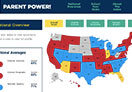
The State Policy Report Card is a complement on many levels to an increasing body of knowledge available about how policy impacts schools. On teacher issues, for example, StudentsFirst’s report shines, providing depth and context for the most important issues governing how states permit schools to evaluate, retain and reward teachers. In contrast, the Center for Education Reform’s annual report cards, issued for more than a decade, place emphasis on “parent power”, which includes in-depth analyses on which state charter school laws yield a truly dynamic and accountable charter school environment in which high numbers of quality schools operate with autonomy. The Parent Power Index© ranks states by their cumulative progress on all reforms, using the Center’s charter school laws annual ranking, data from The Friedman Foundation on state school choice programs, the National Council on Teacher Quality’s State Policy Yearbook and Digital Learning Now’s 10 Elements of Quality Online Learning. In addition, CER considers the user friendliness of state data and accessibility of local school board elections.

When the Center releases 2.0 of the Parent Power Index, as well as the 14th Annual Essential Guide to Charter School Law: Ranking and Scorecard, lawmakers will have another insight into state reform laws and their implementation. It’s likely that DC will remain the leading charter school law in the nation, while Indiana remains the overall top-ranked state for Parent Power. Rhode Island will stay at 31st for its charter law and 22nd for Parent Power. Conversely, StudentsFirst rates DC 4th, Indiana 3rd and Rhode Island 5th. About the differences across the various ratings, Allen said: “It’s terrific to have the ‘cumulative GPA’ that different report cards provide, but interested parties should also understand the differences between how organizations are slicing and dicing information. These tools together can do much to advance our shared goals of empowering parents and informing policymakers and the media which cover them.”