








Sign up for our newsletter

Daily Headlines for March 12, 2014

Click here for Newswire, the latest weekly report on education news and commentary you won’t find anywhere else – spiced with a dash of irreverence – from the nation’s leading voice in school reform.

NATIONAL COVERAGE

Choosing to Learn
National Review Online, March 12, 2014
Americans face a choice between two paths that will guide education in this nation for generations: self-government and central planning. Which we choose will depend in large measure on how well we understand accountability.

Common Core unifies foes
Column, Boston Herald, MA, March 12, 2014
Common Core is the latest federal education reform fad. Like “No Child Left Behind” before it, Common Core uses federal money to bribe local schools into using a federal measuring stick on student performance.

What about pensions, school choice? VA lawmakers ignore big issues this session
Watchdog.org, March 12, 2014
Virginia doesn’t have a very open mind when it comes to methods for K-12 education, and 2014 was no exception.

Think about real education reform
Editorial, Orange County Register, CA, March 12, 2014
You don’t have to have children to have a good sense of today’s nationwide debate over education reform. The controversy pits public school unions and their defenders against supporters of private school, home-schooling deunionization – and, making recent headlines – charter schools.

STATE COVERAGE

ARIZONA

Vista Grande students, parents, teachers share fears
Arizona City Independent, AZ, March 12, 2014
Some Vista Grande High School students, parents and teachers shared their fears Tuesday that making Vista a charter school would degrade it.

CONNECTICUT

Hearing divided on charter proposal
Stamford Advocate, CT, March 12, 2014
Two entrenched factions met in the lunchroom at the Government Center — one to attack and one to support a plan to start a new charter elementary school in Stamford, based on a Bronx, N.Y., model.

DISTRICT OF COLUMBIA

D.C. mayor says he plans to increase budget for schools by more than $100 million
Washington Post, DC, March 12, 2014
The District’s traditional public and public charter schools would receive a major infusion of more than $100 million next year, including tens of millions to improve services for at-risk students, under a budget proposal announced Tuesday evening by Mayor Vincent C. Gray (D).

Eight groups apply to open new D.C. charter schools
Washington Post, DC, March 12, 2014
Eight groups have submitted applications to open new D.C. charter schools in fall 2015, according to the D.C. Public Charter School Board, which is responsible for vetting proposals and deciding which merit approval.

FLORIDA

Senate passes bill encouraging state-level collaboration for military charter schools
Tampa Bay Times, FL, March 11, 2014
On the heels of a tug-of-war over a proposed charter school at MacDill Air Force Base, the state Senate on Tuesday approved a bill encouraging military commanders to establish charters.

ILLINOIS

Why half of urban kids drop out
Opinion, CNN, March 12, 2014
The average high school graduation rate in America’s biggest urban school districts, which serve large numbers of children from very disadvantaged backgrounds, is only about 50%.In most cities, the figure is even lower for African-American males.

KENTUCKY

House panel approves bill allowing schools to eliminate 10 instructional days for weather
Lexington Herald Leader, KY, March 12, 2014
The House Education Committee approved a bill that would allow school districts to waive as many as 10 days of school instead of making up all the time lost to bad weather this winter.

LOUISIANA

Community group decries proposals targeting EBR schools
The Advocate, LA, March 11, 2014
The leader of an organization that previously opposed attempts to create a breakaway school district decried a variety of proposals targeting the East Baton Rouge Parish school system.

New public school funding formula proposes to give on average an extra $232 per student
Times-Picayune, LA, March 11, 2014
Public schools systems in the New Orleans and Baton Rouge areas would receive an average of $232 more per pupil from the state next year, under a proposal now pending before the Louisiana Board of Elementary and Secondary Education. Whether they get it, however, is an open question.

MASSACHUSETTS

Advocates push for bill to lift cap on charter schools
Boston Herald, MA, March 12, 2014
Supporters of a Beacon Hill bill that would remove the cap on charter schools are pointing to a rising number of applicants in tomorrow’s Boston charter school lottery as proof of “tremendous demand.”

Charters unfairly blamed for school districts’ fiscal woes
Opinion, Herald News, MA, March 11, 2014
District school officials are fighting a legislative proposal to lift the cap on charter public schools, claiming charters take money from them. But, here is the simple truth. Districts lose money to charter schools because they lose students to charter schools. It’s a straightforward concept that seems to be lost on district officials.

Children selected in lottery to attend a Springfield charter school
WWLP, MA, March 11, 2014
Veritas Prep Charter School in Springfield will welcome this fall 81 new 5th graders. Those 81 students were picked through a lottery from a pool of 106 students.

MISSISSIPPI

Measure would ease Miss. school takeover rules
Hattiesburg American, MS, March 11, 2014
Requirements for the Mississippi Department of Education to take over dozens of struggling schools would be eased under a proposal moving forward in the Legislature.

NEBRASKA

Charter schools fail to solve educational crisis
Opinion, Daily Nebraskan, NE, March 12, 2014
Legislative Bill 972 would create a pilot program for the State Board of Education to provide funds for charter schools. The state is right to begin engaging in a productive debate on our education system, but it’s important we don’t allow the bill to narrow the scope of reform.

NEW JERSEY

Critics again take aim at One Newark school reorganization plan
Star-Ledger, NJ, March 12, 2014
A parade of critics again blasted the Newark school reorganization plan this morning, telling the Legislative Joint Committee on the Public Education that Superintendent Cami Anderson’s proposal is misguided, potentially illegal and that there is no evidence that it will improve student performance.

Opinion: Time to rejuvenate NJ charter school law
Column, Star-Ledger, NJ, March 11, 2014
Charter schools were created on the premise that educators would be given the freedom to innovate in exchange for greater accountability, a heightened expectation of student achievement and the testing of ideas that could be incorporated into traditional public schools.

NEW YORK

45% of New York City 8th-graders got into top high school choice: Education Dept.
New York Daily News, NY, March 12, 2014
The city’s Department of Education said 84% of the 77,043 students who applied for public high schools made it into one of their top five choices, as eighth-graders around the city celebrated — or lamented — upon learning which institution they would attend in the fall. But just 5% of the students admitted to specialized public high schools this year are black; only 7% are Hispanic.

Charter schools need affordable housing, too
Opinion, New York Post, NY, March 11, 2014
Charter schools’ current fight against Mayor de Blasio’s effort to deny them promised space is actually rooted in a problem that dates back to Dec. 17, 1998, when the state Assembly overwhelmingly gave final approval to the Charter Schools Act. The best way to avoid future conflicts is to fix that law’s biggest flaw — its failure to provide “brick-and-mortar” funds for charters.

Mayor de Blasio heeds parents while school foes just obstruct
Column, New York Daily News, NY, March 12, 2014
Now there’s an all-out campaign by the elite to kneecap Mayor de Blasio’s authority over education policy. Everyone from Gov. Cuomo to pundits to hedge-fund backers of big charter networks — the guys bankrolling all those charter school television ads of late — have lined up against a guy who has been in office only three months.

Status Quo at Elite New York Schools: Few Blacks and Hispanics
New York Times, NY, March 12, 2014
Seven black students have been offered a chance to start classes at Stuyvesant High School in September, two fewer than received offers last year. For Hispanics, the number has dropped to 21 from 24.

Superintendent targets failing Bennett, MLK
Buffalo News, NY, March 11, 2014
Two Buffalo schools are facing dramatic overhauls after years of consistently failing to meet state standards, and the district’s proposed changes will likely involve starting new programs that focus on careers in the sciences.

PENNSYLVANIA

Camden charter seeks Council help fighting closure
Philadelphia Inquirer, PA, March 12, 2014
CAMDEN More than 100 teachers, students, and parents from a charter school ordered to close by the state packed City Hall on Tuesday night asking City Council members for help and support.

Phila. plans to transform two more schools, give parents choice
Philadelphia Inquirer, PA, March 12, 2014
PHILADELPHIA For the fifth year in a row, the Philadelphia School District is preparing to deliberately shrink itself, giving some of its most-troubled schools to charter operators for turnaround.

SOUTH CAROLINA

Set the record straight
Column Aiken Standard, SC, March 12, 2014
The assertion made in the Aiken Standard – “New superintendent should lead reforms” on Jan. 28 that substantial improvement in the education system in South Carolina has not occurred during my time as state superintendent is simply wrong. While there is much work to be done, we have made much progress.

TENNESSEE

Bill allowing for-profit charter operators advances
The Tennessean, TN, March 12, 2014
Legislation that would let for-profit charter management organizations operate in Tennessee was advanced by the House Education Subcommittee by a voice vote on Tuesday.

Dozens of Nashville Prep parents defend charter school to school board
The Tennessean, TN, March 11, 2014
Nashville Prep parents showed up in full force before the Metro school board Tuesday to defend a place they say is demanding yet fair — and their choice — as they sought to quash a board member’s call for an investigation of the charter school.

More TEA lawsuits possible over tying teacher pay to learning gains
The Tennessean, TN, March 11, 2014
Tennessee’s largest teachers’ union has filed its first lawsuit against a local school board over objections that stemmed from tying learning gains of students to teacher compensation.

Nashville’s Valor charter school attracts unique racial, class mix
The Tennessean, TN, March 12, 2014
A cross section of Nashville students showed up Thursday to learn whether they had the right number to get into Valor Collegiate Academy, a new charter middle school set to open this fall on Nolensville Pike in South Nashville beginning with the fifth grade. Some 260 students applied — with parents citing the appeal of diversity and a more demanding learning environment — but only 160 could get in.

TEXAS

Early College High Schools Proliferate
Texas Tribune, TX, March 11, 2014
Academics at Reagan are rigorous, and the expectations are high. About 90 percent of the students come from low-income families, and the majority are Hispanic, two factors that correspond with higher dropout rates in the state.

Home-rule Dallas ISD might not have the flexibility supporters seek, TEA says
Dallas Morning News, TX, March 12, 2014
Almost two weeks ago, members of the Support Our Public Schools committee revealed their effort to invoke a never-used portion of the Texas education code. The law allows an entire district to become much like a multi-campus, open-enrollment charter school.

WASHINGTON

Washington legislators must change teacher evaluation language
Editorial, Spokesman Review, WA, March 12, 2014
With the Legislature planning to adjourn as soon as Thursday, a standoff on teacher evaluations continues, with potentially chaotic impacts on Spokane-area schools.

WISCONSIN

Bill sets new requirements for voucher schools
LaCrosse Tribune, WI, March 12, 2014
Private schools that want to participate in Wisconsin’s voucher program would have to meet new, tougher requirements under a bill that has passed the state Senate.

VIRGINIA

State superintendent of instruction Wright retiring May 1
Richmond Times-Dispatch, VA, March 11, 2014
Gov. Terry McAuliffe will search for a new state schools chief to replace Patricia I. Wright, who will retire from her post as superintendent of public instruction May 1.

ONLINE LEARNING

BHS teachers to create online classes
The Brookings Register, SD, March 11, 2014
Online classes are growing more popular at Brookings High School, and the next step for the district is having Brookings teachers create the online courses that students take.

Blended learning and flipped classrooms
Column, Herald Times Reporter, WI, March 11, 2014
Many professions have their own language and education is often guilty of using jargon that the general public does not completely understand. Two phrases in vogue right now are “blended learning” and “flipped classrooms.”

Spring ISD online classes fill need
Houston Chronicle, TX, March 11, 2014
Spring Independent School District officials are working to develop the classroom of tomorrow – one that allows students to learn anytime, anywhere.

‘Virtual school day’ idea earns nod for innovation
The Record, NJ, March 12, 2014
While the state continues to weigh whether the Pascack Valley Regional High School District’s “virtual school day” last month will count as an official school day, a district administrator already has earned an accolade for the day’s implementation.

Virtual school offers education alternative
Muskogee Phoenix, OK, March 12, 2014
Hambright teaches online through Oklahoma Connections Academy, a tuition-free virtual public school. She shared her experiences and expertise at an information session Tuesday night in Muskogee.

Choosing to Learn

By Joseph Bast , Lindsey M. Burke , Andrew J. Coulson , Robert Enlow , Kara Kerwin & Herbert J. Walberg, National Review Online

Americans face a choice between two paths that will guide education in this nation for generations: self-government and central planning. Which we choose will depend in large measure on how well we understand accountability.

To some, accountability means government-imposed standards and testing, like the Common Core State Standards, which advocates believe will ensure that every child receives at least a minimally acceptable education. Although well-intentioned, their faith is misplaced and their prescription is inimical to the most promising development in American education: parental choice.

True accountability comes not from top-down regulations but from parents financially empowered to exit schools that fail to meet their child’s needs. Parental choice, coupled with freedom for educators, creates the incentives and opportunities that spur quality. The compelled conformity fostered by centralized standards and tests stifles the very diversity that gives consumer choice its value.

Most low- and middle-income families today have no viable alternative to their zoned public school. Absent any alternatives, the school is not directly accountable to them, so policymakers try to approximate real accountability through one-size-fits-all regulations.

But distant bureaucrats cannot know the individual needs and preferences of every family. Nor do they share the local knowledge enjoyed by educators. Nevertheless, some policymakers and education experts have come to view top-down regulations as synonymous with “accountability” rather than as a pale imitation. They therefore mistakenly view parent-driven choice programs as “unaccountable,” confusing regulation with accountability.

In recent days, some have even argued that states should impose the Common Core tests on all school-choice programs. Yet there is no compelling body of evidence that top-down regulation improves student outcomes in schools that are already directly accountable to parents. By contrast, there is much evidence that direct accountability to parents yields results superior to those that are defined by bureaucratic red tape.

global review of the scientific research comparing different types of education systems reveals that the most market-like, least regulated systems consistently outperform more centralized and regulated ones — by a ratio of 15 statistically significant findings to one, across seven different measures of educational outcomes.

In the United States alone, eleven of twelve randomized-controlled trials — the gold standard of social-science research — have found that school-choice programs improve student outcomes, from academic achievement to graduation rates and college matriculation. School-choice students outperform their public peers even though public schools, which are already heavily regulated, generally spend more than twice as much per pupil.

Moreover, as the education marketplace grows, all students benefit. In 22 of 23 empirical studies, academic performance of public-school students improved in response to increased competition. The only study to show no statistically significant difference was the voucher program in Washington, D.C., where public schools were intentionally shielded from competition. The gains from competition in the other studies tended to be modest, but so were the sizes of the choice programs. As in other sectors, greater competition will bring greater gains.

As educational choice expands, parents and schools will adapt. They already do. Many independent schools voluntarily measure their students’ performance with one of numerous nationally norm-referenced tests and publish the results to attract parents. Meanwhile, most parents talk with one another, visit schools, and otherwise do their homework before selecting a school — and even the least active choosers benefit from the decisions of their more active and informed peers.

Educational choice has also been repeatedly shown to produce far higher levels ofparental satisfaction than does centrally planned schooling. That’s because choice empowers parents to find the best education for their children, and test scores are not their only consideration. Research shows that many parents care more about safety and discipline, graduation and college acceptance rates, and moral values.

Dictating uniform standards and tests threatens those other valued features by redirecting educators’ focus from serving families to catering to bureaucrats. It also contributes to a culture of “teaching to the test” that has already resulted in several large-scale public-school cheating scandals.

Children are not interchangeable widgets that can be beneficially fed through their education on the same conveyor belt. Even within a single family, children often learn different subjects at different speeds. Myriad new options are arising in response to that reality that allow students to learn at their own pace in every subject, helping all to fulfill their individual potential — the very antithesis of uniform government mandates.

Instead of imposing ineffective bureaucratic “accountability” on schools, our education system should ensure choice to all students so that every school is held truly and directly accountable to families. Policymakers then can dispense with rigid testing mandates, and all schools, public and private, will be free to serve their most important clients: families.

What about pensions, school choice? VA lawmakers ignore big issues this session

Kathryn Watson, Watchdog.org, Virginia Bureau

ALEXANDRIA, Va. — With Medicaid and mental health dominating Virginia’s legislative session, lawmakers left a few important issues in the dust.

When it comes to tax dollars and free markets, here are the top three missed opportunities for progress.

Pension reform

The Virginia General Assembly made a few feeble attempts this session to address state employee pension issues, but nothing to make a real dent in the woefully underfunded system. Lawmakers passed a bill that ensures former justices can’t receive more than 100 percent of their salaries in retirement.

Still, the General Assembly missed out on an opportunity to further reform the retirement system, which has unfunded liabilities of around $80 billion, according to one analysis by the think tank State Budget Solutions. To look at it another way, VRS has about 41 cents for every dollar it’s obligated to pay its 600,000 members.

As of 2011, state employees contribute 5 percent of their salaries towards retirement, but the state still operates assuming a rate of return of 7 percent on investment, and many critics say that just isn’t safe.

As Virginia’s top auditor said when she took the job in early 2013, public pensions are the top fiscal issue facing the commonwealth.

School choice

Virginia doesn’t have a very open mind when it comes to methods for K-12 education, and 2014 was no exception. Lawmakers offered no more alternatives for opening up charter schools in Virginia, even though the state has just a handful of charters and gets an F from the Center for Education Reform on its charter laws.

A 2013 Gallup poll revealed that nearly 70 percent of those surveyed support charter schools, but there are lots of hoops to jump through for anyone hoping to start one in Virginia.

Charter schools aren’t the only form of school choice that went all but ignored this year. Lawmakers also killed bills that would have offered tax credits for homeschooling families who don’t benefit from the public school system, but pay local and state taxes to support public schools anyway.

The General Assembly did vote to expand the availability of online learning through Virtual Virginia to school divisions around the state.

Decreasing dependence on Washington

As Watchdog.org has reported in the past, Virginia relies heavily on neighboring Washington, D.C., for jobs and other forms of federal spending. Researchers at George Mason University’s Mercatus Center have pointed out that Virginia’s relatively low unemployment rate would be no better than the national average if it weren’t for Northern Virginia’s Washington-centered economy.

Still, lawmakers have talked little — and done even less — to tackle this issue this year and make Virginia’s economy less dependent on the federal government. How do you do that? Mercatus experts say it’s best for government to stop picking and choosing winners with tax preferences, for starters.

Critics of Medicaid expansion might add that relying on the feds to pay 100 or 90 percent of the tab for up to 400,000 more Virginians doesn’t help the commonwealth become more independent either.

Tennessee Needs to Embrace School Choice

Voucher Program Would Be Step In The Right Direction

CER Press Release
Washington, DC
March 11, 2014

The Tennessee House Budget Subcommittee just passed a bill that would allow students in the bottom 10 percent of low-performing schools to obtain a voucher, and by extension an opportunity for success. This first step could potentially open the door for even more students to benefit from having the means to seek out the education that’s right for them.

“Parents in Tennessee have been clamoring for more power over their children’s education,” said Kara Kerwin, president of The Center for Education Reform. “We applaud Governor Haslam and the leadership in the state legislature that are working to answer their call, and encourage them to stay the course.”

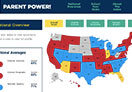
Tennessee currently ranks 26th in the nation on the Parent Power Index©, which measures the ability in each state of a parent to exercise choices, regardless of their income or their child’s level of academic achievement, and engage and have a voice in the systems that surround their child, including their local school and school board.

Two proposals, one slightly more ambitious than the other, currently making their way through the Tennessee Legislature would represent a modest, yet positive step in introducing much-needed school choice for students stuck in low-performing schools. Last year, lawmakers could not reach an agreement on similar efforts to create a voucher program to give students the chance to escape failing schools.

“States where parents have options to choose tend to yield higher growth rates in student achievement,” said Kerwin. “Hopefully lawmakers in the Volunteer State will appreciate the potential for improving educational outcomes for Tennessee students in failing schools, and remain steadfast in delivering increased access to better opportunities.”

Daily Headlines for March 11, 2014

Click here for Newswire, the latest weekly report on education news and commentary you won’t find anywhere else – spiced with a dash of irreverence – from the nation’s leading voice in school reform.

NATIONAL COVERAGE

Education reform: It’s positive, optimistic and Republicans can make it work if they seize the issue
Column, Washington Examiner, DC, March 10, 2014
A bigger issue waiting to be seized by Republicans is education reform. In New York, a battle has erupted between Gov. Andrew Cuomo, a sudden proponent of at least partial school choice when it comes to charter schools, and New York City Mayor Bill de Blasio, who has pledged to close charter schools and return mostly poor and minority children who are succeeding in them to failing public schools.

Teach for America tests out more training
Washington Post, DC, March 10, 2014
Teach for America, which places thousands of freshly minted college graduates in teaching jobs in some of the toughest schools in the country, is rethinking its training program in light of complaints from its own members that they need more preparation for the classroom.

STATE COVERAGE

ALASKA

Panel questions charter student transit
Juneau Empire, AK, March 11, 2014
A provision in Alaska Gov. Sean Parnell’s omnibus education bill that provides for transportation for charter school students raised questions Monday in the Senate Education Committee.

ARIZONA

Divisive Arizona school plan advances in Legislature
The Republic, AZ, March 11, 2014
The Arizona Legislature will soon decide whether to dramatically expand the state’s nation-leading efforts to give parents control over where to spend their child’s taxpayer-generated education funds.

ARKANSAS

Fayetteville Catholic aims to build top charter school
Arkansas Catholic, AR, March 11, 2014
From its humble beginnings in a dairy barn, Haas Hall Academy in Fayetteville has been the Cinderella story on the educational scene and the name that is synonymous with the academy and its success is Dr. Martin W. Schoppmeyer Jr

CALIFORNIA

The watchdog at L.A. Unified
Editorial, Los Angeles Times, CA, March 11, 2014
LAUSD’s inspector general post, created by legislation, is set to end this year. It should not only be renewed but strengthened so it can continue its important work.

COLORADO

Bill would give charters a say in override elections
Chalkbeat Colorado, CO, March 10, 2014
A bill introduced Monday would give charter schools a greater voice in planning of tax override ballot measures proposed by their districts.

CONNECTICUT

A charter school’s philosophy
Opinion, Stamford Advocate, CT, March 11, 2014
This is going to be a bad news-good news piece. First, the bad news. We regularly hear how the United States isn’t preparing enough low-income students for college and the careers of the future. What’s more depressing is in Stamford, that problem is very real. Roughly half of Stamford’s low-income elementary school children are below grade level in reading, writing and math.

FLORIDA

Academy marches on amidst teacher scandal
Ocala Star-Banner, FL, March 11, 2014
Francis Marion Military Academy continues to march along at its new home off Southwest 20th Street in Ocala, though it is a journey over rough terrain.

Private gain, public drain
Editorial, Miami Herald, FL, March 10, 2014
Florida’s legislative leaders are eager to amp up the state’s school-voucher program, which gives tax credits to businesses that fund disadvantaged children’s scholarships to private schools. Greased with political support and PAC money, a proposal to increase the $286 million program by $120 million over four years is wending its way through committees with few signs of a hitch, which is bad news for public-school supporters.

INDIANA

IPS Likely to Convert Some Schools to Charter-Like Structure
WIBC, IN, March 11, 2014
The Indianapolis Public Schools would convert some of its lowest-performing schools to a charter-like structure under a bill poised for approval this week by the General Assembly.

Most local Indiana teachers rated at least effective
Courier Journal, IN, March 10, 2014
When a principal strolls intoDan Haskell’s classroom at North Harrison High School these days, he knows that it is him — not his students — who are being graded.

LOUISIANA

A pause on policies?
Editorial, The Advocate, LA, March 10, 2014
Down at the State Capitol, much of the legislative session may be taken up with education bills.

Nonprofit seeks to start a sixth charter school in Lafayette
The Advocate, LA, March 10, 2014
A local nonprofit group has submitted a charter school application to the Lafayette Parish School Board to open a career and technical high school in 2015.

Schools, education groups present options at ‘school choice fair’ in Baton Rouge
Times-Picayune, LA, March 10, 2014
“School choice” has been the educational buzzword in Louisiana in recent years, and there are certainly a lot of choices for a parent looking for a school for their child: public schools, parochial schools, private schools, charters, homeschooling.

MASSACHUSETTS

At least 59 percent of administrators, teachers returning to New Bedford High
South Coast Today, MA, March 11, 2014
At least 123 of 208 teachers and administrators will return to their jobs at New Bedford High School next year despite a turnaround plan crafted by Superintendent Pia Durkin that calls for replacement of 50 percent.

MICHIGAN

Parents, teachers speak against proposed special education changes in Michigan
Detroit News, MI, March 11, 2014
At a public hearing in Detroit, parents and educators expressed anger, dismay and confusion Monday about proposed changes to how special education students are taught in Michigan.

NEVADA

School choice still a work in progress
Opinion, Tahoe Daily Tribune, NV, March 10, 2014
Choice has been a fundamental American right since this country’s revolution against King George and the British. School choice, however, is still a work in progress. The basic public education model involves a system of taxpayer financed disembodied bureaucracies which build schools, hire teachers and establish zoning lines to create transportation efficiency and manage classroom capacity.

NEW HAMPSHIRE

Charter cap trap: A restriction to repeal
Editorial, Union Leader, NH, March 11, 2014
Current state law limits the percentage of students who can transfer from their existing public school to a charter school within one school year. The cap is set at 10 percent per grade. It should be zero. A bill up for a vote in the House this week would achieve that change.

NEW JERSEY

NJ lawmakers holding hearing today on Newark school reorganization plan
Star-Ledger, NJ, March 11, 2014
Many lawmakers have already voiced criticism of Newark Superintendent Cami Anderson’s school reorganization plan, with one legislative committee approving a bill intended to prevent the proposal’s school closings.

NEW YORK

Cardinal Dolan and teachers union clash on bill that would give tax credits for school donations
New York Daily News, NY, March 11, 2014
Dolan joined a group of business and labor leaders to push for a bill that would provide dollar-for-dollar tax credits to those who donate money to educational institutions, but the state’s teachers union says it’s a ‘thinly veiled voucher bill’ that would hurt public schools.

Cuomo panel recommends ending relationship with inBloom
Journal News, NY, March 11, 2014
New York should end its relationship with a non-profit group creating a statewide education database, according to a report Monday from a panel created by Gov. Andrew Cuomo.

Reality bites Bill
Opinionm, New York Daily News, NY, March 11, 2014
New York City should be within shouting distance of broadening prekindergarten schooling now that Mayor de Blasio appears headed toward facing defeat on his tax-the-rich plan.

A war on children
Editorial, New York Post, NY, March 11, 2014
Mayor de Blasio now promises to help charter students whose schools he took away only a few weeks ago. But the Charter War he’s been waging isn’t ending — it’s escalating.

NORTH CAROLINA

My kids are thriving at Shelby’s charter school
Column, Shelby Star, NC, March 10, 2014
This is a message for all my fellow Cleveland County residents who may not know about the magic that is happening in our hometown: Shelby’s first-ever charter school. If you do know about it, I am offering an account of our family’s experience there so far.

N.C. charter advisers give StudentFirst a month to save the school
Charlotte Observer, NC, March 10, 2014
RALEIGH State charter officials Monday gave StudentFirst Academy a month to present a detailed financial and educational plan that will help them decide whether the west Charlotte school should remain open next year.

Survey asks teachers to grade impact of education changes
Winston-Salem Journal, NC, March 11, 2014
How has state education reform affected the way teachers feel about their jobs? We’ll know in June. The N.C. Teacher Working Conditions Survey opened Monday, asking teachers across the state to anonymously rate their feelings toward things like school leadership, facilities and student conduct.

OHIO

About 1,000 Cleveland third graders – 40% of them – required to go to summer reading school
Cleveland Plain Dealer, OH, March 10, 2014
About 1,000 Cleveland school district third-graders read so poorly that they’ll need to spend half their summer break in summer school to try to catch up and meet state standards.

OKLAHOMA

Oklahoma lawmakers should hold off on tweaking third-grade reading law
Editorial, The Oklahoman, OK, March 11, 2014
WHEN Oklahomans finally know how many third-grade students will be retained under the state’s new reading law, no one will be happy. The number, whatever it is, will be heartbreaking. The number, whatever it is, will be far too many. The number, whatever it is, will be regrettable. Make no mistake, however, that children learning to read is no game of numbers.

PENNSYLVANIA

Missing link to quality charter schools
Opinion, Bucks County Courier Times, PA, March 11, 2014
The theory behind public charter schools is simple: greater flexibility in exchange for increased accountability will produce more high-quality options for families. What’s proven to be the challenge is the “accountability” part of this equation.

New money, new plans for 2 troubled Phila. schools
Philadelphia Inquirer, PA, March 11, 2014
But the Blaine-Kelley transformation model is different, and also departs from the existing Promise Academy district turnaround model.

SOUTH CAROLINA

State Superintendent Wants To Create District For Failing Schools
WLTX, SC, March 10, 2014
Year after year South Carolina ranks in the bottom in the country when it comes to education.
Superintendent Mick Zais says it’s time for change and the his new proposal could mean taking away power from school districts.

TENNESSEE

Kingsport BOE: Bills attack on local control of schools
Kingsport Times News, TN, March 10, 2014
The city’s school board has gone on record opposing a proposed Tennessee law that could quash the ability of school systems to pay dues for professional organizations of school board members, superintendents, principals and others if the organization lobbies the General Assembly.

TEXAS

Even at charters, school choice limited
Commentary, San Antonio Express-News, TX, March 10, 2014
Charter proponents do a disservice by misrepresenting what Texas data actually say when comparing charters to traditional public schools, as Victoria Rico did in the Express-News (“Charter Schools: Do they add up to a better system? Despite social ills, students succeed,” Opinion, Jan. 16).

Fix the process for closing schools
Opinion, Houston Chronicle, TX, March 11, 2014
The parents, teachers and community members of Jones High School, Fleming Middle School and Dodson, N.Q. Henderson and Port Houston elementary schools were not given adequate time to present alternatives to closure. Then, under the guise of soliciting community input, the administration announced six hastily orchestrated meetings at the affected schools. Even so, 900 students, parents and community members attended these meetings to voice their opposition.

WASHINGTON

Teachers union says districts can bear loss of waiver money
The Olympian, WA, March 11, 2014
As state lawmakers consider measures that aim to keep Washington’s waiver from the federal No Child Left Behind Act, the state teachers union is working to convince them that losing the waiver wouldn’t be a big deal.

While the adults argue, education achievement gap remains
Column, News Tribune, WA, March 11, 2014
It was coincidental that Kati Haycock was in the area last week in the midst of legislative debate over two important education reform issues. Coincidental, perhaps, but not inconsequential.

ONLINE LEARNING

Education reform requires engagement
Opinion, Idaho Press, ID, March 11, 2014
Creating the learning environments that mirror how technology is used outside the classroom is not a matter of simply giving teachers and students the latest hardware and software. Rather, creating the learning environments our students need and deserve requires that school systems undertake a fundamental cultural shift.

“Flipping” classrooms might work in county
Editorial, Island Packet, SC March 10, 2014
Latest educational trend may be helping Beaufort County students succeed or it could be just another education fad.

Hilliard schools to provide tablets for all
Columbus Dispatch, OH, March 11, 2014
Classes to go digital: In three years, every student will have a computer for learning

NEWSWIRE: March 11, 2014

Vol. 16, No. 10

CHARTER BATTLES: A NEW HOPE. New Hope Academy is a charter school in York, PA, that serves a student body of which 98 percent live in poverty. Since 2007, that student body has had a 93 percent attendance rate, 84 percent have gone on to a post-secondary education, and nearly 23 percent are identified as having special needs. Oh, and not to mention the class of 2011 had a 91 percent graduation rate, and in 2012, graduating seniors received $1.3 million in merit-based college scholarships. And yet somehow this charter school is on the brink of closure. Yesterday, a Commonwealth State Court in Harrisburg, PA, heard closing arguments in the latest chapter of New Hope’s struggle to remain open in the face of local adversity. About 100 students made the trip to Harrisburg to show their support  for the school that has given them the opportunity to excel academically. Last year, the local district voted to close New Hope as it continued to meet academic benchmarks and demonstrate a clear-cut need for another schooling option in a low-income area. As New Hope continues to fight for survival, let this serve as a lesson to PA lawmakers that charter schools flourish best when overseen by multiple, independent authorizers invested in their success. We hope Pennsylvania gets the memo soon that it’s too hard to start and sustain charter schools in the Keystone State.

SAT PATH TO OBSCURITY. Once again, The College Board has decided to make changes to the SAT exam, this time reducing writing and vocabulary standards, which will undoubtedly have a dwindling effect on whatever rigor the exam has left. If the previous changes are any judge, these new modifications will create confusion in terms of testing, and lower expectations for students who, heaven forbid, expand their vocabulary and love of learning. SAT scores are as stagnant today as they were over a decade ago, and lowering expectations will not only make the exam itself more obscure, but the students who are no longer being challenged.

VOLUNTEER TO LEAD ON VOUCHERS. Tennessee families are in search of a leader in the state legislature who will boldly make the case for increased school choice, and champion the voucher proposal currently making its way through the House. If passed, students in the bottom 10 percent of Tennessee’s lowest-performing schools will be eligible to receive a voucher to pursue a better educational opportunity. Although it’s comparatively modest to other successful and more ambitious school choice programs in other states, this bill no doubt represents a step in the right direction for a state in dire need of more choices. It’s critical lawmakers acknowledge the potential for improving educational outcomes for students currently in failing schools, and avoid a repetition of last year’s inaction.

STATE OF THE DISTRICT. Due to a noticeably high amount of snowfall here in the DC area, District of Columbia residents had to wait until today to hear Mayor Vincent Gray’s State of the District Address. It’s fitting Mayor Gray is delivering the State of the District from a school, given the urgent need to advance the reforms seen in the District that have led to improvements in achievement from students at all schools, both charter and traditional. Achievement gains are evidence of the positive ripple effect charter schools and school choice programs have on all students, who for so long have been bereft of good schools. The outperformance of District charter school students on both national and citywide assessments compared with traditional school peers should compel the Mayor to firmly back policies rooted in choice and accountability.

CHALLENGES FOR CAROLINA CHARTERS.  In a state that’s trying to expand choices for students and improve teacher quality measures, there’s certainly more work to be done on the charter school front. The Charter School Advisory Council is meeting today to discuss and make recommendations on 71 charter school applications (out of 170 letters of intent filed) to the State Board of Education, which is the sole authorizing entity in the state. Avid Newswire readers know that having charter commissions of this nature is not best practice, and having multiple, independent authorizers allows for a vibrant, quality charter school sector. Recent media reports have shown charter schools are struggling with administrative issues, a common reason for charter school closures, especially in states without strong charter school policies. So while the pro-reform Governor McCrory made good on campaign promises about school choice, he has been silent about creating an environment where charter schools can thrive and can receive the best possible oversight, so administrative and management snafus can be avoided. 

CHARTER LAWS 2014. This March we will release our much-anticipated 2014 Charter School Law Rankings & Scorecard, which provides an update on important changes to state charter school laws and gauges how well-equipped states are in allowing charter schools to thrive. See where your state stands on last year’s scorecard, and be on the lookout and stay tuned for the latest!

GOLDEN TICKET? The Cato Institute in Washington, DC will be hosting a special viewing of “The Ticket: The Many Faces of School Choice” on Tuesday, March 18. This documentary tours the country, highlighting different forms of how parents and students exercise the freedom of choosing the education that’s right for them. Get your “ticket” to The Ticket by clicking here to register.

SYMPOSIUM 2014 hosted by The Black Alliance for Educational Options (BAEO) will be held from March 20-22 in New Orleans. The Symposium will feature informative sessions on school choice mobilization and advocacy, and can’t-miss speakers including, but not limited to, former US Education Secretary Rod Paige and the irreplaceable Howard Fuller. Click here for more information.

Daily Headlines for March 10, 2013

Click here for Newswire, the latest weekly report on education news and commentary you won’t find anywhere else – spiced with a dash of irreverence – from the nation’s leading voice in school reform.

STATE COVERAGE

DISTRICT OF COLUMBIA

D.C.’s elected leaders have an important role to play in education
Opinion, Washington Post, DC, March 8, 2014
I was interested to read the Feb. 25 op-ed by former Washington Post publisher Donald E. Graham on the District of Columbia Public Schools and the D.C. Council education committee’s recent hearing on DCPS [“Has D.C. learned its lesson?”].

Test scores point to school reform success in the District
Editorial, Washington Post, DC, March 8, 2014
SCHOOL REFORM in the District is working. That is the unassailable message of test scores released Thursday by federal education officials. Students at every level improved in reading and math, and the improvement exceeded the national average.

FLORIDA

Expand scholarship
Editorial, The Tampa Tribune, FL, March 10, 2014
Florida House Speaker Will Weatherford puts it well when he says, “No child’s future should be dictated by their ZIP code.”

Expanding school choice must empower the poorest students
Editorial, Palm Beach Post, FL, March 9, 2014
The push to give Palm Beach County’s public school students some semblance of “full choice” in the school they attend is fading, amid skepticism from school board members and district officials. Instead, officials are talking about expanding the district’s current, more limited choice program, in which students can attend a public school other than their neighborhood school only by applying to a magnet program or career academy.

Palm Beach County School Board member urges marketing to combat charter exodus
Palm Beach Post, FL, March 9, 2014
With the footsteps of children leaving traditional schools for charters in Palm Beach County growing from a pitter patter to a thundering stampede in recent years, school district officials say they need to fight for the hearts and minds of students and their parents by doing what charter schools do — spending money on marketing to sell their school.

KANSAS

School Funding Fight Far From Over
Topeka Capital-Journal, KS, March 9, 2014
The Kansas Supreme Court has settled some immediate issues over public school funding, but it left for another day the biggest issue — how much more money, if any, legislators must spend on education.

LOUISIANA

Parents weigh in on education legislation
The Advertiser, LA, March 8, 2014
Common Core standards and a related standardized test are top issues for parents as Louisiana lawmakers convene Monday.

MASSACHUSETTS

Momentum for new charter schools stalls
Boston Globe, MA, March 9, 2014
Four years after a wave of support for charter schools swept through the State House, fueled by a competition for federal dollars, the momentum appears to have faded.

Parker School turnaround plan changes teachers’ pay
South Coast Today, MA, March 8, 2014
State Education Commissioner Mitchell Chester’s four-pronged plan to turn around the “chronically underperforming” John Avery Parker School will change the way teachers are compensated, basing their pay on more than just experience and education.

MINNESOTA

Panel takes up teacher evals.
Albert Lea Tribune, MN, March 8, 2014
Minnesota has a popular teacher bonus program and a new teacher evaluation law that educators insist needs dedicated funding to work properly. How the two will co-exist has long been in question. Members of the state House Education Policy Committee began that debate Friday by examining four bills that would help merge the two systems.

MISSOURI

Few families file for transfers out of Kansas City school district
Kansas City Star, MO, March 9, 2014
Twelve families, 23 children. Amid all the anxiety over the damage Missouri’s student transfer law may bring on the Kansas City area, that is the number of transfer requests Kansas City Public Schools says it received for the coming school year.

Lawmakers compromise as they address school transfers
St. Louis Post-Dispatch, MO, March 10, 2014
Missouri legislators are moving closer to addressing a political riddle that has baffled them for years: how to temper a law that has sent thousands of students in troubled districts to other schools in the St. Louis region.

MONTANA

The turnaround: Butte high’s dropout rate on par with state average for first time in years
Montana Standard, MT, March 9, 2014
Thanks to special intervention programs and students like Edwards who are sticking with school, Butte High’s dropout rate is on par with state averages for the first time in years. Only about 3.6 percent of students who enroll in the fall quit by the end of the school year.

NEBRASKA

OPS officials want to revisit talks about Skinner Elementary focus program
The Omaha World Herald, NE, March 10, 2014
The Omaha school board wants to revive talks about creating a focus program at Skinner Elementary.

NEW JERSEY

Camden superintendent: A ‘dramatic lack of rigor’ in district schools
South Jersey Times, NJ, March 9, 2014
Camden Superintendent Paymon Rouhanifard offered three anecdotes to illustrate the kind of situation he walked into when Gov. Chris Christie appointed him to the job six months ago.

State’s ‘One Newark’ plan may be facing tough audience in Trenton
New Jersey Spotlight, NJ, March 10, 2014
Some legislators have already made displeasure known — critics, union members, community organizers to be on hand

NEW YORK

A charter school space solution
New York Daily News, NY, March 9, 2014
The state should offer rent money to charters, and then they should pay it directly to their co-located schools.

Charter school battle lines hardening
Troy Record, NY, March 9, 2014
It was the best of times for charter schools. And it was the worst of times for charter schools.

Cuomo Steps Up for Charters
Review & Outlook, Wall Street Journal, March 10, 2014
The New York battle over charter schools deserves national attention, and not only for the fate of the Big Apple’s 70,000 children who attend these non-traditional public schools. The fight is also forcing Democrats to declare themselves on the defining civil-rights issue of our time, and so far Governor Andrew Cuomo is choosing the children over the teachers unions.

De Blasio faces three new charter-school lawsuits
New York Post, NY, March 10, 2014
Mayor de Blasio is getting hit on Monday with three new lawsuits by charter-school supporters, his traditional enemies — just as his pals who despise the popular institutions are threatening him with legal action for offering a compromise.

In Rent Plan for Charters, Mayor Faces a Hard Road
New York Times, NY, March 10, 2014
As a candidate for mayor, Bill de Blasio electrified crowds of parents and education activists with a pledge to charge rent to charter schools, one of the starkest policy departures from his predecessor, Michael R. Bloomberg.

New York Clash Over Charter Schools
Letter, New York Times, NY, March 9, 2014
The conflict in New York over public charter schools and their host districts brings into sharp and painful relief the core flaw in the charter law. It was unwise to create a parallel system designed to compete for dollars and success.

Parents and children get caught between charter school feud with teachers union and pro-charter forces
New York Daily News, NY, March 8, 2014
Parents and children of charter schools are caught between two well-funded interests. As of last week, the political action committees of the United Federation of Teachers and the four major charter backers were fairly evenly matched financially, a Daily News review found.

NORTH CAROLINA

State panel to ponder fate of StudentFirst charter
Charlotte Observer, NC, March 9, 2014
State charter officials will discuss Monday whether to stop paying for the deeply indebted StudentFirst Academy or let the board keep trying to save the Charlotte charter school that foundered after opening in August.

OHIO

Third-graders using vouchers need not pass reading test
Columbus Dispatch, OH, March 9, 2014
Third-graders in traditional public schools and charter schools will be held back if they can’t pass a state reading test, but those who receive taxpayer-funded vouchers to attend private schools will not be.

PENNSYLVANIA

Charter schools vow challenge to state order to close
Philadelphia Inquirer, PA, March 9, 2014
Officials and parents at two charter schools that the state has ordered to close at the end of June said the action came before changes instituted this school year could be proven effective, and vowed a challenge.

New Hope Charter School set for hearing on school’s fate
York Dispatch, PA, March 9, 2014
Monday afternoon, attorneys for New Hope and the York City School District will present their final arguments at a courtroom hearing in Harrisburg. The stakes are high.

West Chester charter Sankofa in disarray, district says
Philadelphia Inquirer, PA, March 9, 2014
WEST CHESTER When West Chester’s Sankofa Academy opened in 2005, its founders touted it as an African American charter school where students would excel under a curriculum infused with their history and culture.

SOUTH CAROLINA

Charleston County schools succeed, fail in efforts to attract white families to mostly minority schools
Charleston Post Courier, SC, March 8, 2014
It also is the exception rather than the norm. Fifty years after the first black students walked through the doors of Charleston County schools, the district still struggles to offer racially balanced learning environments. Of the district’s 81 schools, 19 percent are made up almost solely of black students. Two percent are composed mostly of white students.

TENNESSEE

Unlocking Doors to Education
Column, Memphis Daily News, TN, March 9, 2014
George Washington Carver is quoted as saying that “Education is the key to unlock the golden door to freedom.” In our community, there are many education doors; however, there is not a master key that opens all the doors.

WASHINGTON

Issaquah district may close alternative high school
Seattle Times, WA, March 9, 2014
The Issaquah School District is considering closing Tiger Mountain Community High School, which serves students who are looking for alternatives to traditional high schools. The plan has drawn opposition.

State rejection of K-12 money will be hard to explain
The News Tribune, WA, March 9, 2014
Imagine that you’re a voter, ballot in hand, as you decide whether to vote yes or no on your local school levy. You generally support public education. But you’ve been officially notified that the schools your children attend are “failing.”

ONLINE LEARNING

Blended learning has potential … and drawbacks
Letter, Cincinnati Enquirer, OH, March 8, 2014
As a teacher who spent over 30 years in the profession, I feel a word of caution is appropriate. Blended learning can be an excellent way to learn certain skills, like researching a particular topic.

‘Cyber’ realities continue to flow
Opinion, Philadelphia Inquirer, PA, March 9, 2014
The term cyber charter school evokes a wonderful world in which jet packs propel children to education pods where information is seamlessly uploaded to their cerebral cortexes, unimpeded by the discontents of the brick-and-mortar world. And yet Pennsylvania officials rejected all six of the latest applications to launch cyber charters. How could they?

Detroit schools project always keeps virtual classroom open
Detroit News, MI, March 9, 2014
Detroit Public Schools educates the largest number of children in the state — nearly 50,000 — yet outside school, its students are among the most disconnected, with 70 percent lacking Internet access at home.

For-profit virtual charter schools are a good fit
Letter, Morning Sentinel, ME, March 10, 2014
Your repeated use of negative terms to denigrate for-profit virtual charter schools are simply red herrings and hypocritical, as Maine’s public schools do business every day with for-profit vendors out of state. The real issue is that virtual charter schools threaten to change the way public education works, by empowering parents with choice among public schools.

Questions linger about Maine’s first virtual charter school
Editorial, Portland Press Herald, ME, March 9, 2014
Weathering the application process is one thing, but living up to state criteria is another.

Virtual charter schools seen as a real solution for certain students
Portland Press Herald, ME, March 9, 2014
Two Maine moms believe online teaching is the answer for their fast learners and kids with health or social challenges.

Accountability or overregulation? Charter supporters split over Minnesota bill

Mary C. Tillotson, Watchdog.org

Charter school authorizers in Minnesota whose schools fall in the lowest 25 percent of public schools could be required to close those schools or submit an explanation to the state.

That’s if state Senate Bill 836 passes. Charter school supporters are split over whether the legislation from state Sen. Terri Bonoff would strengthen or weaken charter schools in the state where the movement began.

Increased regulation is unnecessary and could threaten the independence that’s core to charter schools’ identity, said Eugene Piccolo, executive director at the Minnesota Association of Charter Schools, and Kara Kerwin, president of the Center for Education Reform.

“Four years ago we overhauled our charter school law that put in a process for evaluating the performance, Piccolo said. “Why don’t we go through the process one time and see if it works? And if it doesn’t work, let’s tweak it.”

Kerwin’s group ranks Minnesota’s charter school law as the second-best in the country, behind Washington, D.C. The National Association of Public Charter Schools ranks Minnesota’s law as the best in the country.

But Brian Sweeney, director of external affairs for Charter School Partners, said the bill would improve the overall quality of charter schools and make it easier for supporters to defend the charter movement.

“There are those that want to close down all charter schools, and we think it would inoculate the charter sector if we ourselves cleaned up those troubled charter schools,” Sweeney said.

Sweeney and Piccolo both said it was hard to compare charter schools to traditional district schools.

Whether charter schools are better academically is “controversial,” Sweeney said, though he referred to a “Beating the Odds” column in a local newspaper, highlighting the highest-performing schools with at least 85 percent of students living in poverty. A majority of those schools are charters.

Many charter schools in the Minneapolis-St. Paul area are very high performing, they said, but others don’t do as well.

About 40 percent of charter schools can only be compared to district schools in an apples-to-oranges way, Piccolo said. That’s partially because charter schools serve twice as many English-language learners as district schools, and more than twice the number of students in poverty.

Right now, 17 charter schools are in the lowest 25 percent of Minnesota’s public schools, based on three years of test scores, Sweeney said.

He referred to an uptick in lawsuits in recent years, filed by charter schools against their authorizers when the authorizers decided to close the schools. This could work as a disincentive, making authorizers less inclined to close underperforming schools, he said.

“We think it gives them cover for those authorizers who need more push,” Sweeney said. “Closing down a charter is difficult.”

A 2009 overhaul of the charter law emphasized the authorizer’s role and gave the authorizer more ability to close down an underperforming charter school.

As part of that overhaul, authorizers must lay out their plan for overseeing their schools’ performance, academically and financially. Schools agree to academic goals and financial operations in a contract between the schools and the authorizers.

“Authorizers have different levels of intervention they do before they pull the plug, but (there’s) nothing that says they can’t boot the place. We’ve had a quarter of all charter schools close,” he said.

Charter schools already have much more accountability measures and procedures than district schools, including testing and financial audits, Piccolo said.

Furthermore, the state’s charter law stipulates that “an authorizer may or may not renew a charter school contract at the end of the term and may unilaterally terminate a contract during the term for cause” and that “an authorizer is immune from civil and criminal liability for all activities related to a charter school.”

Threats of lawsuits shouldn’t deter authorizers from closing underperforming schools, Piccolo said.

Under the 2009 law, the state commissioner of education reviews authorizers’ performance every five years, and that first review hasn’t come due yet.

Piccolo said lawmakers should wait to change the process until the state has been through it once.

Bonoff’s office didn’t return a request for comment.

Daily Headlines for March 7, 2014

Click here for Newswire, the latest weekly report on education news and commentary you won’t find anywhere else – spiced with a dash of irreverence – from the nation’s leading voice in school reform.

NATIONAL COVERAGE

1M kids stop school lunch due to Michelle Obama’s standards
Washington Times, DC, March 6, 2014
New school lunch standards implemented as a result of First Lady Michelle Obama’s anti-obesity campaign have led to more than 1 million children leaving the lunch line, according to a new report.

Accountability or overregulation? Charter supporters split over Minnesota bill
Watchdog.org, March 7, 2014
Charter school authorizers in Minnesota whose schools fall in the lowest 25 percent of public schools could be required to close those schools or submit an explanation to the state.

Education policy analysts look to states for reform
Daily Callers, DC, March 6, 2014
A look at individual state report cards reveals that states need to pave the way for new reform by filling the gaps between teacher quality and student achievement, education policy experts said at a panel Wednesday.

Gov. Jindal delivers harsh criticism of President Obama at conservative conference
Times-Picayune, LA, March 6, 2014
Jindal also continued his attacks on the Obama administration for its lawsuit against his administration’s school choice program, which he says has given the parents of poor children the chance to send their children to schools, including private religious institutions, with high academic standards, and insistence on discipline and regular homework.

The poor — primarily blacks — lose in public-ed monopoly
Opinion, Orlando Sentinel, FL, March 6, 2014
The facts are clear. If you are poor in America — and you are unlucky enough to live in a ZIP code where school choice or charter schools are not accessible — you are stuck with the school your local government forces you to attend. In 1954, the Supreme Court ruled that schools could not be segreted by race. Today they are segregated by economic status.

STATE COVERAGE

CALIFORNIA

New teachers scarce after state funding cuts
Merced Sun Star, CA, March 7, 2014
Young teachers have become far more scarce in California classrooms after school districts slashed their budgets to survive the recession.
From 2008 to 2013, California saw a 40 percent drop in teachers with less than six years’ experience, according to a Sacramento Bee review of state data.

COLORADO

Educators to state: Let’s go above Common Core
Denver Post, CO, March 6, 2014
Douglas County educators are among those who don’t want the state to implement the national Common Core standards, but their objections have less to do with money and local control than with high standards.

DISTRICT OF COLUMBIA

D.C. charter officials seek to keep Options open
Washington Post, DC, March 6, 2014
D.C. charter school officials who previously had said they would seek to close Options Public Charter School for financial mismanagement said Thursday that they will now push to keep the school open.

FLORIDA

Florida Private Schools Bill Advances for Needy
The Ledger, FL, March 6, 2014
Legislation that would dramatically expand a state program that helps low-income children attend private schools in Florida moved ahead Thursday during an emotional and crowded hearing that pitted supporters of public education against advocates for school vouchers.

MacDill group withdraws request to open charter school
Tampa Bay Times, FL, March 7, 2014
A group that wants to open a charter school at MacDill Air Force Base has dropped its request, but says it will try again.

Teacher evaluation system flunks
Editorial, Tampa Bay Times, FL, March 7, 2014
No wonder the Florida Department of Education fought to keep its teacher evaluation scores a secret. They are too complicated, too often at odds with real-world observations and further evidence the state needs to call time out as it revamps its accountability system. An evaluation tool that its defenders cannot explain and that has no direct connection to so many teachers it rates is a tool that needs work.

GEORGIA

City charter before state board next month
Times-Georgian, GA, March 6, 2014
Erin McGinnis, director of school improvement for the system, said during a work session Thursday that district leaders will have one minute to give their “elevator pitch” to the state board for why the system deserves and requires the charter system status.

ILLINOIS

Retain panel for charter schools
Editorial, Chicago Sun-Times, IL, March 7, 2014
A movement is afoot to kill a state commission that hears appeals from groups that want to open charter schools but are denied by their local school districts.

LOUISIANA

‘Career diploma’ promises Louisiana high school graduates good jobs — without four years of college
Times Picayune, LA, March 6, 2014
After decades of taking a back seat to the college preparatory curriculum, vocational-technical education is on the rise in Louisiana. A proposal to the state education board Friday would rejuvenate the high school “career diploma,” promising to open high-paying jobs to graduates – without college.

Renewal rules to change for state-authorized charter schools
Times Picayune, LA, March 6, 2014
Louisiana would raise the standards for state-authorized charter schools to stay in business, under rules that the Board of Elementary and Secondary Education adopted in committee Thursday. But charters serving students who are over age, have been expelled or have dropped out might have a better shot at staying open.

Taylor presents ‘Innovative Schools’ plan to EBR board
The Advocate, LA, March 6, 2014
East Baton Rouge Parish Superintendent Bernard Taylor told the School Board on Thursday he hopes to solicit proposals to create new schools in order to head off growing competition from charter schools and avoid a future “tipping point.”

MAINE

Why have Maine Democrats made school reform a partisan issue?
Opinion, Bangor Daily News, ME, March 6, 2014
New York City is far from Maine, but we’ve seen a similar attitude toward charter schools in our largest city. The mayor of Portland, Michael Brennan, has sought to undermine the one charter school operating there at every turn. He opposed its initial establishment, then tried to get it investigated by the attorney general. When that failed, he moved on to a moratorium to ensure that no more charter schools would be established in his city.

MASSACHUSETTS

Want a longer school day? Pay up
Column, Boston Globe, MA, March 7, 2014
A longer school day has arrived as a consistent campaign theme. Among the leading candidates, Democratic gubernatorial hopeful Martha Coakley says she’s a big believer, while rival Steve Grossman calls a longer day an important tool for improving education. Republican Charles D. Baker says he supports a longer day in underperforming schools.

Year-round education pilots in at-risk schools worthy of state’s investment
Editorial, Battle Creek Enquirer, MI, March 6, 2014
We’re not prepared to endorse a wholesale move to year-round public schools in Michigan, but it’s a reform that merits serious consideration. Appropriating dollars that would allow at-risk schools to test an expanded school calendar seems to us a worthwhile investment.

NEW JERSEY

Educators told to shut 2 S.J. charter schools over ‘dismal’ test scores
Cherry Hill Courier Post, NJ, March 7, 2014
The New Jersey Department of Education will close charter schools in Camden and Pemberton Township at the end of June because of “dismal” test scores.

NEW YORK

Don’t Forget Kindergarten, Some in New York Say
Wall Street Journal, March 7, 2014
As New York state officials debate how to pay for universal prekindergarten, upstate Valley Central School District is considering a painful option: terminating kindergarten programs.

Cuomo turns his back on city kids
Opinion, New York Daily News, NY, March 7, 2014
Charter school industry money is being flung into Albany, and it’s stinking up the place.
Tuesday, Gov. Cuomo made it clear that he’s on a mission to increase funding for privately-run charter schools — even as he continues failing the large majority of New York students by underfunding traditional public schools.

Marie Antoinette Fariña
Editorial, New York Post, NY, March 7, 2014
Surely “they’re on their own” ranks right up there with “let them eat cake.”
Especially because Carmen Fariña went on to say “they have other options.” The truth is that for almost all these displaced kids, the only other “option” is an inferior public school.

The Ideologue vs. the Children
Opinion, Wall Street Journal, March 7, 2014
What a small and politically vicious man New York’s new mayor is. Bill de Blasio doesn’t like charter schools. They are too successful to be tolerated. Last week he announced he will drop the ax on three planned Success Academy schools.

NORTH CAROLINA

PACE files an appeal to get charter back
Chapel Hill News, NC, March 7, 2014
A charter school that was not renewed in February has appealed to get its charter back. PACE Academy filed an appeal with the state Office of Administrative Hearings Feb. 7, the day after the State Board of Education unanimously voted not to renew its charter when it expires in June.

OHIO

Cleveland picks its second round of struggling schools to target for improvement
Cleveland Plain Dealer, OH, March 6, 2014
Ten more schools with low-performing students will receive special attention for improvement next school year in the second round of “Investment School” efforts by the Cleveland school district.

OPEN ENROLLMENT: Big money at stake
Marietta Times, OH, March 7, 2014
Two Washington County public school districts are losing students and the funding that comes along with them in Ohio as part of the state’s open enrollment policy.

OKLAHOMA

Oklahoma City, Tulsa superintendents address critical issues during education forum
The Oklahoman, OK, March 6, 2014
Third-grade reading, new education standards, teacher pay, and the arts were among key issues discussed by Dave Lopez, interim superintendent of Oklahoma City Public Schools, and Keith Ballard, superintendent of Tulsa Public Schools, during a forum Thursday in Oklahoma City.

PENNSYLVANIA

AIU forum bashes governor’s education budget
Pittsburgh Tribune-Review, PA, March 7, 2014
Gov. Tom Corbett would not have gotten much encouragement from nearly 200 educators and political leaders at a forum at Allegheny Intermediate Unit in Homestead on Thursday night.

Phila. principals are asked to take 15 percent pay cut
Philadelphia Inquirer, PA, March 7, 2014
The Philadelphia School District wants its principals to take a pay cut of about 15 percent and begin paying toward their health benefits.

Officials put focus on charter funding
The Altoona Mirror, PA, March 7, 2014
Charter school officials and rural public school district superintendents had the attention of Pennsylvania Auditor General Eugene DePasquale on Thursday at the Cambria County Courthouse.

Pocono Mountain School District rejects olive branch from charter school
Pocono Record, PA, March 7, 2014
The Pocono Mountain Charter School last week reached out to the Pocono Mountain School District to end their protracted fighting, but the district rejected the overture as a “public relations stunt” that continues to deny wrongdoing at the embattled school.

TENNESSEE

New Charter School Touts More Diversity, Hundreds Apply
WTVF-TV, TN, March 6, 2014
If you think families are losing interest in Nashville’s charter schools, you probably haven’t heard of Valor Collegiate Academy. Thursday, hundreds of families learned if their child will make it into the first 5th grade class.

Rutherford County School Board says state lawmakers won’t listen
Daily News Journal, TN, March 7, 2014
The Monday following a school board meeting on Feb. 20, the board hand delivered a resolution with its concerns about current legislation to the Tennessee General Assembly. The board’s resolution expressed disagreement with the Tennessee General Assembly bills “aimed at privatizing the state of Tennessee’s free public educationsystem.”

Thoughtful deliberation is taking place in parents’ school-choice decisions
Editorial, Memphis Commercial Appeal, TN, March 7, 2014
A lot of parents who do not live in the six suburban cities that have formed their own school districts, but whose children are enrolled in schools there, are sitting on pins and needles right now, wondering if their children will be able to attend those schools when the new school year begins.

WASHINGTON

Inslee to keep pushing teacher evaluation bill
Yakima Herald, WA, March 7, 2014
Gov. Jay Inslee said Thursday he hopes lawmakers can come to an agreement on the state’s teacher-evaluation system before the Legislature adjourns next week.

WISCONSIN

Contract negotiations delay charter school
Journal Times, WI, March 6, 2014
The meeting with pastors was canceled earlier this week after a Racine Unified School Board vote on the charter school’s contract with the district was postponed yet again. “(The delays) get you down a little bit but you find a way to pull yourself up because it’s about the kids,” Maryland said. “I went through the same thing with the REAL School.”

ONLINE LEARNING

LePage vetoes state-run virtual school bill
Portland Press Herald, ME, March 6, 2014
The governor, citing a provision halting virtual charter schools, rejects the proposal within hours of its final passage in the Senate.

Teaching teachers about technology
The Bulletin, OR, March 7, 2014
Every student in third through fifth grade at Juniper Elementary has an iPad, but what do they use them for? In Jaime Speed’s fifth-grade class, the students are solving mysteries in “augmented reality.”

Will ‘virtual schools’ enrich or replace traditional education?
Opinion, Kokomo Tribune, IN, March 7, 2014
Future K-12 students may take many of their classes online. If you look behind you, you’ll see the future is almost here. It’s pursuing us with amazing speed. We call it virtual education, and it’s an indispensable part of our future. Some virtual schools claim to offer the same curriculum and instructional practices as their brick-and-mortar neighbors. Maybe so and maybe not!

It’s Time to Honor Teachers as Professionals

Kara Kerwin, Williams Pioneer Review

In a California courtroom on February 4th, it took little over a minute for a former elementary school teacher to deliver one of the saddest commentaries on the dysfunction that encompasses teacher employment policies in the U.S. public education system.

“I just felt like no matter what work I did in the classroom or how hard I worked that none of it mattered, because a seniority date mattered way more than how much I did for kids, or what principals would say about me, or what parents would say about me,” Bhavini Bhakta recalled during her emotional testimony in the Vergara v. California lawsuit aimed at changing teacher hiring and retention practices. “All that mattered was my hired date. And after that happening for that many years, you think that, ‘I’m not even a person, I’m not even doing anything, it’s just my hired date that matters. I’m a number and not a person.’ And that’s not easy.”

In California, only three numbers matter when deciding the fate of teaching personnel. These numbers cannot be found on test scores or report cards, and cannot be quantified by the number of students who positively benefit from having a teacher who goes the extra mile.

The only numbers that actually factor in when determining teacher retention are the month, day, and year the teacher was hired. This explains how Bhakta was honored with a Golden Apple teaching award but then also laid off the same year.

In May 2012 nine student plaintiffs filed the Vergara lawsuit to change rules that make it impossible to encourage and reward teachers who do their job well, and remove those who do not. If successful, the case could open the door for evaluation and student achievement to play a larger role in administrative decisions, as opposed to seniority alone, and would prompt a thorough reexamination in how California rewards good teaching.

Teacher quality standards should value the positive role a teacher can play in a student’s life, and ensure proper safeguards are in place so students receive the critical support in the classroom that they deserve.

These nine students, along with their peers, want someone at the front of the classroom who will bring out the best in them and help them excel academically. Students care little, if at all, when a teacher was first hired compared to other staff members or whether the school’s administration has honored a permanent guarantee of employment, two principles that remain unfortunately influential in most schools around the country.

The role of a teacher is arguably the most important job in our society, yet we don’t honor it by entrusting them with schools that encourage success, and acknowledge hard work. If there is any place where good work should be rewarded and incentivized, it’s in the classroom, equally applied to both students and educators.

Bhatka has since left the teaching profession, at least in the capacity of being a traditional classroom instructor. If other state lawmakers do not heed the lessons of Vergara, they too will lose out on retaining other good teachers because of demoralizing employment practices. As of now, California is one short already.

Kara Kerwin is President of The Center for Education Reform, a K-12 education policy and advocacy organization based in Washington, DC.