








Sign up for our newsletter

Don’t Get on Randi’s Bad Side

If teacher union administrators ever designed a government lesson, it’s plausible to think it would look drastically different from what actually goes on in the classroom.

In fact, the lesson plan would take all of one day, replacing government structure and elections with one simple rule that applies to Democrats: Don’t cross Randi Weingarten by remotely associating with a reform supporter, or AFT will torpedo your political reputation.

It might seem narrow-minded, but it’s the only rule that seems to matter to union officials.

Clearly, Gina Raimondo, current Treasury Secretary of Rhode Island, was initially unaware of this rule.

Otherwise she may not have had the audacity to introduce fiscal reforms involving a hedge fund manager who also happens to take pride in being vilified by Weingarten.

According to the Wall Street Journal, Weingarten took the high road by threatening Raimondo’s political standing if she didn’t divest state resources from reform supporter Daniel Loeb’s hedge fund. This is by no means to condone Raimondo or Loeb, they’re simply the ones caught in Weingarten’s petty political crosshairs.

It’s all to point out the increasing distance between senior union leadership and issues that have anything to do with improving schools, and the lengths at which a union leader goes to carry out a political vendetta. Seeing as the hedge fund was by all accounts beneficial to union labor, there’s no conceivable reason someone who claims to be focused on education would be involved in an issue like this.

The fact that the head of one of the largest teacher unions in the US would be so heavily invested in political axe-grinding rather than focusing on the real issues facing schools reveals a widening disconnect, not to mention irrelevance to doing what’s best for kids.

Will a Partisan Divide Derail Universal Pre-K?

Kylie Atwood, CBS News

A robust partisan divide in Washington over the role of the federal government in education reform is keeping recent proposals to tweak the American education system on the sidelines, raising the question: will Congress take action or just perpetuate a never-ending debate on the issue?

Two weeks ago, President Obama pushed again for universal pre-K in his State of the Union address, “Last year, I asked this Congress to help states make high-quality pre-K available to every four year-old. As a parent as well as a president, I repeat that request tonight.”

In response, Sen. Lamar Alexander, R-Tenn., the top Republican on the Senate Health, Education, Labor and Pensions Committee, told CBS News that his mother was a kindergarten teacher so he is “all for” early education but he does not think pre-K is an area where the federal government should be involved.

Alexander’s mother hated when the welfare inspector came to check out her nursery and kindergarten that was in their garage. Why? “Because she thought she knew a lot more about it than they [the federal government] did,” Alexander explains.

“I think we should always be talking about it but I think we have a better way to do it than a big promise from Washington,” said Alexander, who has introduced separate legislation that would give vouchers to low-income students they could use at the K-through-12 school of their choice.

As the push for better results ensues, suggestions to implement universal pre-K and school choice are falling under the microscope of education experts. High school graduation rates in the U.S. inched up every year since 1995 yet America is slipping behind in the O.E.C.D. international rankings of student achievement.

Robert Balfanz, the co-director of the Everyone Graduates Center and research scientist at the center for Social Organization of Schools, believes that implementing universal pre-K is a good tool to have in the toolbox. But he does not label it a fix-all remedy.

“As powerful as it is, it is not super-inoculation,” explains Balfanz of pre-K education.

The Obama administration points to the 2005 HighScope Perry Preschool Study, a long-term Michigan-based study, that shows a focus group of children who received pre-K were more likely to graduate from high school and went on to earn higher incomes than focus group of children who did not. Yet certain studies, such as a 2013 study from Vanderbilt University, show that pre-K has positive short-term effects but it does not make holistically positive conclusions about the effect that pre-K has on students in the long-term.

Kara Kerwin, president of the Center for Education Reform, suggests that proposals for federal investment in early childhood education are layered with ulterior motives.

“I see that [universal pre-K proposal] more as a tactic, not a solution. A tactic for avoiding all of the controversy among K-12 education,” Kerwin said

But focusing on the whole education spectrum is important, explains David Johns, the Executive Director of the White House initiative on Excellence for African Americans. “Unfortunately in this country we don’t have the luxury of focusing on a particular point of the pipeline, we have to make comprehensive investments to make sure that the people are successful,” he told CBS News, noting pre-K and early learning are indeed critical.

Alexander argues that investing in school choice will be as beneficial as with other existing federal education programs that give the states flexibility.

“What I am going to do is argue to my Democratic friends, look you like the student loans for college students, you like the GI bill for veterans, if that has helped to produce the best colleges why not us the same kind of funding to help produce the best funding for elementary and high schools. And why not give choice to the low-income people who do not have it today when people with money do have it,” Alexander explains. He makes it clear that this plan will not trump the plans that certain states may already have in place.

More than a dozen states already exercise some version of school choice and with the education debate in Washington facing “unchartered waters,” as Balfanz describes it, local governments will still be ground zero for education reform.

“We can’t wait on the federal government to do this,” says Dave Lawrence, president of The Early Childhood Initiative Foundation. “The real power in changing education in America will come from local communities deciding what they want for their children.”

NEWSWIRE: February 11, 2014

Vol. 16, No. 6

SCAPEGOATING PARENTS. In a weak attempt to find key problems and solutions to public education, The New York Times framed a discussion on its opinion page with the misguided question, “Do Parents Care Enough About School?” Yes, after decades of stagnation and failure in traditional public schools, the Times thought to ask whether parents, who want the best for their children, are obstacles to quality education. Even AEI’s Rick Hess, of all people, is claiming parents and reformers are impeding progress by being too forceful in the push for publicly supported accountability. Framing a discussion that diverts attention away from schools allows people to ignore the trend that education improves in states where parents are given power and options. This is exactly the type of discussion that emboldens the status quo.

THERE’S SOMETHING STRANGE, IN THE NEIGHBROHOOD. Last week on his show, John Stossel showed a clip from the 1984 classic “Ghostbusters.”  In the clip, Dan Akroyd’s character says to Bill Murray’s: “Personally, I like the university. They gave us money and facilities. We didn’t have to produce anything. You’ve never been out of college. You don’t know what it’s like out there. I’ve worked in the private sector. They expect results.” Had Akroyd replaced the word ‘university’ with ‘traditional public school’ and ‘private sector’ with ‘school choice environment,’ he would have effectively summarized the state of public education in the U.S. For too long, lawmakers at every level have given money and facilities to traditional public schools without proper accountability, and now we’re plagued with an unacceptable achievement rate at 34 percent. Charter schools that have strong, independent authorizers demand results and don’t take funding and facilities for granted. Lawmakers should take a cue from “Ghostbusters” and demand accountability rather than continue the blind distribution of tax dollars.

NEW KIND OF SNOW DAY. This winter has yielded noticeably higher snowfalls, leading to ‘snow days’ across the country much to the joy of students who get the day off and much to the chagrin of educators who have to play catch-up once the snow subsides. But thanks to online learning and expanded use of technology in education, a snow day no longer translates to a day off. Using so-called ‘E-Days,’  teachers in states with anticipated snowstorms can assign online learning assignments to students while they’re at home. In states such as Ohio where schools receive pre-approval to provide online coursework, teachers post assignments and are ‘on-call’ to answer questions. Many parents enjoyed the coursework, praising the benefits of seeing their child’s schoolwork first-hand, and reinforcing the popularity of increased parental engagement in education. The role of technology is spurring innovation both inside and outside of the classroom, and with proper engagement in the media, positive stories about online learning will be showing up a lot more often.

CULTURE OF SUCCESS. Last week, we toured the highly regarded Thurgood Marshall Academy (TMA), a charter school in Southeast Washington, D.C. aimed at preparing students for college. That type of learning model is put to good use, seeing as 100 percent of graduating seniors are accepted into college. And no, that’s not a typo. Every TMA senior class has had a 100 percent college acceptance rate since 2005. The culture of success at TMA is exemplified by educators, and equally enforced by the student body. Students serve as hall monitors and peer tutors, run the writing center, and overall do not take the opportunity afforded to them for granted. And thanks to having access to such a positive learning environment, they never have to ask where they would be without access to a better opportunity.

DID YOU HEAR? The Black Alliance for Educational Options (BAEO) and Marvin Sapp officially launched the School of Choice Tour, a ten-day, eleven-city tour that began this week in Indianapolis and will conclude February 20 in Memphis, TN. These FREE events will feature community discussions on how the current state of education is affecting black students, and what families can do to explore education choices available to them. Click here for more information and follow the hashtag #SchoolofChoiceTour on Twitter.

Daily Headlines for February 11, 2014

Click here for Newswire, the latest weekly report on education news and commentary you won’t find anywhere else – spiced with a dash of irreverence – from the nation’s leading voice in school reform. 

NATIONAL COVERAGE

Advanced Placement classes grow in popularity
Associated Press, February 11, 2014
Columbus McKinney is taking his fifth Advancement Placement course at Woodrow Wilson High School in Washington, undeterred even though he didn’t score high enough to get college credit on two of the AP classes he took previously.

Snow days don’t hurt student achievement, study says
Washington Post Blog, DC, February 10, 2014
The messy winter weather in many parts of the country have forced schools to close over and over, forcing school districts around the country to alter their schedule for the year to find time to make up for lost instructional time. But is that really necessary? How much do kids lose when school is closed because of bad weather?

Will a partisan divide derail universal pre-K?
CBS News, February 10, 2014
A robust partisan divide in Washington over the role of the federal government in education reform is keeping recent proposals to tweak the American education system on the sidelines, raising the question: will Congress take action or just perpetuate a never-ending debate on the issue?

STATE COVERAGE

ARIZONA

Charter-school push suspicious
Opinion, Arizona Republic, AZ, February 10, 2014
The recently proposed further proliferation of “non-profit” charter schools makes me question just how really non-profit they are.

Expanding state aid to private and parochial schools on track
Arizona Daily Star, AZ, February 11, 2014
A House panel agreed Monday to allow hundreds of thousands of children to attend private and parochial schools at public expense — a vote one legislator said is part of a radical agenda to destroy public schools.

CALIFORNIA

The Two Faces of LA’s School Superintendent
City Watch, CA, February 11, 2014
Despite its supporters’ protests to the contrary, Vergara is widely seen as a frontal attack against statutory guarantees of due process and seniority rights for state teachers. The suit is the brainchild of Students Matter, a Bay Area nonprofit created by wealthy Silicon Valley entrepreneur David Welch and partly financed by LA billionaire Eli Broad.

COLORADO

Colorado’s slow rollout of teacher evaluations could hold advantages
Denver Post, CO, February 10, 2014
Colorado ranked among national leaders in adopting a new teacher evaluation system but has lagged in implementing it, according to experts who also note that such a strategy could prove beneficial.

FLORIDA

School choice
Editorial, Tallahassee Democrat, FL, February 11, 2014
The concept of a neighborhood school is time-tested. Schools play a key factor in where parents make their homes, and the neighborhood often is critical to a child’s assimilation with others.

GEORGIA

Reese Road Leadership Academy’s charter school renewal application runs into tough questioning
Ledger Enquirer, GA, February 10, 2014
The application to renew Reese Road Leadership Academy’s five-year charter ran into tough questioning during Monday evening’s Muscogee County School Board work session.

MINNESOTA

Hold charter schools fully accountable
Editorial, Star Tribune, MN, February 10, 2014
Just over 20 years ago, the charter school movement started in Minnesota and gave birth to alternatives to traditional public schools. The idea was that charters, with independence from state education rules, would have more freedom to try new ideas to improve student learning.

MISSOURI

Missouri School Board debates the scope of its role in failing schools
St. Louis Post-Dispatch, MO, February 11, 2014
They sat down to find consensus in areas that could potentially define a bold new approach toward failing schools. But the members of the Missouri State Board of Education on Monday couldn’t escape a crisis that’s unlike any the state has faced in public education.

NEW HAMPSHIRE

Pay to ride? Request from school choice family prompts review of Easthampton school busing policy
New Hampshire Gazette, NH, February 10, 2014
Angelica Trenholm and her daughter Casey can see the Easthampton school bus from their living room window as it stops on Division Street West to take students to White Brook Middle School, where Casey is an eighth grader.

NEW JERSEY

N.J. education chief Chris Cerf stepping down
The Record, NJ, February 11, 2014
New Jersey Education Commissioner Chris Cerf, who helped broker a landmark tenure law with the state’s large and powerful teachers union, is stepping down to rejoin the private sector.

NEW MEXICO

Educators slow to respond to statewide survey
Albuquerque Journal, NM, February 11, 2014
The response by New Mexico teachers to an anonymous survey – designed as a vehicle to express their opinions about teaching conditions – has been dismally low and a big disappointment for education leaders across the state.

NEW YORK

Cuomo rips Regents for watering down Common Core
New York Post, NY, February 11, 2014
Gov. Cuomo excoriated the state Board of Regents Monday after it proposed watering down Common Core standards to accommodate ineffective teachers and principals.

Cuomo Says Education Board’s Plan Dilutes
New York Times, NY, February 11, 2014
Gov. Andrew M. Cuomo attacked state education officials on Monday for what he saw as an attempt to water down a new teacher evaluation system that was one of his earliest legislative triumphs.

Education bloat exists in middle
Commentary, Albany Times Union, NY, February 10, 2014
Once again the controversial issue of high-salaried district superintendents has made its way to the forefront of discussion regarding school budgets. Television news reports, chatter among community members, Gov. Andrew Cuomo’s criticisms and newspaper articles intensified the argument that the salaries of school superintendents are much too high.

Geoffrey Canada resigns as Harlem Children’s Zone leader after two decades of service
New York Daily News, NY, February 11, 2014
A prominent Harlem charter school advocate who gained national fame in a documentary that examined the country’s educational system is stepping down from his top post.

Study: Charging Rent Would Lead to Charter-School Decline
National Review Online, February 10, 2014
New York City mayor Bill de Blasio is no fan of charter schools, having threatened to charge the schools rent and create stricter regulations for co-location — the practice whereby charter schools occupy underused space in traditional district public schools.

NORTH CAROLINA

McCrory: Increase teachers’ base pay $4,200 over two years
News & Observer, NC, February 10, 2014
The proposal Gov. Pat McCrory announced Monday to raise the base pay for early-career teachers was met with praise and immediate questions about raises for those with more experience.

State official: Check criminal records of NC charter applicants
Charlotte Observer, NC, February 10, 2014
N.C. Board of Education member John Tate called Monday for criminal record checks on charter-school applicants after reading an Observer article Sunday about problems at a recently authorized charter school.

Update: N.C. leaders don’t budge on changing tenure
Greensboro News & Record, NC, February 10, 2014
State lawmakers are promising to raise teacher pay, but they aren’t backing down on controversial changes to tenure.

OKLAHOMA

Oklahoma City school’s a model for success
The Oklahoman, OK, February 11, 2014
Teachers that helped turn around academics at U.S. Grant High School credit professional learning communities, training planned for 18 other underperforming schools in the Oklahoma City district.

PENNSYLVANIA

Philadelphia School Chief Faces Down Budget Cuts and Crises
New York Times, NY, February 11, 2014
William R. Hite Jr., superintendent of schools here in one of the nation’s poorest cities, is known as a man who prefers collaboration to confrontation, but he has spent the academic year taking no prisoners. He laid off almost 4,000 workers to close a $304 million budget gap and threatened to keep school doors locked until officials found stopgap money to ensure what he considered a basic level of security for students. He says he was just warming up.

Reform of Pa. charter schools long overdue
The Mercury PA, February 11, 2014
Members of the Pennsylvania General Assembly are charged with being good stewards of taxpayer dollars. It is our responsibility to treat this money as an investment by doing all we can to ensure the highest possible “return.” One of the greatest investments we make is in education.

York City school officials unimpressed by charter application
York Dispatch, PA, February 11, 2014
Dozens of people, most of them in matching red T-shirts, crowded into the York City School District’s administration building Monday evening.

TENNESSEE

Local politics may sway school vouchers debate
The Tennessean, TN, February 11, 2014
National groups may be pouring money into the fight over school vouchers, but don’t overlook the impact local groups can have on the debate. More specifically, those in three key Senate districts.

TEXAS

Six open-enrollment schools to lose charter
KXAN, TX, February 10, 2014
The Texas Education Agency will continue to revoke the charters of six open-enrollment charter schools.

WISCONSIN

Pro-school choice town hall meeting: Voucher advocates find not all agree
Leader-Telegram, WI, February 11, 2014
Parents are best equipped to decide what type of education their children receive. That was the core message school choice advocates repeated Monday night at a town hall meeting in Eau Claire to explain why they support expansion of the state’s private school voucher program.

ONLINE LEARNING

Online hockey schools prompt hard questions
Star Tribune, MN,m February 10, 2014
Minnesota’s first-ever online high school set up to provide intensive hockey training has produced a girls’ team that is charging toward next week’s state tournament.

Spotsy students flip over digital tools
Free Lance-Star, VA, February 10, 2014
Grant Hobbs rarely talks around others, but was the first student to raise his hand during a recent class discussion in Kelly Creed’s sixth-grade science class.

YUHSD board to discuss online school expansion
Yuma Sun, AZ, February 10, 2014
The expansion of Yuma Union High School District’s online school will be on the agenda at a Yuma Union High School District board meeting Wednesday.

Accountability for Thee, But Not for Me

The old adage dictates that events in life come in threes.

As the irreplaceable Mike Antonucci of the Education Intelligence Agency points out, there are three separate ballot initiatives in California for which the state level Teachers Association is shelling out $3 million.

Not surprisingly, two out of three of these ballot initiatives have absolutely nothing to do with education. But hey, one out of three ain’t bad, and as for the third, the union at least has to look like it has a vested interest in education.

Converted into a percentage, one-third would be 33.3 percent, or slightly higher than the percentage of California fourth graders currently proficient in math.

The education-related third initiative by which the unions are terrified calls for incorporating student performance into teacher evaluations. In other words, the proposal would bring in a key indicator of job performance, to measure well, job performance. What a novel idea!

Called the “High Quality Teachers Act of 2014,” the initiative goes a step further by eliminating seniority from the teacher retention process, and is currently awaiting approval from the attorney general’s office.

This is in addition to the ongoing legal battle in which California student plaintiffs are asserting their inherent right to a quality education by attempting to strike down laws that do nothing to incentivize good teaching.

Rather than support accountability like 86% of the American public, the California Teachers Association is choosing to preserve a system that does anything but ensure the best teachers are in the classroom for California kids.

According to Antonucci, CTA members pitch in $36 per year for ballot initiatives so that union political operatives can ensure what they view as a bright, stable and secure future for the state’s educators. If only students had that same luxury.

Thurgood Marshall Academy First Friday’s Visit

My week began with a talk given by Jack Jennings at GW, my alma mater (how weird to say after only a month out of school!), about presidential politics and federal education policy history.  Mr. Jennings, founder of the Center for Education Policy, is certainly not a fan of school choice and is hailed as a champion of traditional public schools.  However, even he admitted that we need more choice and accountability in schools.  He admitted that even he had learned something from the education reform movement.

Perhaps he had heard about the amazing work that is happening at many of the district’s charter schools.  My week ended with a visit to one of these schools of choice, one of the best in the nation’s capital, in fact:  Thurgood Marshall Academy (TMA, as it is affectionately called).  This school embodies the basic idea behind charter schools:  give a school the opportunity and autonomy to be great, and make sure they follow up and meet high standards.  The potential and promise of the charter school movement is most certainly being delivered at TMA.

First, the data.  100% of TMA’s seniors are accepted into college, and 85% of them are still enrolled in college a year out of high school.  It’s not just the actual numbers that are impressive, but it’s the school’s focus on the numbers.  On the bulletin boards throughout the school’s halls, there are postings of graphs of the  student’s aggregate achievement on the DC CAS, assorted AP tests, the SATs, and the ACTs.  It only makes sense:  the staff knows if they don’t educate their students well, and if the students themselves don’t put in the effort to achieve, the school will close.

The school holds high standards for their teachers, but also gives them autonomy to come up with systems and practices that work for them.  And the teachers hold high standards for their students.  Grade promotion is not a given for TMA students, and if a child is not ready to advance to the next grade, they retake every class from that grade.

But the teachers also give autonomy to their students.  I was struck by how the school culture is mainly enforced by students.  Student participation was high in two classrooms that I visited: a 10th grade biology class and an upperclassmen government class.  Students were stationed as hall monitors throughout the school.  Students ran the writing center.  It was enlightening to say the least to see students using the opportunity and autonomy they were given to succeed.

The charter school’s numerous program offerings really struck me as well.  After school programming and athletics are vibrant, students are visited by professionals from law and policy many times throughout the year, there are job-shadowing opportunities, there is tutoring, and there is an office dedicated to advising alumni throughout their college career.

The echo of so many students attending schools of choice was heard at TMA this week: “where would I be?”  Students at TMA know the great opportunity they have been provided with and they most certainly do not take it for granted.

Daily Headlines for February 10, 2014

Click here for Newswire, the latest weekly report on education news and commentary you won’t find anywhere else – spiced with a dash of irreverence – from the nation’s leading voice in school reform. 

NATIONAL COVERAGE

Are Parents to Blame for Poor Schools?
Opinions, New York Times, NY
February Room for Debate asks whether educators are shirking their responsibility by expecting parents to be more demanding.

Preschool is important, but it’s more important for poor children
Washington Post, DC, February 9, 2014
But an unbounded entitlement would not reduce children’s early gaps in learning. It could even exacerbate disparities. The issue is how, not whether, to invest more in preschool, mindfully preventing learning disparities before they emerge.

School choice has improved student performance
Opinion, Miami Herald, FL, February 8, 2014
U.S. Secretary of Education Arne Duncan has been sounding the alarm that, despite our recent efforts at educational reform, most American schools are still falling behind. Duncan rightly argues that if our children are not learning we have to change the way we do things.

STATE COVERAGE

ALASKA

In Alaska, charter schools straddle the line between public, private education
Alaska Dispatch, AK, February 8, 2014
Charter schools are officially public schools, receiving public funds that come through local school districts. While the schools have to meet district and state educational standards, the methods they take to get there can be unconventional. At Academy, the emphasis is on small class sizes and holistic learning — students are required to study tae kwon do, for example, for both the physical and mental demands of the sport.

School vouchers move step closer to ballot box
Juneau Empire, AK, February 9, 2014
Giving Alaskans the option to vote on whether or not the state should provide families with vouchers to attend private schools moved one step closer to becoming reality Friday.

ARIZONA

This school plan for urban core might get an A+
Editorial, Arizona Star, AZ, February 10, 2014
Some Arizona charter schools are among the best in the country. Others have been a dismal failure. Most lie someplace in between, OK but not great.

CALIFORNIA

White students get better teachers in L.A., researcher testifies
Los Angeles Times, CA, February 8, 2014
Black and Latino students are more likely to get ineffective teachers in Los Angeles schools than white and Asian students, according to a new study by a Harvard researcher. The findings were released this week during a trial challenging the way California handles the dismissal, lay off and tenure process for teachers.

CONNECTICUT

Support growing for more charter schools in Bridgeport
Connecticut Post, CT, February 10, 2014
An outspoken Hartford magnet school principal, a Rhode Island education reform advocate and a longtime city teacher who also happens to be the mayor’s ex, all want the same thing: open the state’s next charter school here.

FLORIDA

Charter school’s commercial avoids F grade
Tampa Bay Times, FL, February 10, 2014
The ad, nevertheless, is just the type of thing that stirs up critics of charter schools, which use tax dollars but are run independently of government districts.

Final details could snag new Pasco charter school
Tampa Bay Times, FL, February 8, 2014
Plans for Pepin Academies to open a new charter school in Pasco County next fall are not yet a done deal. Confusion reigned in the days after the Pasco School Board appeared to have approved Pepin’s 15-year contract, as district officials tried to reconstruct exactly what board members left undone.

Legal opinion penned by Crist puts him on one side of controversial charter school issue, at odds with Democrats
Florida Times-Union, FL, February 8, 2014
An opinion on charter-school funding by then-Republican Attorney General Charlie Crist is at odds with a portion of the Democratic base whose help he now needs to become the next governor.

Woodville proposes charter middle school
Tallahassee Democrat, FL, February 9, 2014
Parents in Woodville have been trying for years to open a middle school closer to home.

GEORGIA

Good, bad in new Ga. teacher evaluations
Augusta Chronicle, GA, February 9, 2014
Georgia’s new teacher evaluation system might be an improvement over the old one, but it’s not likely to work exactly as intended and critics warn it might even turn into be a magnet for lawsuits.

ILLINOIS

Panel releases recommendations on what to do with shuttered schools
Chicago Tribune, IL, February 8, 2014
An advisory committee looking at what to do with Chicago schools that were closed last year is recommending that the city consider using the buildings for other district or city agency uses before putting them up for sale.

MASSACHUSETTS

Guidelines to curb school suspensions being drafted
Boston Globe, MA, February 10, 2014
Massachusetts is taking public input over the next few weeks as it crafts guidelines aimed at keeping students in school by reducing suspensions and expulsions.

MICHIGAN

A ‘maker’ charter school? More study is needed
Crain’s Detroit Business, MI, February 9, 2014
Could West Michigan be the site of the nation’s first elementary or high school based on the “maker movement” — the trend that encourages people to marry the latest technology with traditional skills to physically build projects?

Just 29, Ohio native launches charter school in Detroit
Detroit News, MI, February 10, 2014
The kindergartner is among 40 students attending Detroit Achievement Academy, a new charter school for kindergarten and first-grade students on the city’s west side. The project-based school is the brainchild of Kyle Smitley, 29, an entrepreneur who left a lucrative children’s organic clothing business in San Francisco to move to Detroit and open the school in September.

MINNESOTA

Head of St. Paul charter school should go, authorizer says
Pioneer Press, MN, February 8, 2014
St. Paul’s Concordia University is urging the school board at a charter school it oversees to replace its beleaguered superintendent.

MINNESOTA

Plan unveiled to gradually privatize public schools
Column, Winona Daily News, MN, February 10, 2014
“If I was going to write a bill to privatize public schools,” the Senate staffer told our small group, “this is what it would look like.”

MISSOURI

Transfer funds hurt troubled districts as they accumulate elsewhere
St. Louis Post-Dispatch, MO, February 10, 2014
The 2,200 transfer students have fanned out across the St. Louis region in search of a better education than they were getting in the troubled Normandy and Riverview Gardens school districts.

NEVADA

Agassi fund gives big boost to charter schools
Las Vegas Review Journal, NV, February 8, 2014
Outside Las Vegas, Andre Agassi’s legacy is defined by his eight Grand Slam tennis titles. But in his hometown, Mr. Agassi’s reputation as an education reformer is rapidly redefining his celebrity.

NEW JERSEY

Four Newark neighborhood schools will become charters in updated ‘One Newark’ plan
Star-Ledger, NJ, February 8, 2014
North Star Academy, TEAM and BRICK charter schools have agreed to operate grades K-4 in three Newark neighborhood schools, while Newark Legacy Charter School will run grades pre-K through 5 in a fourth district building, Newark officials have announced.

Newark Superintendent Cami Anderson deserves support, not vilification
Editorial, Star-Ledger, NJ, February 9, 2014
Superintendent Cami Anderson is answering decades of failure in Newark with an ambition and urgency that’s long overdue.

NEW MEXICO

Raising the bar helps graduation rates climb
Albuquerque Journal, NM, February 10, 2014
Alone, those educational initiatives might not have made a dramatic impact upon a struggling school. But when put together, they and other initiatives are the major reasons two Albuquerque high schools saw their graduation rates jump 10 points last year, according to their principals.

NEW YORK

Charter schools scramble for space after mayor’s moves
New York Post, NY, February 10, 2014
Seeing the writing on the blackboard, new charter schools are scrambling to find private space as Mayor de Blasio moves to keep them from using city-owned public-school buildings in the future.

Sending city students to Catholic schools isn’t a perfect plan, but it will help some of them
Opinion, Buffalo News, NY, February 9, 2014
Good intentions sometimes come with unintended consequences. Such is the case with a proposal to move students from their failing Buffalo schools into Catholic schools.

The war on charter kids
Opinion, New York Post, NY, February 8, 2014
Mayor de Blasio’s assault on the city’s dynamic, overwhelmingly successful charter schools has turned out to be swifter and more punishing than even his campaign rhetoric suggested.

With tightened restrictions, charter schools may leave New York City
Fox News, NY, February 10, 2014
After New York City spent years building a thriving charter school community, Bill Phillips, president of Northeast Charter Schools Network, says Mayor Bill de Blasio is showing how to take it down.

NORTH CAROLINA

StudentFirst charter school dreams fade in startup turmoil
Charlotte Observer, NC, February 8, 2014
On a January morning in 2013, Phyllis Handford and Sandra Moss donned blue blazers and pitched their vision to a crowd of west Charlotte leaders. For years they’d been trying to turn their small private school, StudentFirst Academy, into a charter that would reach more students.

Troubling indications that there’s teacher shortage coming in North Carolina
Editorial, News & Observer, NC, February 9, 2014
This is the type of person North Carolina’s Republican lawmakers are going to drive out of the teaching profession: A seventh-grade science teacher at Weldon Middle School in Halifax County said of some recent unexpected time off, “I was depressed with all the snow because I missed my kids so much.”

PENNSYLVANIA

Philly schools consider universal enrollment model
Philadelphia Inquirer, PA, February 9, 2014
When it’s time to enroll in school in Philadelphia, students face a bewildering array of choices: Neighborhood public school? Cyber school? Charter? Private or religious school? What about a specialty district school focused on science? Performing arts? International affairs?

CONTROL ISSUES: Is the state using charter rules to help kill Philly’s school district?
Editorial, Philadelphia Daily News, PA, February 10, 2014
LAST WEEK, the School District of Philadelphia confirmed what it feared back in November: It is facing an extra $25 million in unbudgeted costs associated with increased enrollment in charter schools. Charters have enrolled 1,600 more students than allowed by their agreements with the district.

TENNESSEE

Fair educates parents on charter schools, activities
Memphis Commercial Appeal, TN, February 8, 2014
Durant was one of hundreds of parents who attended a fair Saturday at the University of Memphis to learn about Shelby County’s 56 charter schools and how they compare to the rest of the public school system on state assessment tests.

GOP schools bill could limit lobbying by Nashville, Williamson, other districts
The Tennessean, TN, February 10, 2014
Republican lawmakers have introduced legislation to put a new check on local school districts’ efforts to lobby the state legislature in a move critics contend is intended to mute opposing education viewpoints.

Will Pinkston, shrewd but polarizing, is a force on Metro school board
The Tennessean, TN, February 9, 2014
He’s a key ally to Director of Schools Jesse Register. He’s also the chief messenger on the school district’s No. 1 preoccupation in recent months: that the rapid growth of publicly financed, privately led charters has reached a financial tipping point here. Pinkston even coined a phrase for those who dispute the math: “charter zealots.”

WISCONSIN

Three reasons why independent charter schools are outperforming traditional public schools
Milwaukee Courier, WI, February 8, 2014
On average, students attending the collection of independent charter schools in Milwaukee are outperforming their peers in traditional public schools.

ONLINE LEARNING

A new antidote for snow days: ‘e-learning days’
USA Today, February 9, 2014
For a small but growing number of students across the country, the words snow day no longer necessarily mean a day of sleeping late and goofing off.

At Ed-Tech Conference, Midwestern Educators Will Explore The Flip
St. Louis Public Radio, MO, February 10, 2014
Rapid-fire changes in technology have the potential to turn education on its head, and Lodge McCammon thinks that can be a good thing.

Baltimore County schools begin technology initiative
Baltimore Sun, MD, February 8, 2014
From sprawling Los Angeles to tiny Talbot County on Maryland’s Eastern Shore, educators are experimenting with the next wave of technology in schools: a tablet or laptop in every student’s hand. The results have drawn national attention — for both their embarrassing failures and their successes.

‘Fail factory’ teacher churns through 475 students per year
New York Post, NY, February 9, 2014
Students failing any of those subjects get dumped on Pajares, who signs them up for an online course they can do in a computer lab or at home. Students can snag full credit without attending class.

Hartford schools ponder virtual academy
Herald Palladium, MI, February 8, 2014
Berrien Springs schools is offering to operate a virtual academy for Hartford schools. The Hartford school board heard a presentation on the idea Thursday night from Dallas Bell, representing Berrien Springs schools.

Maine commission should say ‘no’ to virtual charter schools
Editorial, Portland Press Herald, ME, February 10, 2014
For-profit companies should not get the state’s scarce public education money.

Exit interview: Florida Virtual School’s Julie Young on innovation and disruption in education
Orlando Business School, FL, February 7, 2014
The Florida Virtual School isn’t just a school. It’s an innovation, a pioneer in public education established 17 years ago that helped make Florida’s performance-based funding model — the Virtual School only gets paid when a student passes a class — into a national pioneer.

In Arizona, Choosing Schools is a Popular Practice

Luci Scott, The Republic

At 4 p.m. on a Friday in mid-January, Yong Ming Liu appeared outside the offices of Chandler Unified School District, a spot he kept in the cold for three nights and two days.

“I slept in my car Friday night and Sunday night,” said Liu, a professor of mechanical engineering at Arizona State University.

Liu and the nearby men in line saved each others places as they left for breaks during their vigil.

Liu was there to gain a coveted spot for his son at a school of his choice as soon as open enrollment began the following Monday morning.

As soon as he registered his son for kindergarten at Chandler Traditional Academy-Independence, he was heading to the airport to fly to a conference in Washington, D.C. He had changed his airline ticket from Sunday and delayed his business in D.C. for a half day to gain a spot in CTA for his son, who is in preschool at New Vistas, a private school.

CTA-Independence has a good reputation, Liu said, and “it’s less expensive and closer.”

The school, which has a traditional curriculum and students clad in uniforms, rates a score of 10 out of a possible 10 on the website greatschools.org.

In Arizona, parents may send their children to schools outside the boundaries of their neighborhood and even out of the districts in which they reside.

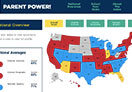
Arizona ranks fifth in the nation for school choice, according to the Center for Education Reform, a think tank in Washington, D.C., that rates states on what the center calls “parent power,” or access to quality options and information.

The center praises Arizona for scholarships for students with disabilities, a strong charter-school law, the availability of online learning, transparency and ease of obtaining information on choices, and the convenience of voting for members of the state’s 227 local school boards during the general elections in November.

In the Chandler district of 41,556 students, one-third are attending a school outside their home-school boundaries; that is 10,007 who live within CUSD and 3,877 who live outside the district. The schools with the most boundary exceptions are Perry High, with 935 students attending from outside its boundary, and Chandler High, with 912.

The district does not keep tabs on the number of students living in the district but attending a non-district school.

“There is no obligation from a family to notify the district that they are choosing a school outside of CUSD whether it be a nearby district school other than CUSD, private school or charter school,” district spokesman Terry Locke said.

In Tempe Elementary District, 2,511 of its 11,720 students live within the district but go to a school outside their attendance boundary, and 1,998 live outside the district but attend a district school.

In Kyrene School District, 3,768 of the 17,874 students live outside the district.

The trend also applies in the Tempe Union High School District. At Mountain Pointe High in Ahwatukee, for example, more than 50 percent of its roughly 2,600 students last school year were from outside Mountain Pointe boundaries.

Kara Kerwin, president of the Center for Education Reform, described Arizona as a “hotbed of reform.”

She said, “When parents have access to options and good information about schools, all schools do better. It’s a ripple effect.”

Kerwin, when asked why Arizona ranks fifth in the nation for parent power but ranks low nationally in academic achievement, said that only a small percentage of students are participating in choice.

“There’s much more work to be done,” Kerwin said. “On the parent-power index, Arizona ranks at 80 percent. That’s still not an A. … There’s a huge gap between access to good options, and a huge achievement gap for most of the children in Arizona.”

Among those families taking advantage of choice at open enrollment at CUSD on Jan. 13 was that of Sara Fried, of Chandler, who arrived at 6:45 a.m. that Monday. She wanted to enroll her son in kindergarten in CTA-Liberty, CTA-Goodman or Hancock Elementary, all of which score 10 out of 10 on the website, which calculates parental opinions, test scores and grades.

“We wanted something rated high academically,” she said.

She lives within the boundary of Bologna Elementary School, but that school scores only 4 out of a possible 10 on greatschools.org, despite high praise written on the site by some parents.

Another parent in line, who arrived Monday morning before the district’s doors opened, was Nitin Deshpalde, an engineer at Intel, whose daughter was being enrolled in kindergarten at Chandler Traditional Academy-Goodman. She currently is at Bright Beginnings.

“I’ve heard CTA expects students to be well-educated, well-rounded,” Deshpalde said. “I’ve heard it has a good curriculum and teachers who are good people who care about children.”

Also in line was Vidya Sreekantham, who planned to enroll her daughter in third grade at CTA-Independence and take her out of Bright Beginnings.

“Independence is a more rigorous curriculum than Bright Beginnings,” said Sreekantham, a scientist at Caris Diagnostics.

“I hear it’s a good school, and it’s a couple of blocks away.”

Susan Avery of Chandler chose San Tan Junior High for her son, who will be in seventh grade. If he stayed within his boundaries, he would go to Willis Junior High, and Avery was adamant that he would not go there.

Willis Principal Jeff Delp said in a Feb. 5 e-mail that many families choose to send their children to Willis for its safe learning environment and to participate in its blended learning Innovation Academy and its gifted program.

“We serve an ethnically, economically and academically diverse student population by emphasizing three core values, the first one being that Willis is a place where everyone must feel safe and valued,” Delp said.

Daily Headlines for February 7, 2014

Click here for Newswire, the latest weekly report on education news and commentary you won’t find anywhere else – spiced with a dash of irreverence – from the nation’s leading voice in school reform. 

STATE COVERAGE

ALABAMA

More Alabama students enrolling in private schools
Montgomery Advertiser, AL, February 7, 2014
More students are moving from public to private schools with the help of scholarships provided by groups that were able to raise the maximum amount of money allowed by Alabama law.

COLORADO

Colorado Springs charter school in turmoil over leadership, contracts
Colorado Springs Gazette, CO, February 6, 2014
A festering feud that some say boils down to differences of philosophy and others believe has turned nefarious is driving a wedge between board members of STAR Academy.

FLORIDA

Florida House speaker wants to use sales tax revenue for private school vouchers
Palm Beach Post, FL, February 6, 2014
Already calling for a “massive expansion” of school choice, House Speaker Will Weatherford shed more light Thursday on his plans for beefing up the state’s Tax Credit Scholarship program, a controversial voucher program begun under former Gov. Jeb Bush.

Leaders want to simplify school grades
Tallahassee Democrat, FL, February 7, 2014
Florida’s A-F grading system for schools should be simplified, but not suspended, House Speaker Will Weatherford said Thursday.

School district attempts to recoup charter funds
News- Press, FL, February 7, 2014
It’s been more than a year since a Richard Milburn School has operated in Lee County, yet the charter school corporation may still owe the school district a significant amount of money.

ILLINOIS

CPS continues to ease disciplinary policy
Chicago Tribune, IL, February 7, 2014
Chicago Public Schools officials said Thursday that they are starting to see success in efforts to dismantle a much-criticized zero-tolerance policy toward discipline and want to expand initiatives to reduce student suspensions to privately run charter schools.

Room for magnet and partnership school
Beacon News, IL, February 6, 2014
East Aurora’s magnet academy and Aurora University’s partnership school may serve similar academic purposes, but there are plenty of children to fill both schools’ slots, district officials say.

INDIANA

New state academic standards to be hashed out next week
Indianapolis Star, IN, February 7, 2014
A framework for Indiana’s new academic standards for K-12 students is expected to be hashed out next week.

Private school parents want to isolate their children
Letter, Indianapolis Star, IN, February 6, 2014
The state introduced vouchers a few years ago and it was suggested by a Star reader that we open vouchers to all, a suggestion that has been made before. What pro-voucher people don’t understand is that private schools don’t educate everybody.

MARYLAND

Maryland education needs fundamental reform
Commentary, Baltimore Sun, MD, February 6, 2014
“Maryland, No. 1 in education!” We’ve heard that boast ad nauseam over the last five years, every time Education Week releases its Quality Counts rankings. We hear it especially from the state’s political establishment, as it takes every chance it can to claim credit for this top ranking in the nation.

Test data ‘part of a story’ for teacher evaluations
Maryland Gazette, MD, February 6, 2014
State schools Superintendent Lillian M. Lowery said she thinks the “confusion and tension” in Maryland around the Common Core State Standards stems from how local school systems will use data from tests aligned with the standards.

MASSACHUSETTS

Building better schools requires concerted effort
Letter, South Coast Today, MA, February 7, 2014
The news of New Bedford’s newest under-performing school — a charter school — is bittersweet. Because, while it’s a shame that another school is not performing up to our rigorous standards, it also clearly shows that education solutions shouldn’t consist of sweeping problems under the proverbial rug by opening more schools and shifting kids around.

NEW YORK

Idea of Charging Rent for New York Charters Hits Wrinkle
Wall Street Journal, February 7, 2014
Mayor Bill de Blasio might want to think twice before he figures how much to charge charter schools for rent: If he charges too much, it could cost the city money.

Council Speaker Mark-Viverito coy on charter cuts
New York Post, NY, February 7, 2014
Council Speaker Melissa Mark-Viverito backed a city program last year that provided $32.5 million in city funds so a charter school in her East Harlem district could build a new home.

Fair Pay for City Teachers
Letter, New York Times, NY, February 7, 2014
Re “Teachers’ Push for Back Pay May Pinch City” (front page, Feb. 5): The question for New York City is not whether it can afford to pay competitive salaries to the teachers of the city’s more than one million schoolchildren, but whether it can afford not to.

NORTH CAROLINA

Cabarrus teachers torn over giving up tenure for $500 raise
Charlotte Observer, NC, February 7, 2014
On Feb. 10, the Cabarrus County school board will consider approving a set of standards that will determine which 25 percent of its teachers will get a pay raise under a new state law. But many teachers are grappling with whether they’ll take the state’s deal if it’s offered to them.

Charter school leaders vow to fight closing
WRAL, NC, February 6, 2014
Jane Miller has every intention to keep Pace Academy’s doors open, but the state Board of Education has other plans. The body unanimously voted Thursday not to renew the Carrboro public charter school’s charter.

School Board abandons public schools
Editorial, Winston-Salem Chronicle, NC, February 6, 2014
The Winston-Salem/Forsyth County Board of Education won’t be among the scores of North Carolina school boards adding their names to a legal challenge to the state’s controversial plan to allocate millions of public education dollars to a private school voucher program for “poor” students.

State board approves alternatives to Read to Achieve
Mooresville Tribune, NC, February 6, 2014
Members of the State Board of Education on Thursday approved multiple alternative assessment methods for determining third grade reading proficiency.

State Board of Education unanimously votes not to renew PACE
News & Observer, NC, February 6, 2014
The State Board of Education voted unanimously Thursday not to renew a struggling charter school based on the recommendation of the state’s charter school advisory board.

OHIO

Kasich floats ‘deregulation’ for schools
Columbus Dispatch, OH, February 7, 2014
Gov. John Kasich used the word deregulation yesterday to describe how he might bring about some of the changes he seeks for Ohio schools.

OKLAHOMA

Planned education rally angers lawmakers
The Oklahoman, OK, February 7, 2014
Two state lawmakers are chastising Oklahoma school districts that are planning to give teachers and students a day off so they can lobby for more education funding at the state Capitol.

OREGON

Portland Association of Teachers will alienate public by striking over minor disagreements
Editorial, The Oregonian, OR, February 7, 2014
If Portland teachers go on strike, they will send tens of thousands of families into turmoil. The community could live with that turmoil – even support it — if it were the only way to prevent intolerable conditions in the city’s classrooms.

PENNSYLVANIA

Charters to cost School District $25 million more than anticipated
Philadelphia Inquirer, PA, February 7, 2014
The Philadelphia School District has seen its charter school costs soar at the same time it is grappling with a deep financial crisis.

Easton Area School Board charter school hearing gets heated
Lehigh Valley Express Times, PA, February 7, 2014
A charter school hearing in front of the Easton Area School Board on Thursday night was often emotional and occasionally contentious.

TENNESSEE

Can tests scores be trusted to evaluate charter schools?
Nashville Ledger, TN, February 6, 2014
As the Tennessee Legislature prepares to debate a host of proposed charter school bills, opponents are tapping into research that claims charters often use questionable tactics to skew test scores, among them “cherry-picking’’ high-performing students while “counseling out,’’ those who test poorly.

UTAH

Bill would give enrollment preference to grandchildren of charter school founders
Desert News, UT, February 6, 2014
Lawmakers Thursday gave their first nod of approval to a bill that would make it easier for the grandchildren of a charter school’s founder to attend that school.

VERMONT

Performance lackluster on state tests
Burlington Free Press, VT, February 6, 2014
Girls from higher income families are the top performers at Vermont schools and low-income boys are marooned at the bottom.

WISCONSIN

Charter schools continue to expand in Fox Cities
Appleton Post Crescent, WI, February 6, 2014
As lawmakers continue to debate a proposal that could greatly expand independent charter schools in Wisconsin, plans are in place to increase public school-based charter options in the Fox Cities.

New school voucher legislation would only further Wisconsin’s war on education
Editorial, Badger Herald, WI, February 6, 2014
Last year, Wisconsin essentially expanded the geographical scope of its already- existing school voucher program by creating a new statewide school voucher program alongside the older program. Even so, the new statewide program was the result of legislative negotiation and compromise.

ONLINE LEARNING

47 of 69 Louisiana public school systems are deemed technology-ready
Times Picayune, LA, February 6, 2014
Amid an initiative by President Barack Obama to improve Internet connectivity in public schools, the Louisiana Education Department on Wednesday said 47 out of the state’s 69 school system’s now meet minimum standards of technology readiness.

Florida Virtual School CEO to retire
Orlando Business Journal, FL, February 6, 2014
Julie Young, president and CEO of Florida Virtual School, has announced her retirement after 17 years at the helm.

Poor Performance Could End Tennessee’s Test Of First Online Public School
WREG, TN, February 6, 2014
Second-grader Casey Ubiarco iis one of the 300 West Tennessee students enrolled in Tennessee Virtual Academy, also known as TNVA. Casey logs into classes daily from home using a laptop, and the teachers go over lessons just like they would in a classroom.

Williamson County schools, public and private, boost use of technology in classroom
The Tennessean, TN, February 7, 2014
Randy Tucker, the interim head of school at Battle Ground Academy, recently informed parents that the iPad will be the primary tech tool in all grades at BGA beginning with the 2014-15 school year, and not just for students.

Digital Learning Toolkit Guides Innovators

Toolkit provides direction for those on the frontlines of the digital learning revolution

CER Advisory
Washington, DC
February 7, 2014

(WASHINGTON, DC) –The Center for Education Reform (CER) released today The Facts About Digital and Blended Learning, a toolkit aimed to help change public discourse and ensure public acceptance of the widespread benefits of technology and innovation in education.

The Facts About Digital and Blended Learning toolkit provides:

  • Answers to dispel the eight most common myths on digital learning;
  • New public opinion data to help guide public discourse;
  • Tips for working with the media, policymakers and community leaders to set the record straight; and
  • Connections to resources and organizations working to disrupt, transform and accelerate learning now.


The toolkit drives home key points and lessons learned in The Media and The Digital Learning Revolution, a report illuminating key trends in the news coverage of digital and blended learning modalities while offering strategies to help grow public understanding of these important innovations transforming student learning.

Click here to read The Facts About Digital and Blended Learning toolkit.