







Sign up for our newsletter

2014 Digital Learning Toolkit

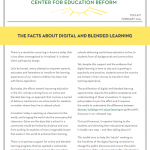
The Facts About Digital and Blended Learning toolkit arms online learning supporters with the realities about digital and blended learning, fights common myths about digital learning, offers suggestions for working with the media, and provides connections to some of the best digital learning resources and organizations.

Download or print your copy of The Digital Learning Toolkit: The Facts About Digital and Blended Learning.



Equity Plus Reform

As is expected but not always evident of highly regarded newspapers, the Washington Post brought to light a serious issue that not only pertains to the District of Columbia charter schools but charter schools across the country.

Late last week, the DC Mayor’s Office released a report that revealed DC charter schools are receiving significantly less per-pupil funding than traditional public schools. The report found that in spite of the spirit of current laws that call for funding equity, traditional schools still receive significantly more money for both educational and administrative purposes.

Although this particular report could not adequately assess facilities funding, it has been well documented that charter schools nationwide face facility-funding shortfalls, often due to restrictive state laws.

Overall, funding disadvantages present an unnecessary distraction for charter administrators whose main goal is to improve the educational landscape in their communities.

To be sure, the report’s recommendations indicate a good-faith effort to rectify the funding gap by restructuring how public schools receive education dollars. The Post Editorial Board views the report’s Friday evening release as a way to lessen expectations, but it remains to be seen whether these recommendations translate into action.

Ensuring funding equity is important, but it’s equally critical to focus on the type of systemic reform that incentivizes more and better opportunities for students. The DC charter school law is no doubt comparably strong, but as this report indicates, there’s always more work to be done.

Daily Headlines for February 6, 2014

Click here for Newswire, the latest weekly report on education news and commentary you won’t find anywhere else – spiced with a dash of irreverence – from the nation’s leading voice in school reform. 

NATIONAL COVERAGE

Ravitch unloads on school ‘deform’
Washington Post, DC, February 5, 2014
Diane Ravitch, the education historian who has led a de facto national movement against current education policies — including standardized testing, charter schools, vouchers and teacher evaluations tied to student test scores — said Tuesday evening that “the White House’s obsession with data is sick.”

STATE COVERAGE

ALABAMA

In Alabama, school choice is commonplace and constitutional
Commentary, The Huntsville Times, AL, February 5, 2014
On Thursday, February 6, a state judge will hear arguments in a case challenging the Alabama Accountability Act, an education reform measure passed by the state legislature last year, and in particular two school choice programs it created.

Report reveals special education graduation rate gap
Dothan Eagle, AL, February 5, 2014
A new report from the U.S. Department of Education shows significant gaps between the graduation rate for all students and the graduation rate for special education students in Alabama.

ALASKA

Education ‘voucher’ amendment passes Senate Finance Committee
Anchorage Daily News, AK, February 5, 2014
The Senate Finance Committee moved the proposed school-voucher constitutional amendment Wednesday with three members withholding a recommendation to the full Senate.

ARIZONA

Charter schools to state DOE: ‘Stop withholding dollars’
KPHO, AZ, February 5, 2014
This school year, some 3,200 Valley-area charter school teachers haven’t been paid what they should have. So said a Maricopa Co. superior judge this week.

CALIFORNIA

Dispute over new rules for Santa Rosa charter schools
Press Democrat, CA, February 5, 2014
Santa Rosa City Schools is overhauling enrollment policies for the district’s four dependent charter schools to try to increase diversity, but the officials at the first school affected are crying foul that their input was not sought before changes were made.

How a ‘Sacrificial Lamb’ Charter School Plans to Fight Back
Voice of San Diego, CA, February 5, 2014
Right now in San Diego, more than 1,000 families are on waiting lists to enter charter schools. Many of these families live in lower-income neighborhoods with under-performing schools. Others believe their children would thrive in a nontraditional learning environment.

With hostility over, parent-trigger school strives to improve
Hechinger Report, February 6, 2014
The alleged vandalism incident, as described in a police report filed by the San Bernardino County Sheriff’s Victor Valley station, gives a glimpse into just how contentious the parent-trigger process became in the small Mojave Desert town of Adelanto, Calif., a city of 32,000 people about 90 miles northeast of Los Angeles.

COLORADO

Lawyer Brad Miller rejects label of charter school crusader
Loveland Reporter-Herald, CO, February 6, 2014
Colorado Springs lawyer Brad Miller said Tuesday he thinks the Thompson School District community has widely mischaracterized him as a charter-school crusader, when, in reality, he plans to support Thompson in any endeavor and without bias.

DELAWARE

A nurturing environment for my children
Letter, Journal News, DE, February 6, 2014
In honor of the recent observed National School Choice Week (Jan. 26-Feb. 1), I’d like to share why I chose charter school education for my children. Both of my daughters – one in sixth grade and one in kindergarten – attend Odyssey Charter School, and both are thriving.

DISTRICT OF COLUMBIA

A bad deal for D.C. charter schools
Editorial, Washington Post, DC, February 5, 2014
A COMPREHENSIVE new study on school funding in the District validates the long-held suspicion that public charter school students have not been funded equitably compared with their peers in the traditional school school system.

FLORIDA

Bill targeting at-risk middle school students gets early approval
Tallahassee Democrat, FL, February 6, 2014
Florida lawmakers are working to create an “early-warning system” for middle-school students at risk of falling off track.

Lawmaker bemoans lopsided PECO spending
Florida Current, FL, February 5, 2014
A long simmering dispute buried within Gov. Rick Scott’s proposed education budget that involves Public Education Capital Outlay dollars and charter schools boiled over a bit on Wednesday.

State education policies called racially discriminatory
Florida Current, FL, February 5, 2014
A state senator, a civil rights attorney and the mother of a young student said Wednesday theFlorida Department of Education is sending a bad message to public school children and their teachers by having lower achievement goals in reading and math for minority students.

GEORGIA

Local Group Plans to Petition School Board for Charter School
WJBF, GA, February 5, 2014
A group of Columbia County teachers and local fine arts directors sent a letter of intent to the Columbia County Superintendent this past week. They plan to petition the school board in hopes of building Columbia County School for the Arts, a K -12 school that would infuse all aspects of fine arts including music, dance, and foreign language.

ILLINOIS

Charter group wants to open kindergarten to 8th-grade school
Chicago Daily Herald, IL, February 5, 2014
The Elgin Math and Science Charter School Initiative will conduct a community forum Tuesday to answer questions about the group’s charter school proposal.

KANSAS

Report warns of achievement gap for low-income students
Topeka Capital -Journal, KS, February 5, 2014
A new report by a national foundation highlights gains in reading skills among children, but says Americans should be concerned that students from lower-income families are making slower strides.

KENTUCKY

Kentucky Board of Education considers standardizing evaluation of teachers and principals
Lexington Herald-Leader, KY, February 5, 2014
Kentucky has as many teacher and principal evaluation systems as there are school districts, state education officials said Wednesday.

LOUISIANA

Charter School Model Spreads Across Louisiana
WWNO, LA, February 5, 2014
New Orleans will soon become the first city with an all-charter school district, but the education landscape looks much different across the rest of Louisiana. Many parishes have few or no charter schools, but that’s starting to change.

Charter school plan rankles Iberville school superintendent
The Advocate, LA, February 5, 2014
The construction of what is expected to become the first charter school in Iberville Parish has the parish’s school superintendent on edge and voicing concerns about what he sees as a potential threat to the public school system.

Gov. Bobby Jindal looking at tweaks to teacher tenure law
Shreveport Times, LA, February 5, 2014
Gov. Bobby Jindal signaled Wednesday that he’s willing to make changes to his 2012 law that made it tougher for teachers to reach the job protection status of tenure.

Louisiana’s Education Reform May be Due for a ‘Do Over’
Opinion, WWNO, LA, February 5, 2014
It’s been nearly two years since Louisiana’s Legislature passed a package of highly-controversial education reforms. Since then, there has been confusion at the local school level and angst for teachers — especially over changes to teacher pay and tenure under a new evaluation process.

MARYLAND

City teachers upset about mail clause in proposed contract
Baltimore Sun Blog, MD, February 5, 2014
On any given day, a teacher’s mailbox is usually chock full of messages: leaflets advertising professional development, discount coupons for office supplies, publications from curriculum companies, and book club invitations.

MICHIGAN

Snyder pitches funding for new teacher evaluations, ‘distressed’ districts
Detroit News, MI, February 5, 2014
Michigan is one step closer to creating a statewide teacher evaluation system after Gov. Rick Snyder called for $27.8 million in the next state budget to fund evaluator training, a new tool and changes to state data systems.

MISSISSIPPI

Teacher pay raise passes House
Desoto Times, MS, February 6, 2014
Mississippi House members voted 86-26 Wednesday to pass House Bill 504 which raises teacher pay by about $4,250 over four years.

NEW MEXICO

NM must build on its school-reform successes
Editorial, Albuquerque Journal, NM, February 6, 2014
New Mexico has made important K-12 education strides in the past three years, improving the statewide graduation rate from 63 percent in 2011 to 70.3 percent last year, slashing the Anglo-Hispanic graduation gap in the largest district from 19.8 percentage points in 2008 to 10.5 percentage points in 2013, and ranking No. 1 in the nation for Hispanic student participation and success on Advanced Placement tests.

NEW YORK

The Bill comes due for charters
Opinion, New York Daily News, NY, February 6, 2014
Bill de Blasio’s campaign against charter schools is underway. Last week, Schools Chancellor Carmen Fariña announced plans to “reprogram” $210 million in charter school capital funding for other, not yet specified priorities.

The Troubling Teacher Union Strategy
Huffington Post, February 5, 2014
America’s teacher unions are embracing a strategy that could diminish their profession and, over time, undermine education. By engineering a no-confidence vote in New York State Education Commissioner John King and retreating from prior commitments to high standards and accountability, the union risks losing public support for schools.

Waiting for Super Andrew
Editorial, New York Post, NY, February 6, 2014
‘There is room for everybody,” public charter schools and public traditional schools alike, Lt. Gov. Robert Duffy said Tuesday, speaking for the governor.

NORTH CAROLINA

Teachers go red for tenure
Gaston Gazette, NC, February 5, 2014
As president of the Gaston County chapter of the N.C. Association of Educators, Gibson encouraged local teachers to support a statewide initiative called Day of Action.

OREGON

Parents question teachers about attendance options for students
Mail Tribune, OR, February 5, 2014
About 180 community members packed an hourlong forum Tuesday evening to hear teachers describe options they will have for their children enrolled in a Medford school if a strike is called.

Portland Public Schools teachers vote to authorize a strike, walkout set for Feb. 20
The Oregonian, OR, February 5, 2014
Portland Public Schools teachers have authorized the first strike in the history of Oregon’s largest school system and set a walkout date: Feb. 20.

PENNSYLVANIA

Spartansburg Community Considering Charter School
Your Erie, PA, February 5, 2014
Led by the group Save Our Schools, the Spartansburg community is thinking of opening a charter school in the area.

RHODE ISLAND

McKee says McLaughlin’s stance on school ‘will not be forgotten’
Valley Breeze, RI, February 6, 2014
Mayor Daniel McKee is accusing state Rep. Jim McLaughlin of reveling in the disruption created by the shutdown of the construction site of the new Blackstone Valley Prep charter school on Broad Street.

TENNESSEE

Charter school accused of unethical recruiting
WMC-TV, TN, February 5, 2014
While Gordon Elementary’s enrollment has eroded over the years, enrollment at nearby charter schools Klondike Preparatory Academy and Humes Prep is on the rise.

TEXAS

Deion Sanders’ Bitter and Violent Quest to Retake Control of His Crumbling Charter School
Dallas Observer, TX, February 6, 2014
Sure, he was a celebrity, and sure, the school was named after him. But from where Vera Cole sat, Mr. Prime Time couldn’t have been more down to earth.

UTAH

Pleasant Grove autism charter school filling quickly
Daily Herald, UT, February 5, 2014
Less than a month after breaking ground, a special charter school catering to the educational needs of autistic children has already filled its lower grades.

VIRGINIA

School turnaround not a quick fix
Tidewater News, VA, February 5, 2014
Franklin City School Board Chairwoman Edna King said that growth is what the Virginia Department of Education is looking for.

WASHINGTON

Fast-growing school districts seek more money from voters
Seattle Times, WA, February 5, 2014
Several districts in King and Snohomish counties will be asking voters to pass bond measures next Tuesday to accommodate rising enrollment.

Private school for disadvantaged students will become state’s first charter school
KIRO Seattle, WA, February 5, 2014
A non-tuition private school serving students who are homeless or who have suffered abuse or poverty, will become Washington’s first charter school when they open in the fall of 2014.

WISCONSIN

Stevens Point Area Public School Board’s destructive dysfunction keeps educational initiatives on hold
Editorial, Stevens Point Journal, WI, February 6, 2014
After some four hours of bickering and debating and talking in circles, the Stevens Point Area Public School Board on Monday night finally turned its attention to a proposal for a new expeditionary charter school.

ONLINE LEARNING

Aspire charters planning to expand ‘blended learning’ model
LA School Report, CA, February 5, 2014
Aspire Public Schools, a nonprofit charter school operator with 12 schools chartered through LAUSD, announced this morning that it will expand its blending learning curriculum to all of its elementary schools in the Los Angeles region by the end of the 2015-16 school year.

‘Blizzard bags’ give kids school work during calamity days
Columbus Dispatch, OH, February 6, 2014
Westerville second-graders woke up yesterday to find that school was canceled again.

Digital Education
Valley Morning Star, CA, February 5, 2014
The school district is currently involved in a digital classroom initiative. This allows students in specific classrooms to use their own digital devices such as iPads and iPhones in class for their school work.

Digital Learning Day Ignites the Blended Flame
Commentary, Ed Surge, February 5, 2014
As part of the 3rd annual Digital Learning Day, educational leaders from all over country descended upon the Library of Congress in Washington D.C. on February 5th.

District to Explore Digital Opportunities
The Missourian, MO, February 5, 2014
Union School District Superintendent Steve Bryant called for the Missouri Chamber of Commerce and Industry to lobby for the governor’s budget to help promote virtual learning opportunities.

Exploring digital learning is changing education
WEAU 13, WI, February 5, 2014
Visiting a ski-hill during school hours, taking a field trip to a cheese factory or learning stories in several different languages all in one day, all of that was possible for many kids in the area and across the country, as learning communities, businesses and school districts came together for the National Digital Learning Day.

State House passes Aument’s bill rebooting online learning
Lancaster Newspapers, PA, February 5, 2014
The state House on Wednesday passed legislation that embraces the fact that learning is moving beyond the four walls of Pennsylvania’s classroom.

Two Virtual Schools Move Forward, Early Voting Fails
The Free Press, ME, February 5, 2014
This week the Maine Charter School Commission held public hearings for two so-called “virtual schools” after voting unanimously to advance the applications of Maine Connections Academy and Maine Virtual Academy.

Virtual School on Snow Days
Debate, New York Times, NY, February 5, 2014
While snow days conjure images of sledding, sleeping and hot chocolate, they can also compromise education goals. Especially when it snows, and snows. And snows.

Obama’s Education Fibs

Jason L. Riley, Wall Street Journal

Sadly, people in the U.S. and abroad have become accustomed to the fact that President Obama stretches the truth with some regularity, whether the topic is his health-care law, the terror attacks in Benghazi or “red lines” in Syria. In his interview with Fox News’s Bill O’Reilly on Sunday, the president offered up another whopper.

Asked by Mr. O’Reilly why he opposed school vouchers that “level the playing field” and “give poor people a chance to go to better schools,” the president replied, “Actually, every study that’s been done on school vouchers, Bill, says that it has very limited impact if any.”

Mr. Obama said that the means-tested voucher programs in Milwaukee and Washington, D.C, “didn’t actually make that much of a difference,” and added, “As a general proposition, vouchers have not significantly improved the performance of kids that are in these poorest communities.”

In fact, study after study using gold-standard random-assignment methodology has shown that vouchers not only improve student outcomes but have the biggest impact on low-income minorities. Here’s a sampling:

A 2013 study by Matthew Chingos of the Brookings Institution and Paul E. Peterson of Harvard found that school vouchers boost college enrollment for blacks by 24%. A 2006 evaluation of a school choice program in Dayton, Ohio, found that “after two years, black voucher students had combined reading and math scores 6.5 percentile points higher than the control group.” A 2010 study in the Journal of Educational and Behavioral Statistics found that voucher recipients had math scores 5 points higher than the control group after just one year. A 2008 study of vouchers in Charlotte, N.C., found that “after one year, voucher students had reading scores 8 percentile points higher than the control group and math scores 7 points higher.”

What about the voucher programs in Milwaukee and Washington that Mr. Obama dismissed as ineffective? A 1998 Brookings Institution study found that “After four years, voucher students had reading scores 6 Normal Curve Equivalent (NCE) points higher than the control group, and math scores 11 points higher. NCE points are similar to percentile points.” And the Obama administration itself released a report on the D.C. voucher program in 2010. “The students offered vouchers graduated from high school at a rate 12 percentage points higher (82 percent) than students in the control group (70 percent), an impact that was statistically significant at the highest level,” according to a summary. “Students in three of six subgroups tested showed significant reading gains because of the voucher offer after four or more years.”

According to the president, these studies don’t exist. Nevertheless, the non-existent reports and summaries I quote above can be found on the website of the Friedman Foundation for Educational Choice at http://www.edchoice.org/Research/Gold-Standard-Studies. The preponderance of evidence shows clear benefits for students who receive school vouchers—whether the measure is test scores, graduation rates or life outcomes. The research is not mixed or inconclusive.

Mr. Obama’s problem with vouchers is not that they don’t work. Rather, it’s that they work all too well and thus present a threat to the education status quo and the teachers unions who control it. Democrats like Mr. Obama are deeply dependent on union support–so dependent that they will sometimes tell bald-faced lies about school-choice research on national television and hope that no one notices.

Daily Headlines for February 5, 2014

Click here for Newswire, the latest weekly report on education news and commentary you won’t find anywhere else – spiced with a dash of irreverence – from the nation’s leading voice in school reform. 

NATIONAL COVERAGE

Obama smacks Bill O’Reilly on school voucers
Washington Post Blog, DC, February 5, 2014
The Obama administration has steadfastly opposed vouchers, which use public money for families to pay for private school tuition, even while it has supported other reforms that critics say are leading to the privatization of public education.

The Education Revolution: Breaking the Status Quo
Column by Kevin P. Chavous, Huffington Post, February 4, 2014
In the early 1800s, Prussia created a top-down model of education to educate the masses with an emphasis on quantity not quality. This same model was imported to the United States in the mid 1800s, and now 150 years later, our country’s education system continues to teach children in the same form, fashion and formula created generations ago.

STATE COVERAGE

CALIFORNIA

Charter seeks to expand
Santa Maria Times, CA, February 5, 2014
About 22 parents and other attendees stood in a showing of support for Trivium Charter School at a Lucia Mar Unified School District board meeting Tuesday.

Some charter schools may not get bond money
Fox5 San Diego, CA, February 4, 2014
When voters passed Prop. Z in 2012, they were under the impression the money would go to improve schools around San Diego, but two local school board members are putting forth a plan that establishes some guideline that could exclude some charter schools from getting any of the cash.

Walton group funds more charter schools in L.A. than elsewhere
Los Angeles Times, CA, February 5, 2014
Los Angeles charter schools have been the largest recipients of funding from the foundation associated with the family that started Wal-Mart, according to figures released Wednesday.

FLORIDA

Fight for educational equality goes on
Column, Tampa Bay Times, FL, February 5, 2014
A national policy report card released by StudentsFirst in January gives Florida education policies high marks in many areas. It also outlines areas where Florida needs to improve — specifically the areas of school choice and spending wisely.

Hernando teachers union proposes performance-based pay for all
Tampa Bay Times, FL, February 4, 2014
Hernando County teachers have long received pay raises based on their experience. It’s been simple: Survive another year, jump a step on the salary schedule.

Pasco School Board approves 15-year contract with Pepin Academies
Tampa Bay Times, FL, February 4, 2014
A new charter school that faced early problems with its application has won a 15-year contract to open in Pasco County in the fall. But the lengthy agreement comes with a caveat that the school will have obtained financing for a permanent new building.

School superintendents tell Gov. Rick Scott that school districts need more money
Miami Herald, FL, February 4, 2014
Gov. Rick Scott spent the past week promoting his “historic” proposal to boost education spending.
In a meeting Tuesday with Scott, about 30 school superintendents did all the talking.

GEORGIA

Cherokee Charter high school gets the boot
Cherokee Ledger, GA, February 5, 2014
Cherokee Charter Academy’s fledgling high school program will not survive after the end of this school year — it was decided Jan. 27.

ILLINOIS

CPS changing assessment test for selective-enrollment high schools
Chicago Tribune, IL, February 5, 2014
Every year, getting into Chicago’s most competitive public high schools is a gut-wrenching, high-stakes process for many students and their parents.

INDIANA

Choose school wisely, hold schools accountable
Opinion, NW Times, IN, February 5, 2014
Ambassador Christian Academy in Gary, which has 257 students using Choice Scholarship Program vouchers — the highest in the state — is an F school under Indiana’s A-F grading system for school accountability.

Make vouchers available to all students
Opinion, Indianapolis Star, IN, February 4, 2014
I have read all the articles about the increased use of vouchers to attend private schools with utter amazement at the narrowness of the debate. As a parent who sent my two boys to private Catholic grade schools and high schools, I think the argument could be made that every school-age child attending a private school should receive a voucher!

LOUISIANA

Parents exploring charter school option in Lafayette
The Advocate, LA, February 4, 2014
The lack of racial diversity at her daughter’s school drew Robin Thomas to a meeting Tuesday to learn more about Willow Charter Academy, one of three new elementary charter schools set to open in Lafayette Parish in August.

MASSACHUSETTS

Despite state probation, parents back charter school
South Coast Today, MA, February 5, 2014
The state put the Global Learning Charter Public School on probation last week but parents at a meeting Tuesday night said they believe their children are getting a good education.

MICHIGAN

Michigan Aims to Aid Shrinking Schools
Wall Street Journal, January 4, 2014
Michigan’s governor plans to propose new school funding from the state’s nearly $1 billion surplus, including aid for districts struggling with enrollment declines amid competition from charter schools and other districts, officials said.

MISSISSIPPI

Legislature briefs: Inspection stickers, charter schools, appointed school superintendents
Jackson Clarion Ledger, MS, February 5, 2014
Charter schools could decide whether their employees could participate in the state Public Employee Retirement System under HB 444, passed to the full House on Tuesday.

Republican pay package fails teachers
Editorial, Sun Herald, MS, February 4, 2014
At least Democrats in the Mississippi Legislature are honest about giving every public school teacher in the state a pay increase with no strings attached. Republicans strike us as less than honest.

NEW YORK

A Call to Ignore Exam Results When Evaluating Educators
New York Times, NY, February 5, 2014
A year after a switch to new standardized tests for public school students caused passing rates to plummet, leaders of both political parties in the New York Legislature on Tuesday called on the state to back away from plans to use those exams to grade teachers.

Cuomo expresses support for charter schools
New York Post, NY, February 5, 2014
Charter schools, under siege by the de Blasio administration, received a rousing show of support Tuesday from the Cuomo administration, which declared that there should be “room for everybody” when it comes to improving education.

De Blasio names charter schools advocate as deputy mayor
New York Post, NY, February 5, 2015
Mayor de Blasio tapped Children’s Aid Society CEO Richard Buery Jr. as his fourth and final deputy mayor Tuesday — even as City Hall mulls booting the group’s charter school from a public building.

Delay Sought in Key Portion of New York State’s Evaluation of Teachers
Wall Street Journal, February 5, 2014
New York state lawmakers on Tuesday pulled their support from a key part of new teacher evaluations, saying schools should get more time to implement tough new academic standards before teachers are held accountable for students’ results.

Don’t take charter funds for pre-K
Editorial, AM New York, NY, February 4, 2014
The battle has begun. Schools Chancellor Carmen Fariña has said the city will divert $210 million intended for charter schools to pay for prekindergarten seats.

New York’s top politicians join together to delay Common Core school tests
New York Daily News, NY, February 4, 2014
The coordinated effort by Republicans and Democrats in New York’s Assembly and Senate is a rare show of bipartisan unity from lawmakers who have been bombarded with complaints from parents around the state about the tests.

Our common chore
Opinion, New York Daily News, NY, February 4, 2014
Joining an epidemic of spinelessness on the Common Core education standards, Assembly Speaker Sheldon Silver and Senate leaders Dean Skelos and Jeff Klein have cast their lot with those who would pause the standards’ full implementation for two years.

NORTH CAROLINA

Applications pour in for private school vouchers
WRAL, NC, February 4, 2014
Three days after North Carolina began taking applications for the state’s new school voucher program, hundreds of families have entered the lottery, hoping to get the state to pick up part of the cost of private school tuition.

Political war isn’t making schools better
Editorial, Fayetteville Observer, NC, February 4, 2014
North Carolina’s teacher-tenure rules were weak. They offered some protection to teachers, but couldn’t deflect basic issues like incompetence, immorality and insubordination.

Unhappy side to NC vouchers: Society stops looking out for the neediest
Opinion, News & Observer, NC, February 5, 2014
Now that North Carolinians can apply for vouchers, the impulse to think they will save education is a natural reaction to a crisis: Public school systems are failing millions of children. Much of this failing is a direct result of two unprecedented difficulties.

OHIO

There must be consequences for those found to have engaged in school-attendance fraud in Columbus city schools
Editorial, Cleveland Plain Dealer, OH, February 4, 2014
The well-orchestrated attendance-fraud scandal in the Columbus City School District outlined in a recent report by Ohio Auditor Dave Yost is outrageous, infuriating and possibly criminal.

PENNSYLVANIA

Three Pittsburgh schools named STARs for high scores
Pittsburgh Post-Gazette, PA, February 5, 2014
Fourth-grader Olivia Russell thinks it’s “awesome” her school, Pittsburgh Whittier K-5 on Mount Washington, has been named a STAR school for the second year in a row, one of only three schools districtwide honored for academic growth.

RHODE ISLAND

The Education of Gina Raimondo
Review & Outlook, Wall Street Journal, February 5, 2014
It isn’t easy being a reform Democrat these days. Witness the decision last week by Rhode Island Treasurer Gina Raimondo, heretofore a hero of pension reform, to buckle under pressure from the teachers union and dump a hedge fund run by a supporter of education choice.

TENNESSEE

Teachers union reverses stance on tying learning gains to evaluations
The Tennessean, TN, February 5, 2014
Tennessee’s largest teachers union has turned against the policy of including student learning gains in the evaluation of teachers, a flip that shows its growing discomfort with a major Race to the Top reform.

Educators propose charter school
The Ashland City Times, TN, February 5, 2014
A Cheatham County Central High School teacher and a former Cheatham Middle School teacher have submitted a letter of intent to apply for a charter school in Cheatham County.

TEXAS

New charter school for Austin
Austin Weekly, TX, February 4, 2014
One of the seven charter schools approved last month by the Chicago Board of Education will be in Austin despite come community protests.

VIRGINIA

Senate backs bills to delay McDonnell school reforms
Richmond Times-Dispatch, VA, February 5, 2014
The Virginia Senate on Tuesday passed with bipartisan support several bills that effectively suspend key planks of former Gov. Bob McDonnell’s education reforms.

WEST VIRGINIA

Bill would limit time state BOE could take over schools
Register-Herald Reporter, WV, February 5, 2014
A bill in the House of Delegates would limit the State Board of Education to five years in a county where it has “taken over” the school system.

ONLINE LEARNING

Education Insider: Online lesson plans leave students cold
Columbus Dispatch, OH, February 5, 2014
Officials in the Olentangy schools had a plan the night of Jan. 28 when they canceled classes for a sixth time this school year: The students would make up the day online.

Maine lawmakers consider creating state-run virtual school
Portland Press Herald, ME, February 5, 2014
The proposal has bipartisan backing, but a provision to freeze approval of private virtual schools faces opposition from LePage administration.

Mentor schools, students see results with blended learning
The News-Herald, OH, February 5, 2014
While spiral notebooks and loose leaf paper are still present in the classrooms, seventh-graders at Mentor’s Ridge Middle School don’t fret about a backpack or a disorganized Trapper Keeper eating a handout. Instead, the students use school-owned iPads where most of their course work is accessible through education-specific applications or Google Drive, an online storage site for documents, files and pictures.

Northfield math teachers use iPads to flip classroom, help struggling students
Northfield News, MN, February 4, 2014
Hannah Amy stared down at her math problem set, unsure how to proceed. But instead of getting frustrated, skipping to the next problem or giving up on the homework all together, she simply raised her hand and asked her teacher for help.

What does digital learning look like in kindergarten?
The Birmingham News blog, AL, February 4, 2014
Ideas for digital learning are expanding daily in Mobile and Baldwin County schools, where teachers are integrating digital devices to the very youngest children.

NEWSWIRE: February 4, 2014

Vol. 16, No. 5

DIGITAL LEARNING IN THE NEWS. If the only newspaper a person ever reads is the Los Angeles Times, he or she would be inclined to think that students’ use of iPads is the most revolutionary classroom introduction since the chalkboard, and a substantial product of the digital learning revolution. But “digiformers” know that real innovation in the classroom is much more than new devices, and it’s the responsibility of the news media to cover it accordingly. That’s why CER Senior Fellow and president emeritus Jeanne Allen dug a little deeper in a new report that delves into how digital learning receives media coverage, and recommends how digital proponents should engage newspapers across the country. According to Allen’s findings, it behooves “digiformers” to engage local papers with a vested interest in what types of innovations are benefitting district schools and communities. Read the full report to find out other ways to ensure the positive spread of the digital revolution in the American press.

NOT JUST BIG CITIES. Much of the conversation surrounding charter schools tends to focus on improvements made in urban educational systems, but urban families aren’t the only ones in need of more choices. A new report sheds light on the underserved rural student population, which tends to have low graduation rates and more students living in poverty. With measures such as quality authorizing, flexible hiring practices to draw good teachers to rural areas, and equitable funding, charter schools have the potential to improve educational outlooks in rural areas. One of the primary benefits of school choice is a student can succeed regardless of zip code. With the right set of laws and policies, this promise can finally hold true for rural students.

AN UNACCEPTABLE GAP. Data from the U.S. Department of Education reveals unacceptably wide graduation gaps across the states between students with disabilities and their regular education peers. While large gaps pervaded across the South, such as special needs students in Mississippi who are 43 percent less likely to graduate when compared with traditional students, achievement gaps were found in several other states as well. Students with special needs comprise approximately 14 percent of the charter school population in the U.S.., which is comparable to the ratio in traditional schools, and could potentially grow as charters continue to expand at a steady, linear pace. Proposals to give special needs families much needed options, such as Senator Tim Scott’s (R-SC) CHOICE Act are positive steps, however the onus needs to be more on state lawmakers to implement solid choice programs for their constituents who require choices beyond the traditional system.

WEST COAST OFFENSIVE. A young reformer in California named Courtney Brousseau has set out to improve the educational experience of himself and his fellow students by petitioning for a system that rewards highly performing teachers.  Courtney says he’s had a number of great teachers throughout his schooling, and wants to advocate for a system that maintains quality teachers, and incentivizes others to make necessary improvements. These commendable efforts come amid a legal challenge in California where nine student plaintiffs are fighting to strike down constraining teacher hiring practices on the grounds that they impede their inherent right to a quality education. Current laws in California often allow for ineffective teachers to remain in classrooms without motivation to improve, and make it difficult to fire poorly performing teachers, something 86 percent of Americans would likely be against. In the meantime, we hope Courtney continues to serve as a force for positive change, and more students make their voices heard.

CHANGING THE CONVERSATION. Last week, the American Enterprise Institute (AEI) hosted an intense discussion on the benefits of choice and competition in education. After all, competition has always been a basic American principle, and should rightfully be extended to education. “Forget about ‘quality’ — all the regulators are trying to take ‘quality’ and make it their own, putting us into a little box,” CER president Kara Kerwin told fellow panelists and the audience, speaking of the need to change the conversation to focus on what makes students “successful” in learning. By focusing on policies with proven track records of lifting student outcomes, even if they don’t adhere to a certain set of rules and oversight, lawmakers end up placing the interests of students before the whims of special interests. And the public knows lawmakers aren’t putting student interests first; 69% of Americans believe elected officials are not doing a good job when it comes to education.

CELEBRATE INNOVATION. Don’t forget tomorrow is Digital Learning Day! Stay tuned on www.2024.edreform.com or follow us on twitter @edreform for new tools and data for ‘Digiformers.’

Rise of Student Reformers in California

I asked Courtney, a high school student and founder of Students Transforming Education (STE), what caused him to become active and work toward reforming tenure in California.  I figured I would soon hear a story about a horrible teacher, the kind you hear about on the news – that “bad apple” who does not care about his or her students, is lazy, and doesn’t help students achieve academic heights.

I was surprised to hear the exact opposite.  Courtney explained that his life had been changed for the better thanks to outstanding teachers.

“I have been extremely lucky to have amazing teachers and I have seen firsthand the impact a great teacher can have,” he said.  Courtney had been pushed and inspired to take part in extracurricular activities like Youth & Government.

He recognized how is own life was changed  the necessity for every student in the nation to have access to outstanding teachers.

The summer before his junior year, Courtney got to work on his very own organization, STE, to “transform” the system that keeps poorly performing teachers in place.  “After researching about the situation in California and talking with teachers, administrators, school board members and education reform advocates, I decided it was time some gets students involved.”  He created an online presence using his knowledge in website design, and made it easy for students like him to inform themselves about the issues and get involved.

For Courtney, that is what was important: students getting involved, and students using their voices to fight for a change in the system that would directly affect their lives and academic experiences.  High school students get a bad rap, in his view, for not being involved and not caring about the issues.

“Students are not given the same potential to voice their opinions,” he said.  But he and his organization are set out to transform that too.

Not only does STE strive for tenure reform, but also, on another level, hopes to show that students can take control of their academic futures and care about the system enough to enact change.  Perhaps it is those in the policy world who should be getting the bad rap for not listening enough to actual students.

The main vehicle that STE offers for students to get their voice heard and to do away with teacher tenure in California is through petitions.  Students challenging themselves to raise awareness and collect signatures, which now total over two thousand, are how STE’s goals are met.

Courtney and STE are to be commended for taking action and for the results they have achieved.  It is people like Courtney who provide the “boots on the ground” of education reform.  Courtney proves that grassroots activists, of any age across the entire country can get results.

The simple fact is that two thousand students (and counting) cannot be wrong.  Each one of those signatures represents a student with a story of a great teacher that changed their life for the better.  Each signifies the importance of establishing policies that put fantastic teachers in front of our nation’s students.

They deserve nothing less.  Each signature represents a student who may have not been given the opportunity to be educated by a stellar teacher, and that may have had a negative impact on the rest of their lives.

Next to parents, teachers are the most important influence in a child’s life, and it’s for this reason that teacher quality is of the utmost importance.  Teachers who are successful should be rewarded.  California uses seniority, not performance in the classroom to make layoff decisions, and student learning is not an integral part of teacher evaluations.  It is clear that education California needs transforming and needs reform.  I applaud, the efforts of Courtney and Students Transforming Education to put in place a system that favors quality educators, in the classroom.

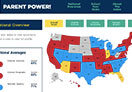
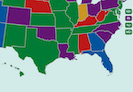
Learn more about Teacher Quality in CA in CER’s Parent Power Index.


Tyler Losey, Outreach Coordinator


School Choice: Encouraging New and Better Schools

As part of National School Choice Week, the American Enterprise Institute hosted a conference to discuss how policy, practice, and research can better facilitate and support vibrant school choice marketplaces. CER President Kara Kerwin moderated the first panel, “Framing the Debate: Lessons from market creation”, emphasizing the need to make each student successful by changing conversations on what quality means in the school choice movement to be centered around what works best for each individual student.

Daily Headlines for February 4, 2013

Click here for Newswire, the latest weekly report on education news and commentary you won’t find anywhere else – spiced with a dash of irreverence – from the nation’s leading voice in school reform. 

NATIONAL COVERAGE

Norton’s school-choice concerns driven by politics, not reality
Opinion, Washington Times, DC, February 3, 2014
There’s a tug of war taking place in the nation’s capital, and school-choice advocates should push forward with all deliberate speed.

Preschool Push Moving Ahead in Many States
New York Time, NY, February 4, 2014
Preschool is having its moment, as a favored cause for politicians and interest groups who ordinarily have trouble agreeing on the time of day. President Obama devoted part of his State of the Union address to it, while the deeply red states of Oklahoma and Georgia are being hailed as national models of preschool access and quality, with other states and cities also forging ahead on their own.

Vouchers and Charters and Magnets, Oh My!
National Journal, February 3, 2014
In case it escaped anyone’s notice, last week was National School Choice Week, as decreed by an organization of the same name and recognized by several governors and mayors.

STATE COVERAGE

ALABAMA

Judge to rule soon on private-school tax credits
Gadsden Times, AL, February 3, 2014
A federal judge said Monday that he will rule soon on whether to throw out a lawsuit challenging a new Alabama law that provides tax credits to families who move their children from failing public schools to private schools.

ARIZONA

New charter-school push in Phoenix core
Arizona Republic, AZ, February 3, 2014
A new group is investing $2.5 million toward an ambitious goal: Its leaders want to open 25 new A-rated charter schools in Phoenix’s urban core by 2020.

Judge blocks state’s bid to collect refunds from charter schools
Arizona Daily Star, AZ, February 3, 2014
State education officials have been blocked by a judge from taking nearly $5.9 million away from charter schools.

IDAHO

Top-down standards will hurt Idaho kids
Opinion, Idaho Statesman ID, February 4, 2014
The people of Idaho should determine how to best educate our children, rather than bureaucrats in Washington, D.C. Numerous federal programs have been sent out and become more onerous, such as No Child Left Behind (NCLB) and now Common Core, with the most extensive testing program yet.

ILLINOIS

Rauner’s charter school takeover
Chicago Sun-Ties, IL, February 3, 2014
Sarah Howard thought Bruce Rauner was an angel who would rescue her financially troubled, academically struggling charter school in East Garfield Park.

LOUISIANA

Looking for Common Core alternatives
The Advisor, LA, February 3, 2014
A group of state lawmakers is pursuing legislation that would take Louisiana out of the Common Core State Standards for public schools or at least put restraints on how those standards are implemented.

MARYLAND

Charter school savings
Letter, Baltimore Sun, MD, February 3, 2014
Commentator Bobbie MacDonald might also have mentioned that charter schools save a lot of money in the facilities solutions that they variously pursue, both in school system-owned buildings and elsewhere (“Don’t leave charter schools behind,” Jan. 28).

MASSACHUSETTS

State renews charter of Salem school
Salem News, MA, February 4, 2014
Massachusetts Education Commissioner Mitchell Chester has renewed the charter of Salem Academy Charter School for five more years.

MICHIGAN

Mich. lawmakers consider test options for Common Core assessments in schools
Detroit News, MI, February 4, 2014
State lawmakers don’t get to pick which test Michigan schoolchildren take when they transition into the world of online state assessments in 2015, but they do control the purse strings to pay for it.

NEBRASKA

OPS board members engage in spirited debate over charter schools
The Omaha World Herald, NE, February 4, 2014
A review of the Omaha Public Schools’ position on this year’s crop of education bills in the Legislature sparked a spirited debate on charter schools at Monday’s school board meeting.

NEW JERSEY

Teachers to see their grades under controversial evaluation system
The Record, NJ, February 3, 2014
The New Jersey department of education plans to give thousands of teachers statewide their first peek Tuesday at their scores under a new system that ties part of their evaluations to their students’ progress on annual state tests.

NEW YORK

City charter contingent heads to Albany
Capital New York, NY, February 3, 2014
About 1,400 New York City charter school parents and advocates will lobby state legislators in Albany on Tuesday as they prepare to do battle with the de Blasio administration.

De Blasio says he won’t allow co-locations for charter schools
New York Post, NY, February 4, 2014
Just days after Mayor de Blasio’s Department of Education proposed slashing $210 million from a charter-school construction fund, he said he also won’t allow charters to share space in public-school buildings going forward.

Helping to Build a School for the Poor, by Selling One in a Wealthier Area
New York Times, NY, February 4, 2014
Ife Lenard, a charter school principal in the South Bronx, could not help but smile as she ran her hand over an architectural model of the school that the Children’s Aid Society plans to build for her young students, and described its future pottery kiln, science labs and library.

Mayor de Blasio defends yanking $210M from charter schools
New York Daily News, NY, February 3, 2014
Even though the education capital plan expands funding for prekindergarten seats, the mayor didn’t specifically mention them when he defended his decision to cut charter school funding.

Save the Charter Schools
Editorial, National Review Online, February 4, 2014
Charter schools are a tiny crack in the Berlin Wall of the government-school monopoly, far short of the liberalized approach to education we would prefer. But they are a significant improvement that comes at very little cost, and Mayor de Blasio’s attack on them elevates the interests of his political cronies over those of the city’s children.

NORTH CAROLINA

Education group urges NC teachers to reject contracts
News & Observer, NC, February 3, 2014
A state education group is asking teachers to reject contracts that districts are offering them to replace tenure. Teacher tenure is being phased out under a new law, to be replaced with contracts of one- to four years. To start, school districts must offer 25 percent of their best teachers four-year contracts. Those teachers who sign give up their tenure, but receive pay increases of $500 a year for a total of $5,000 over the four years.

Nearly half of NC’s local school boards sign on as plaintiffs in school voucher case; several also reject teacher contracts
The Progressive Pulse, NC, February 3, 2014
Fifty-four school boards in North Carolina have now signed on to be plaintiffs in the NC School Board Association’s school voucher lawsuit, which calls into question the constitutionality of providing families with $4,200 annual taxpayer-funded scholarships to use at private schools.

Voucher system puts education focus where it belongs — on students
Opinion, Mt. Airy News, NC, February 3, 2014
In Today’s Mount Airy News, on this editorial and opinion page, we have a column called Tuesday Numbers, which is a periodic look at some of the numbers behind significant news stories and events that affect North Carolina residents. The information is supplied by NC Policy Watch, a decidedly liberal organization that often offers commentary on North Carolina politics.

OKLAHOMA

TPS charter school attitude evolves
Editorial, Tulsa World, OK, February 3, 2014
Tulsa Public Schools scored another coup this week, when it was announced the district will receive a $100,000 grant from the Bill & Melinda Gates Foundation to help implement its new district-charter school compact.

PENNSYLVANIA

City board urged to reject 3 charter schools
Pittsburgh Post-Gazette, PA, February 4, 2014
Pittsburgh Public Schools staff on Monday recommended that the school board reject three charter school applications.

Test scores show curriculum changes working at Hyndman charter school
Cumberland Times-News, PA, February 3, 2014
Pennsylvania schools have received new scores under an assessment measure called School Performance Profile.

SOUTH CAROLINA

Lowcountry Leadership Charter School overcomes opening obstacles with new building, happy in new home
Charleston Post Courier, SC, February 4, 2014
Creating this kind of student-centered learning environment is a point of emphasis for the new charter school that opened earlier this school year. Lowcountry Leadership Charter was the only new public school to open its doors in the Lowcountry this fall, and it had a less than ideal start.

SOUTH DAKOTA

Superintendents: Low pay hinders teacher hiring retention
Argus Leader, SD, February 4, 2014
Almost three-quarters of South Dakota school superintendents responding to a survey say they are convinced low pay is an important reason they are having trouble hiring and keeping teachers, according to a survey released Monday by groups representing school districts.

TENNESSEE

PACs spend big as TN legislators consider new school voucher system
The Tennessean, TN, February 4, 2014
As the Tennessee General Assembly considers adopting a new school voucher system, two out-of-state organizations in support of that cause are making a strong statement financially in the state legislature.

Nine charter school groups signal plans to apply to open in Nashville
The Tennessean, TN, February 3, 2014
Nine charter school operators have signaled interest in applying to open new schools in Nashville, including six that would locate in the south part of the city and another looking to take over a low-performing Metro school.

TEXAS

Charter school inequality?
Opinion, Houston Chronicle, TX, February 3, 2014
The topic of school finance is back in the pages of this paper with last month’s start of Round Two of the school finance trial after a yearlong delay.

ONLINE LEARNING

Fort Gibson school district pilots virtual school day; students completing assignments on snow days
KJRH-TV, OK, February 3, 2014
With so many snow days already this year, one local school district is coming up with a way to keep students learning outside the classroom.

NC lawmakers hear from company on virtual schools
WNTC, NC, February 4, 2014
One of the national companies vying to run a taxpayer-supported, online-only school in North Carolina is making a public pitch to state legislators.

Obama will speed up plan to connect public schools to the Internet
Los Angeles Times Blog, CA, February 4, 2014
President Obama is speeding up his pet project to connect American public schools to the Internet through an unusual combination of government investment and contributions from the private sector.

5 Innovative Ideas for School Choice Reform

Tyler O’Neil, The Christian Post

WASHINGTON – Education experts proposed five innovative ideas for reforming K-12 education to free up the system for dynamic growth through the small government “School Choice” movement.

One scholar claimed the current system which focuses on nebulous “quality” enables government bureaucrats to misuse parents and students. “Forget about ‘quality’ — all the regulators are trying to take quality and make it their own, putting us into a little box,” declared Kara Kerwin, president of the Center for Education Reform (CER), at The American Enterprise Institute (AEI) on Thursday. Kerwin argued that, instead of “quality,” education reformers should focus on promoting success.

Michael Q. McShane, research fellow in education policy studies at AEI, warned about the dangers of switching from a public monopoly to a free market in industry and education. Russia, for example, privatized too quickly, allowing the oligarchs to take control of industry, McShane argued. For successful deregulation, a country needs liberalization, stabilization, and institution building.

Liberalization involves the basic freeing up of the system — “increasing school choice through charter schools, vouchers, and education savings accounts,” McShane explained. Once this occurs, a country will face inflation and unemployment, so the government needs to establish clear and transparent rules. “That’s one role that the government ought to play,” the small-government advocate admitted. Finally, the system needs to build institutions well and slowly, to train workers for the new environment.

McShane warned that deregulation, for all the good it does, will also result in unemployment, creative destruction (where some companies are beaten by others and go out of business), and a surprising list of “winners and losers.” Nevertheless, he firmly supported smaller government education reform.

Below is a list of the 5 reforms the panelists advocated for.

1. Education Savings Accounts

“Our education system needs to get better, faster, and more cost effective, all at the same time,” declared Matthew Ladner, senior advisor of Policy and Research at the Foundation for Excellence in Education. While change of this sort happens frequently in other spheres of life — especially in the technology industry — it is “not normal for K-12 education,” Ladner explained. In order to do this, he argued, “we want to put people in charge of education, we want to broaden the definition of what a school is.”

Ladner pointed to the Empowerment Scholarships Program in Arizona, which he dubbed “School Vouchers 2.0.” Instead of a coupon allowing parents to choose a school for their child, he explained, it is an account that can only be used for education — private tutors, online programs, private school tuition, public school courses, community college, and even future college expenses. Ladner called this flexibility “the key to getting parents to be careful shoppers,” so they maximize their opportunities.

“I want to put parents in charge of the restructuring of education, and that’s how I think we get from a public education system that rolls like the Flintstones to one that flies like the Jetsons,” he explained.

2. Teacher-Entrepreneurs

Kara Kerwin, president of The Center for Education Reform, speaks at an American Enterprise Institute panel on school choice, January 30, 2014. Andy Smarick, with Bellwether Education Partners, looks on.

Kerwin argued that “a real educator has to be like an MBA, and think about markets, their customers, and the end product — what would make a child successful.” If teachers think like entrepreneurs, they will provide the best education for the lowest cost.

Competition drives entrepreneurs to provide the best quality product at the lowest cost, so they get business and make a profit. In a similar way, school choice would lead teachers to give kids the best “bang for their buck,” since they have to compete with other teachers and schools. Teachers would do a better job teaching kids at a lower cost if they thought like entrepreneurs.

3. School Networks, Incubation

“We need to bring the charter operating model to private school choice,” declared Andy Smarick, partner at Bellwether Education Partners. Smarick pointed out that three-quarters of Catholic private schools are run by the parish, and the principal does all the hiring, firing, building management, and other work to keep the school running. If these private schools followed the example of Charter Management Organizations (CMOs), however, that would take these burdens off the principals.

Charter schools have developed school networks, where a central group manages all the administrative work, such as hiring and firing, renewing building leases, and updating contracts. The only difficulty with applying it to private schools, Smarick noted, is money — the D.C. Center City Consortium was able to create a private school network, but it failed due to insufficient funding.

School networks enable incubation — a process where a larger group identifies school leaders to start a new school, provides money for them, and guides the leaders through the process.

4. Independent Charter School Authorization

Andy Smarick, partner at Bellwether Education Partners, speaks at an American Enterprise Institute panel on school choice, January 30, 2014. Kara Kerwin, president of the Center for Education Reform, looks on.

Smarick also argued for independent charter school authorization, where groups other than the school district authorizes charter schools. “If the district is put in charge of authorizing charter schools, there’s this natural cap [of charter schools] of about 15 or 20 percent — they never allow it to get above that,” he explained.

Smarick listed successful school districts where a group other than the school district authorized charter schools. In Boston, “kids are learning a full year more in reading and math compared to their peers in traditional public schools,” he explained. “Who was the authorizer in Massachusetts? The state, not the district.”

5. Educational Options

“Unless we have a market where there’s a million different possible choices, and multiple costs, we are setting the price as opposed to letting the market set the price for us,” Kerwin claimed. In order to give parents the ability to get the best education at the lowest price, there must be competition between options, the CER president explained.

In addition to the online, public, and private options involved in education savings accounts, Ladner argued for the virtue of new technology and classical education methods. “I think the broad theme in the next few years is a thoughtful substitution of technology for labor in such a way that increases productivity and keeps the human touch,” Ladner said.

Admitting that two of his children attend a classical school (Great Hearts in Phoenix), whose “notion of advanced technology might be the eraser,” Ladner added, “I think there’s absolutely a role for the old-fashioned classics education, and there seems to be an almost insatiable parental demand for it.” Smarick agreed.

Ladner also praised the Home School Movement as “the fastest growing choice option in the country,” explaining that universities have started demanding students educated at home. Kerwin called homeschooling families “a huge incredible force,” for innovation in K-12 education.