







Sign up for our newsletter

Postcards From the Past – NO. 7

 Postcards from the Past 
A new, occasional blog post in commemoration of CER’s 20 years in business and the historical events that have taken place during our history and the history of the education reform movement.

In its annual “Quality Counts” release, the researchers at Education Week took a different approach to state evaluations in response to evolving policies surrounding accountability and standards over the past decade.

According to a January 2001 edition of Newswire, Maryland earned an ‘A’ grade, higher than the ‘B’ grade it’s been given for 2014.

Even then, K-12 achievement indicators needed to be taken with a grain of salt, evidenced by an independent review that found MD test scores painted an inaccurate picture of actual student proficiency.

Education Week is to be commended for adapting its review, but more needs to be done to take into account the gains posted in certain states and what kind of reforms have been implemented. These factors would also be more reflective of the widening public consensus surrounding choice and accountability-oriented policies.

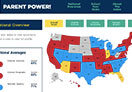
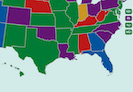
That’s why we have the Parent Power Index, an interactive tool that measures action and results in education, and whether policymakers have measurably taken steps to empower parents with choice and transparency.


Daily Headlines for January 9, 2014

Click here for Newswire, the latest weekly report on education news and commentary you won’t find anywhere else – spiced with a dash of irreverence – from the nation’s leading voice in school reform. 

NATIONAL COVERAGE

Eric Cantor and Bill de Blasio exchange fire over schools
Washington Post, DC, January 8, 2014
Calling school choice the best route out of poverty, House Majority Leader Eric Cantor took aim at New York City’s new mayor on Wednesday for his cooler stance toward public charter schools and warned that Republicans may hold congressional hearings on the education policies of Democrat Bill de Blasio’s administration.

How to Solve the Education Crisis – It’s all about who you elect
Pleasanton Express, TX, January 8, 2014
Thanks to assessments of educational progress, we know where our children stand compared to other communities, states, and even nations. Now that the holidays are behind us, it’s time to take stock of how we are doing, and set resolutions for the New Year.

Maybe We Should Stem the Panic and Consider Needs
Letters, Wall Street Journal, January 8, 2014
The Common Core was designed to raise the bar as far as what is required for graduation in key subject areas for students in U.S. schools.

Obama administration guidelines could lead to racial quotas in school discipline
Washington Times, DC, January 8, 2014
How discipline is doled out in the classroom now will be under much closer scrutiny by the federal government, but some analysts say the Obama administration’s efforts ultimately may backfire and could lead to de facto racial quotas in American schools.

Report: School Choice Is the Next Education Revolution
US News & World Report, January 9, 2014
While a handful of American school districts are making strides in expanding school choice opportunities to parents and students, the majority still have a long road ahead, according to a new report from the Brookings Institution’s Brown Center on Education Policy.

School Choice Is a Whale-Sized Red Herring
Huffington Post, January 8, 2014
Perhaps the most debated notion in elementary and secondary education these days is school choice. Educational reformers and politicians (an overlapping pair) arouse the public by asking, “Why shouldn’t everyone have the same choices the rich folks have?” That’s a whale-sized red herring and is neither the intent nor the result of school choice.

STATE COVERAGE

ALABAMA

Clark-Shaw Magnet Middle School is all over National School Choice Week
Letter, The Huntsville Times, AL, January 8, 2014
The final week of January is an exciting time for students, parents, teachers and schools because all over the country, excellent choices in education are celebrated.

ARKANSAS

The end of the public school
Opinion, Arkansas Times, AR, January 9, 2014
The Arkansas State Board of Education is the forum this week for another couple of rounds in the ongoing battle over upending the conventional system of public education.

ARIZONA

Basis to open elementary school in OV
Arizona Star, AZ, January 9, 2014
Basis Schools is expanding its early-elementary school education program to Oro Valley.

DISTRICT OF COLUMBIA

D.C. Public Charter School Board votes to close Arts and Technology Academy
Washington Post, DC, January 8, 2014
The D.C. Public Charter School Board voted unanimously Wednesday to close Arts and Technology Academy, a large Northeast Washington elementary school, for failing to meet its academic achievement goals over the past 15 years.

FLORIDA

Lawmakers question timeline for new education standards, state tests
Miami Herald, FL, January 8, 2014
When Pam Stewart became state education commissioner in September, lawmakers said they would give her time to untangle the complicated issues facing the education department. That unspoken grace period came to an end Wednesday, when members of the Senate Education Committee grilled Stewart on the future of Florida’s public schools.

GEORGIA

Academy gives PCHS students options
Eatonton Messenger, GA, January 9, 2014
Three years ago, Putnam County Charter School System put in place a new requirement that all students entering high school have a “pathway” of study.

KANSAS

Kansas: House education committee won’t change
Basehor Sentinel, KS, January 8, 2014
Education lobbyists at the Kansas Statehouse were surprised to hear Monday that there will be no changes in the makeup of the House Education Committee, where a bill to greatly expand the state’s charter school law failed last year by a single vote.

LOUISIANA

Jindal teacher tenure law struck down again, heads back to state Supreme Court
Times-Picayune, LA, January 8, 2014
For the second time in as many years, a Baton Rouge judge ruled Wednesday that a controversial teacher tenure law passed in 2012 violates the state Constitution.

RSD’s school closure process has uneven effect on students at failing schools
The Lens, LA, January 8, 2014
When the Recovery School District closed the failing Murray Henderson Elementary last summer, Linda Wattigney’s three grandchildren were assigned to Paul Habans Charter School.

MARYLAND

Md. may no longer technically be No. 1 in education
Baltimore Sun Blog, MD, January 8, 2014
Maryland’s superintendent of schools has no plans to take down dozens of signs in the windows of her agency’s headquarters that proclaim Maryland No. 1 in education. Likewise, Gov. Martin O’Malley is unlikely to stop bragging that Maryland is No. 1 in the nation, a point he made again Wednesday on Twitter.

MASSACHUSETTS

Shrewsbury sees pros and cons in charter school enrollment drop
Worcester Telegram, MA, January 8, 2014
School officials called the recent decline in charter school enrollment a “good news, bad news” scenario for the district.

STEAM Studio charter plan would weaken Andover schools
Letter, The Andover Townsman, MA, January 9, 2014
High School teacher of 15 years experience and her father who has 10 years of service on the Andover School Committee and 10 additional years of service on the Andover Finance Committee.

MISSOURI

Say yes to longer school year
Editorial, St. Louis Post-Dispatch, MO, January 9, 2014
Parents in some school districts whose kids are home for the 19th day in a row are probably wishing mightily that Gov. Jay Nixon’s proposal last year to add six days to the state’s academic calendar had succeeded.

STL Language Immersion Schools recognized internationally
St. Louis American, MO, January 9, 2014
A group of second graders at the French School, a local language-immersion charter school, recently fought for the right to use school lockers – and won.

NEW HAMPSHIRE

House passes bill to increase aid to charter schools, sustains Hassan’s vetoes
Concord Monitor, NH, January 9, 2014
In a surprise vote late yesterday, the House went against a committee recommendation and passed a bill that would increase the amount of state aid given to charter schools.

NEW JERSEY

School chiefs tout gains while also warning that much work remains
New Jersey Spotlight, NJ, January 8, 2014
In a meeting that lasted nearly five hours, representatives of the growing roster of state-controlled New Jersey school districts made their annual presentations yesterday to the State Board of Education.

NEW YORK

Cuomo offers education plans, but funding in doubt
Albany Times Union, FL, January 8, 2014
In a State of the State address that focused largely on job creation, economic development and tax relief, Gov. Andrew Cuomo also issued a sweeping agenda for education, including support for statewide, full-day prekindergarten programs and a plan to funnel $2 billion to upgrading technology in schools.

Cuomo wants to pay best teachers more
New York Post, NY, January 9, 2014
Gov. Cuomo made a dramatic proposal in his State of the State speech Wednesday to offer bonuses of up to $20,000 for teachers who receive top marks on their evaluations.

PENNSYLVANIA

Pottsville Area develops committee to focus on charter school
Republican Herald, PA, January 9, 2014
At its first workshop of 2014, Pottsville Area School District on Wednesday introduced a new committee which will focus on alternative education in the district, including Gillingham Charter School.

SASD talks about financial effects of special education, charter schools
The Reporter, PA, January 8, 2014
Education lobbyists at the Kansas Statehouse were surprised to hear Monday that there will be no changes in the makeup of the House Education Committee, where a bill to greatly expand the state’s charter school law failed last year by a single vote.

SOUTH CAROLINA

Void left by the closing of Choices
Editorial, Morning News, SC, January 9, 2014
We were disappointed to hear this week about the closing of Choices Charter School in Florence. With low enrollment and even lower funding, the little rustic campus out by Interstate 95 will be no more by month’s end.

TENNESSEE

What to expect from Tennessee’s ringmasters, jugglers and clowns in ’14 as the legislature rolls back into town
Nashville Scene, TN, January 9, 2014
With the next election a short 10 months away, state lawmakers are hoping to spend as little time as possible at Capitol Hill this spring so they can kick off the campaign season.

TEXAS

Dallas ISD’s 2011 Principal of the Year has left to run a charter school
Dallas Morning News Blog, TX, January 8, 2014
Dallas ISD’s 2011 Principal of the Year recently left to run a charter school opening this fall in Keller.

WASHINGTON

Skepticism greets Por Vida charter school proposal
Yakima Herald Republic, WA, January 9, 2014
Local educators expressed skepticism Wednesday about a Texas-based nonprofit that wants to open the Yakima Valley’s first charter school under a new law permitting a number of the nontraditional schools starting this year.

WISCONSIN

Independent Charter Schools divert money to private interests
Column, La Crosse Tribune, WI, January 8, 2014
“Will the Legislature allow statewide expansion of charter schools and how will that affect my local public school?” This question is one I hear so often, particularly in communities where people are worried about the future of their small local schools.

Little Chute opening unique charter school
Fox 11, WI, January 8, 2014
Little Chute is set to open the district’s first K-8 charter school in the fall. Administrators hope the alternative school helps Little Chute keep growing.

ONLINE LEARNING

K12 founder Ron Packard steps down to start new online education venture
Washington Post, DC, January 8, 2014
Ron Packard, the founder and chief executive of Herndon-based online education provider K12 Inc., has resigned and plans to form a new company focused on technology-based learning programs.

Online Schools Prove Tough Rivals in Quest for Students, Funds
Education Week, January 9, 2014
Virtual education is prodding many districts to ramp up their own cyber offerings

Ripon’s Online Public School Adding Teachers
Fox 40, CA, January 8, 2014
Modern technology is changing the realm of education. Some students are choosing to skip traditional brick and mortar schools and log on to virtual classrooms.

Snow angels: Catholic schools teach an important cyber lesson
Editorial, Pittsburgh Post-Gazette, PA, January 9, 2014
Rather than have students sit home idly, teachers emailed assignments to them with the tasks to be completed by 5 p.m. In developing the program, Seton-La Salle worked with Serra Catholic in McKeesport, which started its initiative last year.

How to Solve the Education Crisis – It’s all About Who You Elect

Jeanne Allen & Kara Kerwin,
Pleasanton Express
January 8th, 2014

Thanks to assessments of educational progress, we know where our children stand compared to other communities, states, and even nations. Now that the holidays are behind us, it’s time to take stock of how we are doing, and set resolutions for the New Year.

According to the Programme for International Student Assessment (PISA), U.S. students are lagging behind. 2012 results show the U.S. is on a rapid decline, ranking 36th in math, 24th in reading, and 28th in science. On the Nation’s Report Card (NAEP), only 34% of 8th graders are proficient in reading and math.

Where have we gone wrong? Quite simply, we’ve elected the wrong people.

In response to children demonstrating less proficiency, the Governors of the 1980s started a movement that reduced federal meddling in state policy and united both parties over issues of choice and accountability. Then-Governors Lamar Alexander of Tennessee and Bill Clinton of Arkansas embraced transformative changes, coalesced other state leaders into an outspoken force, and brought their efforts to national prominence at a groundbreaking policy-making summit in Charlottesville, VA. Governor Tommy Thompson partnered with Democratic and African-American lawmaker Polly Williams to enact the nation’s first voucher program for the neediest children.

Bold leadership in the 1990s saw then-Michigan Governor John Engler buck his own party to equalize school funding, permit parent choices, and enact a charter school law that remains a national model today. Standards and accountability were heresy when Virginia Governor George Allen decided his state needed uniform measures to elevate outcomes. Pennsylvania’s Tom Ridge created a tax credit program to fund school choice scholarships and secured a hard-fought charter school law. And Jeb Bush of Florida oversaw some of the deepest education policy changes the nation has ever seen.

That fervor ignited a movement of educators, parents, and community leaders who started schools, turned around existing ones, became legislators, and created innovations in learning and school delivery, including digital learning. What was once a fast and furious run for school reform from the ground up has come to a steady crawl, incapable of reversing educational decline.

When governors are strong, they counter special interests – teachers unions, school boards associations, and the like – that inhibit progress. When governors are weak, policies emanate from “above” to supplant state programs. Apathetic or timid governors wait for bills to reach their desks, allow special interests to organize, and govern by favorability ratings. The result is a lack of commitment to executing much needed changes.

For example, charter schools are known to be hotbeds of innovation or providers of quality education. Despite numerous studies attesting to their progress in closing the achievement gap, charter schools are still expanding in low numbers in some states, and exist with policies that hamstring those who wish to open them in others. It sounds dramatic that 42 states and D.C. have charter laws, but only half that number have any vibrant charter environment that can help a small number of students. State leaders are key to creating more options, yet laws that need to be improved are compromised from the first discussions.

Kentucky Gov. Steve Bashear recently remarked that his state didn’t need charter schools because the education system was improving, despite evidence to the contrary. He was confusing activity and effort with results, a common problem among today’s leaders.

Pennsylvania Gov. Tom Corbett once declared education a top priority but has achieved little reform despite his party’s full control of the state legislature. Even with Chris Christie, New Jersey moved forward in requiring teachers be evaluated as a condition of employment, yet the final compromise with unions resulted in more ways to skirt the system.

Some state officials show promise of becoming tomorrow’s reform leaders. Wisconsin’s Scott Walker looked unions in the eye and didn’t blink. Louisiana’s Bobby Jindal has set records for positive education reform lawmaking in a state where a devastating storm served as a catalyst for a new public education landscape. Both have state legislatures excited to join them in fighting the status quo.

Make no mistake – the U.S. education system remains in crisis and the achievement gap between poor and minority students and the rest of society remains wide. Most people are aware that the solution is not more money or superficial changes. The key to solving the crisis is electing governors who understand that they have the power to change a system, and holding them accountable to do so. With 36 gubernatorial elections underway in 2014, we should all resolve to make education our top priority when we take to the polls in November.

Louisiana Asks for Complete Oversight

Lawyers for the State of Louisana are asking a federal judge to reverse a 1976 court case that granted federal oversight to ensure school integration, claiming it interferes with the Opportunity Scholarship program.

The request is part of the ongoing lawsuit launched by the Department of Justice against Louisiana that claims that the state’s Opportunity Scholarship program has an adverse effect on school integration.

“There has been no ongoing violation of federal law in this case for nearly four decades. If the United States is unable to identify such a violation, control of private school funding should be returned to the state,” according to the request.

A moratorium on the scholarship program could affect nearly 600 low-income students who are in districts with standing desegregation orders.

On Jan. 7, Louisiana Gov. Bobby Jindal issued a statement that expressed outrage at the continued intervention by DOJ, provocatively saying DOJ is, “more interested in skin color than education.”


Daily Headlines for January 8, 2014

Click here for Newswire, the latest weekly report on education news and commentary you won’t find anywhere else – spiced with a dash of irreverence – from the nation’s leading voice in school reform. 

NATIONAL COVERAGE

Cantor touts school choice to fight poverty
The Hill, January 8, 2014
House Majority Leader Eric Cantor (R-Va.) on Wednesday will hail the movement for greater school choice as “the surest way” to end the cycle of poverty, lending his voice to a new conservative push for solutions to help the nation’s poorest families.

Charter school reform debate coming to Senate floor
The Sentinel, PA, January 7, 2014
The state Senate is set to vote as early as this month on the latest proposal to overhaul Pennsylvania’s 16-year-old charter school law.

New York scores high for school choice in report
New York Post, NY, January 8, 2014
New York is right near the top of a new nationwide scorecard on school choice — a status it could kiss goodbye under the policies of Mayor de Blasio.

State asks vouchers judge to end federal oversight in decades-old school desegregation case
Times-Picayune, LA, January 7, 2014
Lawyers for Gov. Bobby Jindal are asking a federal judge to end a 1976 landmark Louisiana case prohibiting public aid to all-white private schools, which would in effect return control of private school funding to the state.

STATE COVERAGE

CALIFORNIA

Full STEAM ahead: BCS program integrates art and science disciplines
Los Altos Town Crier, CA, January 8, 2014
Bullis Charter School’s STEAM (Science, Technology, Engineering, Art and Math) initiative, a staple at the 10-year-old school, integrates art into the sciences.

FLORIDA

For top principals, look to Miami-Dade schools
Miami Herald, FL, January 8, 2014
The Miami-Dade school district is home to five of the six best principals in Florida, according to a new analysis. The analysis, released Tuesday by Florida State University and the nonprofit Florida TaxWatch, considered data from more than 3,000 high-poverty schools. Principals were evaluated based only on student achievement gains in math and reading.

Seven new charters could take 5,000 students, $30 million from district schools next year
Palm Beach Post, FL, January 7, 2014
The Palm Beach County School Board on Wednesday will vote on contracts for seven new charter schools that could combine to take an estimated 5,000 students and more than $30 million in state revenue from Palm Beach County District-run schools next year.

KANSAS

What’s the Matter With Kansas’ Schools?
Op-Ed, New York Times, NY, January 8, 2014
KANSAS, like every state, explicitly guarantees a free public education in its Constitution, affirming America’s founding belief that only an educated citizenry can preserve democracy and safeguard individual liberty and freedom.

KENTUCKY

Kentucky faces education crisis
Leaf Chronicle, TN, January 7, 2014
Kentucky legislators are approaching a critical point as they prepare to open the 2014 session of the General Assembly Tuesday.

LOUISIANA

You want local, elected school boards? Charter-based voting would do it
The Lens, LA, January 7, 2014
It’s a common gripe among critics of New Orleans school reform: Charter school governance is too clubby. Self-selected and autonomous boards can’t be voted out by constituents, which some say limits community control of a charter school.

MASSACHUSETTS

Charter school’s tutoring program is neither sustainable nor ethical
Letter, Boston Globe, MA, January 8, 2014
LAWRENCE HARMON’S Jan. 4 op-ed “Define tutors as what they are: volunteers” misses the point. Whether the Match Charter School tutors are considered volunteers or whether they are simply minimum wage earners, they are being exploited.

NEW HAMPSHIRE

Bill Before House Would Boost Funding For N.H.’s Charter Schools
New Hampshire Public Radio, NH, January 7, 2014
House lawmakers are scheduled to take up a bill Wednesday to increase annual per pupil funding for New Hampshire’s nearly two dozen charter schools.

NEW JERSEY

Innovative Enrollment Initiative Gives Students Real Choice
Huffington Post, January 7, 2014
If we’re serious about reforming public education in our nation, we have to ensure all our kids have access to high-quality schools. Newark, New Jersey, is launching an innovative new universal enrollment program this week aimed at achieving that goal as well as promoting equity and transparency, but federal regulations may stand in the way of full implementation.

N.J. Board of Education to hear from superintendents of state-run districts
Star-Ledger, NJ, January 7, 2014
The superintendents of the four school districts under state control will address the New Jersey Board of Education tomorrow morning in Piscataway.

NEW YORK

Charter School Parents Protest Co-Location Suit
New York Daily News Blog, NY, January 8, 2014
Charter school parents and advocates protested Tuesday against a move to stop dozens of charters from setting up shop in public schools buildings.

Education Supplement: Charter Corrections
Village Voice, NY, January 8, 2014
As a new mayor moves to rein in charter schools, a Bushwick administrator navigates an unclear future

NORTH CAROLINA

Expansion of charter schools should be conservative
Editorial, News & Observer, NC, January 7, 2014
Back in 1996, when the N.C. General Assembly authorized the creation of charter schools, the idea was that the number would be limited to 100 and that the charters would be part of the public system. They would be laboratories of sorts, not bound by some of the conventional rules of curricula and required programs.

Wake school board grapples with end of teacher tenure
WRAL, NC, January 7, 2014
Legislation approved last year that eliminates tenure for public school teachers in North Carolina is not popular around the table at the Wake County Board of Education.

OHIO

Make room for merit in schools
Editorial, Columbus Dispatch, OH, January 8, 2014
Despite its troubles, the Columbus City School District has some gems, in the form of its most-successful alternative schools.

OREGON

Portland Public Schools teachers contract: District has conceded on key sticking points, union president says sides ‘really close’
The Oregonian, OR, January 7, 2014
Portland Public Schools leaders have offered large concessions on two of the biggest sticking points in negotiations with the teachers union in an attempt to avert what would be the first strike in district history.

PENNSYLVANIA

Charter school gets OK to use former Agere site in Allentown
Allentown Morning Call, PA, January 7, 2014
A charter school proposed for the long under-used former Agere building in east Allentown received approval from the city’s Zoning Hearing Board on Tuesday, though approval from the city school district is still pending.

TENNESSEE

Metro school board’s Michael Hayes gets election challenge from Becky Sharpe
The Tennessean Blog, TN, January 7, 2014
The next round of Metro school board elections — which many expect will generate the same kind of heightened activity and campaign fundraising levels as the last one — has its first challenger.

TEXAS

Education Reform Group Mobilizes for 2014 Elections
Texas Tribune, TX, January 8, 2014
An education advocacy group that became a lobbying powerhouse during the 2013 legislative session with the backing of Texas tort reform heavyweights is now turning its sights to the upcoming election cycle.

UTAH

More students graduating from high school in Utah County
Daily Herald, UT, January 8, 2014
Statistics don’t lie — except when they do. The graduation rates for Utah high school students have increased statewide, up 3 percent since 2012 — 9 percent since 2009. And the dropout rate has decreased by 10 percent since then.

WASHINGTON

Education innovation gets hearing in Yakima
Editorial, Yakima Herald, WA, January 8, 2014
At long last, the Yakima Valley this evening will get a peek at what a charter school might entail. We begin with “at long last” because Washington state has been slow to implement one tool that could expand educational opportunities for our students.

WISCONSIN

Diminished in wake of Act 10, 2 teachers unions explore merger
Journal Sentinel, WI, January 7, 2014
Facing reduced membership, revenue and political power in the wake of 2011 legislation, Wisconsin’s two major state teachers unions appear poised to merge into a new organization called Wisconsin Together.

Independent Charter Schools: Siphoning off public money to private interests
Letter, Pierce County Herald, WI, January 7, 2014
“Will the Legislature allow statewide expansion of charter schools and how will that affect my local public school?”

WYOMING

Home-school group: Let teen take classes
Jackson Hole News & Guide, WY, January 8, 2014
Citing Wyoming statute, the Home School Legal Defense Association in Washington, D.C., is requesting that the school district allow a home-schooled student to take Jackson Hole High School classes that give students high school and college credit simultaneously.

ONLINE LEARNING

Charter school gives each student laptops
Longview News-Journal, TX, January 8, 2014
Lufkin’s Pineywoods Community Academy has more than 100 students who attend high school and college who might have a better chance at being successful this year after the charter school armed each student with a computer.

For three Catholic schools, ‘Cyber Days’ replace old snow days
Pittsburgh Post-Gazette, PA, January 8, 2014
The digital age giveth and it taketh away. For students in northern climes, the ritual of turning on the TV or radio on winter mornings, aquiver with the anticipation of a snow day declaration — indeed the snow day itself — may be threatened by the inexorable march of technological progress.

Oklahoma’s education laws, regulations need to match 21st-century realities
Editorial, The Oklahoman, OK, January 8, 2014
WHEN Oklahoma first enacted its charter school law in 1999, fear was a common reaction. After all, other states collected horror stories of charter school operators embezzling state funds meant for kids and of schools closing up shop midyear, leaving students stranded.

Online schools: Wired for failure under currrent conditions?
Atlanta Journal Constitution Blog, GA, January 7, 2014
Should we be more concerned with the rush to embrace online learning and the lack of scrutiny of the growing for-profit sector in virtual education?

School districts make plan to offer online classes
Chicago Tribune, IL, January 7, 2014
High school students from five west suburban school districts may have the choice of taking some of their courses online next fall.

Teacher writes of ‘virtual-charter hell’ in Louisiana-connected company
The Times-Picayune, LA, January 7, 2014
Oregon educator Darcy Bedortha spent 15 months in “virtual-charter hell” teaching for K12, an online education company with a foothold in Louisiana.

GOP Leader to Speak on School Choice

Jeanne Allen
National Journal
January 7, 2014

Choice is post-partisan! House Majority Leader Cantor’s efforts to highlight positive data on school choice and be a federal voice for school choice is commendable. While school choice proponents nationwide are in the majority, there is no nationwide membership organization for school choice that has the clout of, let’s say the teachers’ union, to win him friends and influence in high places. It’s a lonely endeavor to be for school choice in Washington, because Washington is about power and money, and doesn’t often recognize the realities of the quiet foot soldiers who want and need options and whose valiant efforts are often thwarted by confused and politically charged opponents.

Yes, Cantor is right that those who oppose charters and school choice not only will lose but have been losing the battle for 20-plus years. The status quo has been a powerful force in reducing the level of choice that could otherwise be adopted, or by pushing for overly regulatory rollbacks and fostering the proliferation of bad data. Nonetheless, all but a few states offer substantial choices to some number of students that didn’t exist two decades ago. Altogether such programs reach an estimated 4 million students and adults, with great diversity. The issue of freedom for parents, particularly the poor, is so powerful, that it has united people who are otherwise at polar opposites on many issues.

The all too familiar arguments of opponents are tired and worn and they are the same ones they used unsuccessfully three decades ago. I know. I and numerous others have rebutted them time and time again. In fact, I authored “Nine Lies about School Choice” some years ago and the arguments against choice that are highlighted in this week’s question are eerily similar to those then. For example, the notion that school choice would balkanize anyone is a joke, though I would say that perhaps the education establishment should feel balkanized as their torch for the status quo flickers and fades. That school choice is or ever was a partisan issue is simply not worth addressing, considering a history of school reform demonstrates the bi-partisan nature that has secured it’s implementation in every state where it exists.

Parents want power and they want options as CER’s data shows and its experience over its history also underscores. There would be no movement in standards, teacher quality, content or even pre-K had the pressures of school choice not been present these many years. The Obama Administration might finally want to take a look at that history before they challenge or attempt to kill another school choice program. Then again, it doesn’t matter if they do. No administration has or will ever stop the advances of people who have smelled success and want more of it.

NEWSWIRE: January 7, 2014

Vol. 16, No. 1

MULTIPLE AUTHORIZERS ARE GAME CHANGERS. As with any major legislative initiative, there has been a lot of debate surrounding charter school legislation currently in the Pennsylvania State Senate, particularly the question of creating university authorizers. If done properly, Pennsylvania school districts could expect the same type of quality charter schools that are held accountable by authorizers such as Central Michigan University, the State University of New York, and Ball State in Indiana. But these universities would not have been able to put their knowledgeable staff and expansive resources to good use without the proper amount of autonomy and independence to do what they do best: oversee exceptional schools. Even with the best intentions, well-meaning reform only works best for kids when it’s rooted in proven policy.

WHAT COULD HAVE BEEN. During the summer of 2013, the North Carolina legislature was in a similar situation to the current one in Pennsylvania, when it could have incentivized university authorizers, but balked at the opportunity and instead opted for a quasi-independent board. Over the next two weeks, the State Board of Education will decide the fate of close to 100 charter school applications, 26 of which are eligible for final approval to open this fall. The introduction of many of these schools will no doubt serve as a breath of fresh air to parents in search of other options within their districts. But now that newly implemented Opportunity Scholarship program and teacher reforms are under attack in the courts, it’s become more critical than ever to protect the progress made in 2013, and to make the necessary improvements in the future.

EDUCATION IN 2014. In an education proposal this week, Gov. Nikki Haley of South Carolina is expected to focus on increased technology in classrooms, teacher support, and emphasis on developing reading skills. It remains to be seen whether the proposal will also include much-needed reforms specific to the Palmetto State such as more choice programs, or equitable funding for charter schools. Like many other state governors this year, Haley is up for re-election this November. Because of the mounting frustration with state policies and increased desire for accountability in schools, it’s likely that education will come to the forefront of many gubernatorial elections nationwide. If South Carolina is any indicator, expect to see reform-oriented education proposals from candidates come out in droves in the coming weeks and months.

BREAK OUT THE YELLOW SCARVES. National School Choice Week is almost here, that special time of year when parents, students, school leaders and community members come together to highlight the positive effects of having power and educational options. From January 26 through February 1, there will be over 5,500 events nationwide, meaning there will be ample opportunities for both celebrating progress states and cities have made in delivering higher quality choices, and voicing desire from parents who still don’t have enough of a say over their child’s education. Click here to learn more, and be sure to follow CER and National School Choice Week on Facebook and Twitter for the latest updates, along with a sizeable share of yellow scarf action pics.

THANK YOU for your support in our year-end push to #DeliverthePromise by accelerating the pace of education reform in the U.S. As we head into 2014, we are especially grateful for all of you who have supported and continue to support the Center financially. Our impact and influence would not be possible without you, and we’re grateful for your dedication to ensuring all children have access to the quality education they deserve.

Daily Headlines for January 7, 2014

Click here for Newswire, the latest weekly report on education news and commentary you won’t find anywhere else – spiced with a dash of irreverence – from the nation’s leading voice in school reform. 

NATIONAL COVERAGE

School Choice Week puts spotlight on options
Opinion, Orange County Register, CA, January 7, 2014
America’s education system long has lacked robust choices for parents. Consequently, we face an unprecedented crisis in educational quality. Consider these statistics:

STATE COVERAGE

ARIZONA

School-voucher proponents to push program statewide
East Valley Tribune, AZ, January 6, 2014
Proponents of a voucher-like program are preparing to make them available to every student statewide — more than a million youngsters — now that court challenges to the initial program have been rebuffed.

DISTRICT OF COLUMBIA

Bowser noncommittal on Kaya Henderson
Washington Post, DC, January 6, 2014
Would a Mayor Muriel Bowser keep Chancellor Kaya Henderson at the helm of D.C. Public Schools? Bowser, one of four D.C. Council members challenging incumbent Mayor Vincent C. Gray (D) in April’s Democratic primary, faced that question twice on Friday during WAMU-FM’s Politics Hour with Kojo Nnamdi and Tom Sherwood.

GEORGIA

New performance rules for charter schools raise risks of revocation
Atlanta Journal Constitution Blog, GA, January 6, 2014
Some of you may have missed the AJC analysis of how charter schools could fare under new state performance index. It ran in the middle of the holiday.

Test Scandal in Atlanta Brings More Guilty Pleas
New York Times, NY, January 7, 2014
The cast of characters was mostly former teachers and principals, six of whom pleaded guilty on Monday in a Fulton County courtroom for their part in what has been described as the largest cheating scandal in the nation’s history.

IDAHO

Otter eyes education
Coeur d’Alene Press, ID, January 7, 2014
Gov. Butch Otter billed his State of the State speech on Monday and its proposed 2.9 percent, $37.4 million boost for public education as the start of a five-year journey to lift the quality of Idaho’s schools.

KANSAS

Catholic school, KC charter join effort to bridge digital gap
The Kansas City Star, KS, January 6, 2014
People brought together by a rare partnership between a Kansas City public charter school and its Catholic school neighbor were thinking big.

LOUISIANA

Louisiana’s BESE to consider school funding changes
Alexandria Town Talk, LA, January 7, 2014
The state’s top education board is being asked to consider changes to Louisiana’s complex formula for divvying up money to public schools and to steer new money to technical training courses and special education.

MASSACHUSETTS

No time to rest
Worcester Telegram, MA, January 7, 2014
The latest report from The Research Bureau, “Worcester by the Numbers: Public and Charter Schools,” contains some eye-opening facts about the city’s public schools, including enrollment, achievement, teacher pay, and the relative performance of its only charter high school.

MICHIGAN

At Cesar Chavez Academy, accountability is hard to find
Column, Detroit News, MI, January 7, 2014
I decided to attend the Cesar Chavez Academy (CCA) board meeting in Southwest Detroit on Dec. 12.

MISSOURI

Focus on our kids
Opinion, St. Louis Post-Dispatch, MO, January 6, 2014
I believe that the educators, parents and community leaders throughout our state are united in their desire to ensure that every child has access to quality schools.

NEVADA

Report raises questions about Nevada’s school accountability under No Child Left Behind waiver
Las Vegas Sun, NV, January 7, 2014
Two years ago, the federal government considered Von Tobel Middle School a failing school. Only a third of Von Tobel students were proficient in math, and just a quarter of its pupils passed Nevada’s reading assessment.

NEW YORK

Brooklyn school administrator seeks to form new charter for E. Harlem
New York Daily News, NY, January 6, 2014
Educrat Tameka Jackson wants ‘proactive’ school which, if approved by state, would serve 720 students in grades 6-12. Of the 11 charter schools in East Harlem, only three serve high school students.

District corrects charter school transfer figures
Buffalo News Blog, NY, January 6, 2014
Last month The Buffalo News reported on the number of students who transferred out of charter schools and enrolled in the Buffalo Public School system.

NORTH CAROLINA

Board votes to join voucher suit
The Daily Reflector, NC, January 6, 2014
The Pitt County Board of Education on Monday night voted 9-1 to join a lawsuit against the state regarding a school voucher bill.

Savvy companies can use NC charter school laws to pocket millions
Opinion, News & Observer, NC, January 7, 2014
North Carolina is ripe for an infiltration of nefarious profit-seeking characters in public education. The cap on charter schools has been lifted and the longstanding requirement for “innovation” gone.

OHIO

Teacher education programs at Ohio’s colleges perform well, according to new report
Cleveland Plain Dealer, OH, January 6, 2014
Teacher education programs at all but one of Ohio’s public and private colleges have been rated effective in the second annual comprehensive performance report by the Ohio Board of Regents.

PENNSYLVANIA

Deficit, time limit subdue educational expectations in Pennsylvania
Pittsburgh Tribune-Review, PA, January 6, 2014
Charter school reform and a new special education funding formula top the educational wish list of Pennsylvania’s legislative committee leaders, despite a projected budget deficit of up to $1.4 billion.

Success story
Opinion, The Intelligencer, PA, January 7, 2014
Charter schools are a hit. In the 10 years since the state authorized publicly financed charter schools, 162 bricks-and-mortar charter schools have opened in Pennsylvania; an additional 15 cyber charter schools likewise are online.

SOUTH CAROLINA

Promoting education a fresh step for Haley
Editorial, Aiken Standard, SC, January 7, 2014
The eight-year education reform gap left by former S.C. Gov. Mark Sanford may soon be filled. Sanford’s successor – Nikki Haley – will likely introduce a new K-12 public education reform initiative this week aimed at changing the way our state’s education system works.

TEXAS

Ten fired, two resign at charter school co-founded by Deion Sanders
Dallas Morning News, TX, January 6, 2014
The retooling of Prime Prep Academy accelerated Monday with the firings of 10 employees and resignations of two others at the charter school co-founded by former NFL star Deion Sanders.

VIRGINIA

City leaders call for big change as new MLK school opens
Richmond Times-Dispatch, VA, January 7, 2014
But before the school’s 700 or so students had settled into the cafeteria, Jones and a number of other city leaders were calling for big change in a school that has produced some of the worst standardized test scores in the state for the past three years.

WASHINGTON

Some schools seen as charters in name only
Seattle Times, WA, January 6, 2014
In California — a state besieged by budget cuts, where per-pupil spending is among the lowest in the nation — dozens of schools converted to charters in the 1990s and 2000s in search of a funding boost.

ONLINE LEARNING

Florida Virtual School adds adult classes
Daytona Beach News-Journal, FL, January 6, 2014
Florida Virtual School, a state-funded online education program that serves thousands of Volusia and Flagler students every year, is reaching out to a new audience of adults.

Personalized digital learning takes off as Myrtle Beach middle school students receive iPads
Sun News, SC, January 6, 2014
Eighth-graders in Rebecca Shibley’s math class at Myrtle Beach Middle School sat patiently Monday morning as boxes were opened to reveal the new iPads they all had been waiting for.

Temple prof: Pa. cyber charters are turning huge profits, sending tax dollars out of state
Philadelphia Public School Notebook, PA, January 6, 2014
Fewer teachers. No school building. No heating bill. Same cost.
You’d think Pennsylvania’s 16 cyber charter schools, which teach home-based students via the Web, would spend a lot less per student than brick-and-mortar schools.

Senate Could Vote Soon on Charter School Plan

Natasha Lindstrom, Bucks County Courier Times

HARRISBURG — The state Senate is set to vote as early as this month on the latest proposal to overhaul Pennsylvania’s 16-year-old charter school law.

Tension between the state’s charter system and traditional public schools has intensified as charter schools have proliferated and overall education funding has dropped, with an estimated 119,000 students enrolled in nearly 180 brick-and-mortar and cyber charters in Pennsylvania.

The push for reforms has been further fueled by high-profile corruption scandals, with Nick Trombetta, the former CEO of the Midland-based Pennsylvania Cyber Charter School, now facing up to 100 years in prison for allegedly scheming to steal and hide millions of public dollars.

This past fall, House Majority Leader Mike Turzai cited charter school reform as a top priority, and Senate Majority Leader Dominic Pileggi is a co-sponsor of the bill that now appears to have the most legislative momentum, Senate Bill 1085.

“You’re sort of broken on both ends in Pennsylvania: You have challenges of the replication and growth of high-performance schools that would add value at the same time that you have an inability to effectively oversee some problematic operators of schools,” said Alex Medler, vice president for policy and advocacy for the National Association of Charter School Authorizers. “This bill is trying to fix both of those things.”

SB 1085, by Sen. Lloyd Smucker, R-13, West Lampeter, is an 89-page omnibus bill that would enact a wide range of reforms to the ways charter schools win approval, are held accountable and get funded. It has pulled ahead of a competing proposal that cleared the House in late September as the front-runner to advance this session.

“By making every dollar count and implementing reforms across the board, I believe this legislative package puts to its best possible use the practical experience we have with charter schools over the last decade and a half,” Smucker, who represents parts of Lancaster and York counties, said in a statement.

Gov. Tom Corbett made advancing comprehensive charter school reforms a cornerstone of his first-term agenda, though several attempts have fallen flat thus far. The governor has not yet weighed in on the latest legislative proposals — but plenty of interest groups have voiced their concerns.

Universities as charter authorizers

The most contentious piece of SB 1085 is a provision that would enable four-year universities to become authorizers of new charter schools. Currently only local school districts can approve brick-and-mortar charter schools, and the state Department of Education authorizes cyber charters, which teach students online.

Under SB 1085, university authorizers must be based in the same geographical region where the charter school will operate and have a degree-granting college of education, among other requirements. Authorizers would be expected to evaluate charter school operators based on “objective data” and nationally recognized principles and standards of quality, “including but not limited to” those of the NACSA, which sets best practices for charter operators around the country.

“Universities already have the resources to provide the kind of oversight necessary to hold charter schools to a high standard of accountability,” Smucker said. “My legislation simply gives them the ability to put those resources to use.”

Opponents to the provision, including teachers unions and several advocacy groups that champion traditional neighborhood schools, say that university authorizers would strip the democracy out of the process, by placing authorization in the hands of college officials who aren’t held accountable directly to taxpayers.

The American Federation of Teachers Pennsylvania and the Education Law Center are among groups that have blasted the bill for allowing the “unchecked expansion” of charter schools at the expense of the state’s already cash-strapped traditional schools.

But pro-charter school advocates argue that all too often, local school boards accept or reject proposed charters based on political reasons, rather than the merits of school plans. Some local school boards may be ill-equipped at vetting applicants, and others may simply want to squash any potential competition.

Those in favor of university authorizers say some of the nation’s best charter schools are overseen by institutions of higher education, including the State University of New York’s Charter School Institute, which oversees 125 charter schools in New York state, and Central Michigan University’s Center for Charter Schools, which has approved 59 charter schools in Michigan. Thirteen states now allow universities to approve charter school applications, Smucker said.

“The state authorities, quite frankly, are more likely to turn down a charter school than the district,” said Medler, of NACSA. “Small districts have the highest approval rates – either they don’t have the tools to know it was a bad application, or those same boards are subject to political pressure from people saying, ‘We really want this school.’”

There’s also debate over how to regulate university authorizers to ensure they’re approving charters that perform highly and revoking ones that don’t.

The Washington, D.C.-based Center for Education Reform, a pro-charter schools research group, has concerns about legislators making the requirements too onerous to incentivize Pennsylvania colleges to participate. In several states, legislation has granted higher education institutions the right to authorize charter schools but no universities have stepped up to do so.

“SUNY would not have become a model had they not had the authority and the autonomy to create their own structure, their own performance metrics and their own standards for schools,” said Kara Kerwin, president of The Center for Education Reform.

The National Association of Charter School Authorizers, a think tank in Chicago, supports universities as authorizers but warns that designating too many charter school authorizers can be just as bad – or worse – than not having enough.

“If they open too many authorizers, the effort to police the bad schools will be undercut,” Medler said. “You want to have one or more quality authorizers that aren’t the local district that will reject it for political reasons, but not so many that a bad apple can find someone willing to approve them.”

Funding feuds

Under Act 22 of 1997, the law that ushered in Pennsylvania’s first charter schools, school districts make payments to charter schools based on the amount the districts spend per pupil, minus a series of deductions accounting for district expenses on transportation, facilities, debt service and a few other areas. That means the amount that charter schools get per pupil varies widely by district. Because most charter schools enroll students from multiple districts, they end up getting paid different amounts per student.

The 18-member advisory commission proposed by SB 1085 would be charged with recommending a new funding formula for charter schools by Aug. 31. The House bill called for a similar type of commission to report its findings by March.

“It is time we base our funding formula on actual costs,” Smucker said in a statement. “The commission will help us determine those costs and provide a fuller picture for moving forward.”

But SB 1085 would enact several funding changes immediately, including a 5-percent, across-the-board cut to cyber charters only. Cyber school advocates argue that’s an arbitrary funding grab that would punish all cyber charters based on the alleged fiscal mismanagement of a few bad actors.

“We say study the funding first, and then decide,” said Jenny Bradmon, executive director of Pennsylvania Families for Public Cyber Charter Schools.

Like House Bill 618, the competing Senate proposal aims to correct the so-called “pension double-dip.” Yet some lawmakers and advocates have said the math used to do so in both bills hasn’t quite added up.

Bob Fayfich, executive director of the Pennsylvania Coalition of Public Charter Schools, acknowledges that charter schools get overpaid for pensions; currently charter schools get 100 percent reimbursement from school districts, plus another 50 percent reimbursement from the state. But Fayfich argues that HB 618 would under-fund cyber charter pension costs by 50 percent, and that the latest version of SB 1085 would under-fund pension costs for all charters by 20 percent.

SB 1085 would eliminate the state’s pension reimbursement to charter schools and allow school districts to deduct 30 percent of their own employee pension costs when calculating how much they pay charter schools. The Pennsylvania Association of School Business Officials estimates that SB 1085 could save school districts $32 million in 2014-15, plus another $18 million through the 5-percent cut to cyber charters.

“It will slightly reduce our tuition costs to charter schools, but it appears to benefit the state most by reducing their contribution to the retirement system and continuing our indirect payment of their retirement costs,” said Victor Raskovsky, business manager for the Beaver Area School District in western Pennsylvania.

Ethics and transparency

The least controversial components to charter school law changes – measures to strengthen rules regarding ethics, accountability and transparency – occupy the bulk of both the House and Senate proposals. In fact, Fayfich estimates that about 85 percent of SB 1085 and HB 618 are nearly identical.

The ethics measures including provisions prohibiting charter school administrators from sitting on school boards and making it illegal for charter school board members to be compensated. Lawmakers, school officials from charters and non-charters and advocacy groups on both sides of the debate have all backed such rules.

“Pennsylvania Cyber (Charter School) has definitely been at the forefront of advocating for those kinds of reforms,” said Christina Zarek, spokesman for the school whose former CEO now faces federal tax fraud charges. “Clearly we would be behind anything that allows for more transparency, higher standards and accountability, because I think that’s a good, holistic approach for all the schools involved.”

SB 1085 has already been revised several times through amendments passed by appropriations and education committees, and even lawmakers who advanced it out of committee have said they want to see additional changes before the bill makes it to final passage.

“It’s a work in progress; it’s headed in the right direction,” Kerwin said. “It didn’t go far enough to shore up the ability of universities to become a truly independent authorizer in this state.”

The tweaks to the bill have not satisfied its staunchest opponents.

“Every community in the Commonwealth should be aware that any temporary fixes the bill attempts to provide will quickly be trumped by the bill’s other provisions — from the addition of private, unaccountable authorizers to the unchecked expansion of existing, poorly performing charters,” the Education Law Center wrote in a Dec. 4 analysis of the bill. “Those provisions and others will bring long-term harm to even our wealthiest and highest performing school districts.”

The Senate Appropriations Committee voted 15-11 on Nov. 19 to send the amended version of Senate Bill 1085 to the Senate floor, where it now awaits a vote.

The Senate has seven session days in January, starting with Tuesday. If approved by the Senate, SB 1085 must also clear the House before final passage.

Daily Headlines for January 6, 2013

Click here for Newswire, the latest weekly report on education news and commentary you won’t find anywhere else – spiced with a dash of irreverence – from the nation’s leading voice in school reform. 

NATIONAL COVERAGE

I’m no Common Core fan, but give it a chance
Column, Washington Post, DC, January 4, 2014
As our national battle over the Common Core standards escalates this year, remember that new standards and curricula rarely improve schools. What does work is families becoming more affluent, teachers becoming more proficient and students spending more time and energy on their studies.

Report gives local Teach for America educators high marks in math
The Baltimore Sun, MD, January 5, 2014
A study commissioned by the U.S. Department of Education found that Teach for America teachers — recent college graduates or professionals who commit to teaching in low-performing, low-income public schools for at least two years — were as effective, if not more, at teaching math as those from similar programs or even career educators.

Zero Tolerance, Reconsidered
Editorial, New York Times, NY, January 6, 2014
Schools across the country are rethinking “zero tolerance” discipline policies under which children have been suspended, even arrested, for minor offenses like cursing, getting into shoving matches and other garden-variety misbehavior that in years past would have been resolved with detention or meetings with a child’s parents.

STATE COVERAGE

ARKANSAS

Preliminary education task force report answers few questions
Juneau Empire, AK, January 5, 2014
A two-page report by the state’s education task force released Thursday has left a lot to be desired by Juneau’s legislative delegation.

CALIFORNIA

L.A. Unified finally hiring teachers again
Los Angeles Times, CA, January 5, 2014
After years of layoffs and hiring freezes, L.A. Unified expects to hire more than 1,300 for next year. And it can even be choosy.

When competitors converged, collaboration began in Los Angeles Unified
Commentary, EdSource Today, CA, January 5th, 2014
Nearly a quarter century ago, two Stanford University professors wrote that market forces could reform public education in ways that government dominated by interest groups, like teachers unions, could not. “Politics, Markets, and America’s Schools” by John Chubb and Terry Moe remains a guiding light for Republicans and a large swath of Democrats seeking to transform schools.

CONNECTICUT

Malloy works to appease teachers in 2014
CT Mirror, CT, January 5, 2014
Gov. Dannel P. Malloy’s calculated decision to make a public show of challenging unionized teachers two years ago still dogs the first-term Democratic governor as he prepares for a 2014 re-election he cannot win without support from organized labor.

DELAWARE

Reach Academy to stay open for at least another year
The News Journal, DE, January 5, 2013
The Reach Academy for Girls Charter School, slated to close after the state revoked its charter, will stay open for at least another year by order of a federal judge.

DISTRICT OF COLUMBIA

Before creating plan to improve D.C. middle schools, chancellor wants community input
Washington Post, DC, January 6, 2014
The District’s school system cannot articulate how it will turn around its long-struggling middle schools until it gathers more input from the community, Schools Chancellor Kaya Henderson said recently in response to pressure from the D.C. Council to outline an improvement plan.

FLORIDA

Charter advocates debate impact of local control
The Tampa Tribune, FL, January 5, 2014
Who’s in charge, and where they are, have emerged as points of debate in a bid to open a charter school at MacDill Air Force Base — and in the broader debate about accountability in the growing charter school industry.

Program Gets Students Back Into Education
The Ledger, FL, January 5, 2014
A Polk State College charter high school program set up to target high school dropouts began just in August, and has already shown dozens of students there is hope for their futures.

ILLINOIS

Minority students make up new majority in Illinois public schools
Chicago Tribune, IL, January 6, 2014
New enrollment numbers show that lllinois’ public school system for the first time does not have a white majority, with Latino, black, Asian and other racial groups combined eclipsing white students across the state’s classrooms.

Teachers, district embrace new way on pay
Chicago Sun Times, IL, January 4, 2014
There’s a new kind of teacher reward system in place in a north suburban school district that ties teachers’ portfolios and evaluations to dollars-and-cents results, but don’t expect it to catch on in Chicago or across the state.

IOWA

State education standards face opposition in Iowa
Quad-City Times, IA, January 6, 2014
Conservative suspicion over the national standards known as the Common Core threaten to derail key parts of Gov. Terry Branstad’s education reform plans.

KENTUCKY

Education funding to be key issue for legislators
Richmond Register, KY, January 6, 2014
Since 1990, Kentucky has been viewed as a leader in education reform, first with passage of the landmark Kentucky Education Reform Act in 1990 and then with passage of Senate Bill 1 in 2009.

LOUISIANA

Revised school aid plan wins support
The Advocate, LA, January 5, 2014
After a three-week delay, a special state panel is expected to recommend modest changes Monday in how the state finances public schools, including a controversial program called Course Choice.

MICHIGAN

Trustee gives union a boost
Opinion, Detroit News, MI, January 5, 2014
Given all the academic and financial problems facing public schools in Michigan, the State Board of Education’s intense focus on charter schools seems odd.

NEW JERSEY

The list: top 10 education highlights of Christie’s first term
New Jersey Spotlight, NJ, January 6, 2014
The governor has left his mark on almost every aspect of New Jersey’s public school system.

NEW YORK

Bill de Blasio & an anti-charter lawsuit
Editorial, New York Post, NY, January 5, 2014
Even before Mayor de Blasio took office Wednesday, he was being yanked to his left on a key issue: charter schools. And he had a wise response: Not so fast.

Charter School of Inquiry envisioned as hothouse for kids’ critical thinking
Buffalo News, NY, January 5, 2014
Instead of using textbooks to teach math, how about bringing an apple to class, cutting it into halves – then quarters or fifths, and so on – to demonstrate fractions?

Cuomo’s obligation to your kids
Column, New York Daily News, NY, January 6, 2014
Gov. Cuomo’s priorities are totally askew. In October, Cuomo formed a tax-relief commission, co-chaired by former Gov. George Pataki and former State Controller Carl McCall, to come up with $2 billion in tax cuts for businesses and property owners.

Mark-Viverito was for charters before she was against them
New York Post, NY, January 6, 2014
Melissa Mark-Viverito was for charter schools in her East Harlem district — until she hungered to become the next City Council speaker, critics charge.

Pay, Plus Pension, for Schools Chief
Wall Street Journal, January 5, 2014
New York City’s new schools chancellor will collect both her pension and a salary, putting her total package at more than $410,000 a year, the de Blasio administration said.

NORTH CAROLINA

As charter schools grow, so does need for resource officers
Mooresville Tribune, NC, January 5, 2014
The growth of charter schools here has also created a need for resource officers provided by Mooresville Police Department.

Charter schools poised for expansion in North Carolina
News & Observer, NC, January 5, 2014
The next two weeks will determine how rapidly North Carolina’s charter-school movement expands. Supporters say the schools are giving families more choices, while critics say they’re harming traditional public schools.

State questions whether all-new charter board is ready to run school
Charlotte Observer, NC, January 4, 2014
RALEIGH State charter-school officials say they’ve never seen a case like that of Entrepreneur High.

Voucher system will lead to privatized schools
Opinion, Black Mountain News, NC, January 5, 2014
I should like to offer my take on what the North Carolina General Assembly has done to the folks who work in our public schools. Letters to editors in every county have taken our lawmakers to task for giving vouchers to students to attend private schools.

OHIO

Charter schools a choice for parents
Letter, Tribune Chronicle, OH, January 5, 2014
Ohio families expect ALL public schools to focus on the needs of their children and not squabble about funding.

Charter schools ask justices to rule on White Hat
Columbus Dispatch, OH, January 4, 2014
The state Supreme Court has been asked to decide whether a for-profit corporation that runs charter schools in Ohio owns the desks, computers, books and other items it bought with state tax money.

PENNSYLVANIA

At Phila. high school, a daily struggle with budget cuts
Philadelphia Inquirer, PA, January 5, 2014
Not long ago, Debora Carrera had a climate manager, assistant principal, and aides to keep order in the hallways. But the Philadelphia School District’s financial implosion has eviscerated school budgets, and now there are simply not enough adults to go around.

Court rules against charter school application
Philadelphia Inquirer, PA, January 4, 2014
A Delaware County Court judge has ruled against a former businessman trying to open a charter school in Upper Darby.

In York, a third try for proposed charter school
York Daily Record, PA, January 4, 2014
After being turned down twice, Cynthia Dotson has submitted for the third time an application to start a health-and-fitness-focused charter school in York City.

Pa. Senate set to tackle charter school reforms
Beaver County Times, PA, January 5, 2014
The state Senate is set to vote as early as this month on the latest proposal to overhaul Pennsylvania’s 16-year-old charter school law.

TENNESSEE

Charting future of education
Editorial, The Tennessean, TN, January 5, 2014
A new calendar year is a great time for a fresh beginning. This year could be just that for Metro Nashville Public Schools, Mayor Karl Dean and state leaders to work collaboratively on education reform.

TEXAS

Houston’s public schools are primed for success
Opinion, Houston Chronicle, TX, January 5, 2014
What this means is that Houston has the responsibility and the opportunity today to address many of the challenges other urban centers will face over the next three decades, especially in public education.

WEST VIRGINIA

W.Va. teachers unions want raises
Charleston Gazette, WV, January 4, 2014
Leaders of West Virginia’s teachers unions are hoping that this year’s State of the State address will promise something that last year’s education-heavy address did not: pay raises for teachers.

WISCONSIN

Make teacher evaluations fair
Editorial, The Northwestern, WI, January 6, 2014
Before trying to gauge the state’s progress in developing a successful teacher evaluation program, it’s important to remember the state’s core intentions behind this process.

ONLINE LEARNING

Consider alternative schooling
Column, USA Today, January 5, 2014
Last week, I wrote here about zero-tolerance stupidity, suggesting that as schools grow more and more willing to punish and stigmatize kids for reasons of bureaucratic convenience, it might be parental malpractice to put your kids in public schools.

Online schools
Opinion, Tulsa World, OK, January 6, 2014
State Superintendent Janet Barresi wants stronger academic and financial standards for virtual charter schools operating in the state. We agree.

State Lawmaker Works to Improve Charter, Cyber Charter Schools
WESA, PA, January 6, 2014
A Pittsburgh-area state lawmaker wants charter and cyber charter schools to be regulated as strictly as public schools.

Students gain more resources through technology at school
Valley Morning Star, TX, January 5, 2014
From the description, Gonzalez sounds
like any other student at one of the
top universities in the nation, but in
reality she is a fourth-grade student at
Dr. Rodriguez Elementary School.