





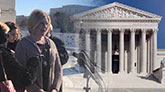


Janet Barresi, Oklahoma State Superintendent and “CER at 20” panelist, is pushing for legislation that will bring new accountability standards to virtual charter schools.
A strong supporter of virtual charter schools, Barresi said it’s critical for Oklahoma’s virtual schools be held to the same standards as all charter schools in the system.
Currently, there are two virtual charter schools that serve 5,269 students out of 25 total charters in Oklahoma, according to the Tulsa World.
In Oklahoma, universities that meet certain criteria, school districts, and federally recognized Indian tribes can authorize charter schools, with virtual schools under the auspices of a State Commission.
Legislation would likely address financial transparency, determining how schools identify low-income students and ensuring fiscal responsibility on the part of the Legislature.
“Virtual charters point to some innovative possibilities in public education as the result of improved communications, but such changes come with challenges,” Barresi said in a statement.
“Accountability, transparency, and rigor remain crucial cornerstones to a high-quality education cornerstones that would be protected through this type of legislation.”
Spacey In Seattle: Muddled Reaction To Charter Law Decision
Egged on by hyperbolic media headlines, teacher union chiefs and their anti-reform surrogates declared the Washington state charter school law unconstitutional, treating it as the kiss of death to innovative educational solutions in the Evergreen State. However, the ruling actually upholds the law’s constitutionality, albeit not to its fullest, which no doubt sets up an appeal decision in an attempt to satisfy one side or the other.
But aside from that, their declarations were completely accurate.
We would have paid to see Diane Ravitch jumping for joy thinking the charter school law was unconstitutional, only to scale back the celebration in an intellectually profound blog post partially entitled, “figure it out yourself.” (But we’d only fork over a few dollars, definitely not as much as the $29 million in union dues the WEA collected in 2010.)
According to leading interpretations of the judgment, the law itself is constitutional, allowing for the approval of charter schools to move forward in 2014. But the judge also ruled charter schools don’t fit the definition of a “common school” stipulated in the state constitution, which could present a barrier to receiving facilities funding from the state budget.
At the end of the day, all of this represents the feeble attempt at which the teacher unions and like-minded allies are trying circumvent the democratic process and impose their will on students and families in need of better schooling options. They can’t stand that a voter approved measure like the charter school initiative gave blinding clarity to the fact that public opinion is not on their side.
And they’ll continue the attack, even if it’s at the expense of students unable to access a school that provides them with a greater chance of success.