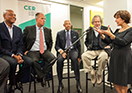







Jeanne Allen and Gerald Tirozzi, Executive Director of the National Association of Secondary School Principals discuss Americans’ satisfaction with their public schools and the increasing number of Americans in support of school choice, namely Florida’s growing voucher program.
Clopton, Paul
January 3, 2014 By
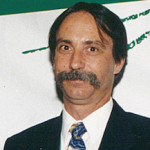
Paul Clopton is a co-founder of Mathematically Correct, an organization of parents, mathematicians, scientists, teachers, and others advocating for improvements in mathematics education. Professionally, he is a statistician with the Department of Veterans Affairs in San Diego where he works collaborates in biomedical research projects with the faculty of the UCSD school of medicine. He also tutors students from the middle school to the graduate school level in statistics and experimental design. He is Vice Chair of the Education Technology Advisory Committee for California. He served as a member of the Mathematics Content Panel that worked on the content of the augmented California STAR mathematics exams and on the California Mathematics Curriculum Framework and Criteria Committee. He has co-authored competitive Algebra exams for the Mathematics Council of Western Pennsylvania, reviews of the statewide assessment system in Texas, and several textbook reviews. Mr. Clopton served on the San Diego Mathematics Standards Committee and on various mathematics textbook adoption committees. He has provided testimony to the House of Representatives Committee on Education and the Workforce, the National Research Council, and the National Assessment Governing Board, and met with Richard Riley, Secretary of Education, to discuss mathematics education. He has two children attending public school in San Diego.
Mathematically Correct is a nationwide organization dedicated to the improvement of mathematics education. The membership spans the political spectrum. Good mathematics instruction is not an issue of just one party or one political point of view. Mathematically Correct supports high standards of learning and well designed, objective studies to measure effectiveness of various programs and teaching methods. Members of Mathematically Correct have contributed to the writing of the California Mathematics Standards, the California Science Standards, the California Mathematics Framework, the California STAR test, the California Mathematics Program Advisory and the San Diego City Schools Mathematics Standards. They have also given invited testimony to committees of the US House of Representatives, and both the California Assembly and Senate. Members recently met, at his request, with Richard Riley, Secretary of Education, to discuss key issues in mathematics education.
McKeown, Michael
January 3, 2014 By

Michael McKeown is a co-founder of Mathematically Correct, an organization of parents and others working toward improving mathematics education. Dr. McKeown served as a member of the committee which drafted the 1996 California Mathematics Program Advisory and as a member of the committee which drafted the Mathematics Standards of Learning for San Diego City Schools. Dr. McKeown also attended, at the request of the California Academic Standards Commission, the workshop that drafted the initial portions of the California Science Standards. In September of 1998, Dr. McKeown and Paul Clopton, also a co-founder of Mathematically Correct, were invited to Washington by Richard Riley, Secretary of Education, to discuss issues related to mathematics education. Dr. McKeown was one of the co-authors of both the Mathematically Correct Algebra I Reviews and the Mathematically Correct Mathematics Program Reviews for Grades 2, 5, and 7.
Dr. McKeown works as a faculty member at the Salk Institute for Biological Studies in San Diego, California, where he studies the genetic control of development and behavior. He is an adjunct faculty member in the Department of Biology at the University of California, San Diego, where is the organizer and lead teacher of the graduate level Advanced Genetics course.
Mathematically Correct is a nationwide organization dedicated to the improvement of mathematics education. The membership spans the political spectrum. Good mathematics instruction is not an issue of just one party or one political point of view. Mathematically Correct supports high standards of learning and well designed, objective studies to measure effectiveness of various programs and teaching methods. Members of Mathematically Correct have contributed to the writing of the California Mathematics Standards, the California Science Standards, the California Mathematics Framework, the California STAR test, the California Mathematics Program Advisory and the San Diego City Schools Mathematics Standards. They have also given invited testimony to committees of the US House of Representatives, and both the California Assembly and Senate. Members recently met, at his request, with Richard Riley, Secretary of Education, to discuss key issues in mathematics education.
Diane Ravitch: “See All The Spin” (1999)
October 24, 2013 By
Baxter, Frank
September 25, 2013 By
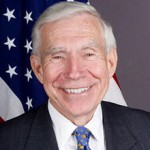
Frank Baxter is chairman emeritus of the global investment bank Jefferies and Company Inc. He returned to the Alliance board, which he chaired, after serving as Ambassador to Uruguay from November 2006 to January 2009.
Mr. Baxter has also has served as Board Chairman for After-School All Stars, Board Member of the California Institute of the Arts, a member of the Governor’s Commission for Jobs and Economic Growth, Vice Chairman of the Los Angeles Opera board and Chairman of the Executive Committee of the Los Angeles Museum of Art.
Additionally, Mr. Baxter was a trustee for the University of California Berkeley Foundation and the I Have a Dream Foundation, Los Angeles Chapter. He is a former director of the NASD, served on the NASDAQ Board, and was Director of the Securities Industry.
Chubb, John
September 17, 2013 By
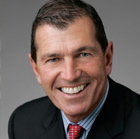
John E. Chubb, a distinguished visiting fellow at the Hoover Institution and a member of Hoover’s Koret Task Force on K–12 Education, is the president of the National Association of Independent Schools effective July 1, 2013. He served as the interim CEO of Education Sector, a nonprofit, nonpartisan research organization. He was a founder of EdisonLearning, a company that for nearly twenty years has partnered with public school districts and charter school boards nationwide to provide innovative schools and education programs with a focus on disadvantaged students.
He previously served as a senior fellow at the Brookings Institution and faculty member at Stanford University. He has also served as an adviser, consultant, and speaker for the White House and for many state governments, public and private school systems, and nonprofit organizations.
Chubb’s most recent book is The Best Teachers in the World: Why We Don’t Have Them and How We Could(Hoover Institution Press 2012). He is the author of several other books, including Liberating Learning and Politics, Markets, and America’s Schools, both coauthored with Hoover Institution senior fellow and fellow K–12 Education Task Force member Terry M. Moe, and Learning from No Child Left Behind. Chubb also edited Within Our Reach: How America Can Educate Every Child, an assessment by the Koret Task Force. His book Politics, Markets, and America’s Schools, which analyzes five hundred public and private high schools using data gathered from more than twenty thousand students, teachers, and principals, argues that free-market principles should become part of the American education system.
Articles written by Chubb have appeared in the Brookings Review, American Political Science Review, Public Interest, the New York Times, the Wall Street Journal, Time magazine, and other publications.
Chubb also coedited Can the Government Govern? with Hoover Institution distinguished visiting fellow and fellow K–12 Education Task Force member Paul E. Peterson.
Chubb holds a PhD from the University of Minnesota and an AB summa cum laude from Washington University in St. Louis, both in political science.
Hess, Frederick
September 17, 2013 By
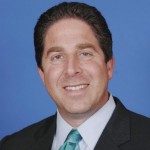
An educator, political scientist, and author, Frederick M. Hess studies a range of K-12 and higher education issues. In addition to his new Education Week blog “Rick Hess Straight Up,” he is the author of many influential books on education including Education Unbound, Common Sense School Reform,Revolution at the Margins, and Spinning Wheels. His work can be seen in scholarly and popular outlets ranging from Teacher College Record, Harvard Education Review, Social Science Quarterly, Urban Affairs Review, and Chronicle of Higher Education, to U.S. News & World Report, The Washington Post, andNational Review. Hess also serves as executive editor of Education Next, on the Review Board for the Broad Prize in Urban Education, and on the Boards of Directors of the National Association of Charter School Authorizers and the American Board for the Certification of Teaching Excellence. A former high school social studies teacher, he has taught at the University of Virginia, the University of Pennsylvania, Georgetown University, Rice University, and Harvard University. He holds an M.A. and Ph.D. in Government from Harvard University as well as an M.Ed. in Teaching and Curriculum.