







With the annual poll season about to begin amidst the Back-to-School and election flurry, the Center for Education Reform has reviewed major polls both nationally and in the states about these issues.
Still On Thin Ice? A Look at Recent Polls on School Choice and Charter Schools (2000)
March 13, 2013 By
The State of Charter Schools (2002)
March 13, 2013 By
School Reform In The United States (1994)
March 13, 2013 By
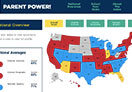
A state-by-state overview of the latest education reform issues. For the purposes of this analysis and to be consistent with popular sentiment, reform refers generally to four broad categories: school choice, contracting-out services to private entities, deregulation or decentralization (e.g.. charter schools), and accountability through strong academic assessment mechanisms.
Key issues that fall within these categories are charter schools, controlled choice, full choice, inter-district choice, intra-district choice, magnet schools, open enrollment, private contracting, private scholarship programs, public school choice, site-based management, tax credits, and vouchers, to name a few.
School Choice In The United States (1993)
March 13, 2013 By
Senate Bill 1048 On Charter Schools is Bad Policy (2004)
March 13, 2013 By
May 28, 2004. Left unchecked, South Carolina could join a growing cadre of states that hold harmless school districts whose students choose to attend charter schools.
Not only are school districts that receive funding for students who attend charters relieved of the consequences of their failures, but more ominous heading into future debates is the fact that the resulting artificially inflated education budgets created by such laws are ripe for cuts in times of fiscal hardship.
Closed Charter Schools By State (2009)
March 13, 2013 By
Charter School Accountability Report: Overview (2009)
March 13, 2013 By
Through CER’s in-depth look at each state’s closed charter schools, it is evident that strong state laws ensure accountability.
CER found that those states with multiple and independent authorizers provided stronger, more objective oversight to ensure the successful charter schools remained open and those that failed to perform were closed.
The Charter Idea: Update and Prospects (1996)
March 13, 2013 By
Four years on, “the charter movement” is beginning to show some real potential for scaling-up school improvement into a strategy for systemic change. This memo is an effort to describe the status of the charter idea as of fall 1995.
This paper is distributed by the Center for Education Reform, at the request of Ted Kolderie with the Center for Policy Studies.
Charter Schools Accountability Report (2009)
March 13, 2013 By
Knowing where charter schools are achieving and the reasons why 12 percent of the nation’s charter schools have closed is important to understanding what makes a school successful. State-by-state breakdowns offer a clear picture of the states whose charter schools are making the grade.
Success starts with creating strong policy environments in states that provide educators with the flexibility to innovate while holding them accountable for student results.
Rethinking Education Reform (1994)
March 13, 2013 By
Jeanne Allen, President of the Center for Education Reform, notes how thinking in education reform represents a sea change from the world of reform in previous years, and heeds reformers of now and the future to look a the ideal, devise the best practical way to get there, and then set their agenda accordingly.