







CER estimate of private firms on contract with charters by the fall of 1998: over 70 (based on forecast of new laws taking effect, companies growing and expanding their contracting. The forecast also includes state for-profit operations notincluded above).
The Philadelphia Story: Educational Progress in the City of Brotherly Love (2007)
March 12, 2013 By
Five years after the state intervened to force change in Philadelphia’s schools, five years after a dynamic schools CEO was hired, andfive years after the multiple provider model was introduced, the achievement results from “The Philadelphia Story of 2007” are clear —competition works for all students.
Outcome-Based Education: A Tale of Two Definitions (1993)
March 12, 2013 By
Performance Contracting: High Stakes Hiring (1997)
March 12, 2013 By
For school employees from the classroom to the superintendent’s office, performance contracting has provided a real professional impetus to measurably improve educational delivery; for public officials and communities it has offered greater leverage in demanding and getting higher achievement from students and schools.
Companies Serving Public Schools (1999)
March 12, 2013 By
Public education is changing in many ways, one of which is the role of school management providers. For years, the thought of a for-profit company running a public school was taboo. But the dissatisfaction with the quality of our public schools has created a demand for innovative and accountable schools. Private management providers are working to meet that need.
Here you’ll find a list of the major providers as of December 1999, including 16 organizations that manage 200 charter schools.
Roundup of the Fourth Annual National Charter Schools Week (2003)
March 12, 2013 By
The New ESEA: What It Means For Charter Schools
March 12, 2013 By
This primer contains questions and answers to help charter schools put in place systems that meet new Federal demands set in motion by the No Child Left Behind (NCLB) Act. Charter schools are not unfamiliar with performance contracts, whereas traditional public schools will be grappling with this sort of accountability for the first time.
NCLB requires requires schools to show academic yearly progress (AYP) and make achievement gains on tests approved by each state benchmarked against national assessments.
The New ESEA: A Primer For Policy Makers (2002)
March 12, 2013 By
This primer contains questions and answers to help schools and districts put in place systems that meet new Federal demands set in motion by the No Child Left Behind (NCLB) Act.
NCLB requires requires schools to show academic yearly progress (AYP) and make achievement gains on tests approved by each state benchmarked against national assessments.
Making the Case for School Choice to the U.S. Supreme Court (2001)
March 12, 2013 By
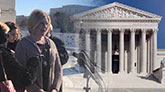
The fate of school choice in Ohio — and perhaps nationwide —may rest with the U.S. Supreme Court, which agreed to review the constitutionality of Ohio’s Cleveland Scholarship and Tutoring program enacted in 1995.
The Center for Education Reform made the following arguments on behalf of 27 civic, education and business groups in an Amicus Brief filed on November 9, 2001.
Ball State University Authorizer Letter (2003)
March 12, 2013 By
January 17, 2003. Dean Roy A. Weaver of Ball State University in Indiana explains Ball State’s commitment to authorizing charter schools, monitoring them to assure success, and conducting meaningful research in a letter to CER President Jeanne Allen.
A major point of emphasis is Ball State’s commitment to adding new charter schools, despite pressure from superintendents. Dean Weaver shares an eight-point list, indicating openness to risk and innovation.