










Sign up for our newsletter

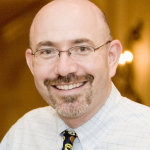
Tantillo, Sarah

Sarah Tantillo consults in New Jersey and nationally with schools seeking to improve student achievement. Sarah taught high school English and Humanities in both suburban and urban New Jersey public schools for 14 years, including seven years at the high-performing North Star Academy Charter School of Newark. She also founded and directed the New Jersey Charter School Resource Center from 1996-1999 and the New Jersey Charter Public Schools Association from 1999-2003. Sarah coaches K-12 schools on literacy and data-driven instruction, school culture-building, and strategic planning.  She has studied at Princeton, Harvard, Johns Hopkins, and Rutgers. Her first book, The Literacy Cookbook: A Practical Guide to Effective Reading, Writing, Speaking, and Listening Instruction, was published by Jossey-Bass in 2012.  Her second book, Literacy and the Common Core: Recipes for Action, became available in July 2014.
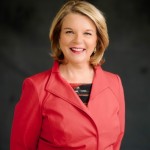
Spellings, Margaret

Margaret Spellings is the president of the George W. Bush Presidential Center in Dallas, Texas. Previously Spellings was president and CEO of Margaret Spellings and Co., a Washington, D.C. consulting firm. She also served as a senior advisor to the U.S. Chamber of Commerce and was president of the U.S. Chamber of Commerce Foundation.

Spellings served in a variety of positions in the Bush Administration. She served as U.S. Secretary of Education from 2005 to 2009. As a member of the President’s Cabinet, she led the implementation of the No Child Left Behind Act. As White House Domestic Policy Advisor, from 2001 to 2005, she managed the development of the President’s domestic policy agenda. Prior to her service in the White House, Spellings was senior advisor to then-Governor George W. Bush of Texas, led governmental and external relations for the Texas Association of School Boards, and has served in key positions at Austin Community College and with the Texas Legislature. She graduated from the University of Houston with a bachelor’s degree in political science.

Greene, Jay

Jay P. Greene is department head and 21st Century Chair in Education Reform at the University of Arkansas. Greene’s current areas of research interest include school choice and the effects of culturally enriching field trips to art museums and theaters on students.

His research was cited four times in the Supreme Court’s opinions in the landmark Zelman v. Simmons-Harris case on school vouchers. His articles have appeared in policy journals, such as The Public Interest, City Journal, and Education Next, in academic journals, such as Education Finance and PolicyEconomics of Education Review, and Educational Evaluation and Policy Analysis, as well as in major newspapers, such as the Wall Street Journal and the Washington Post. Jay Greene is the author of Education Myths (Rowman & Littlefield, 2005) and Why America Needs School Choice (Encounter Broadside, 2011).

Greene has been a professor of government at the University of Texas at Austin and the University of Houston. He received his B.A. in history from Tufts University in 1988 and his Ph.D. from the Government Department at Harvard University in 1995.

Feinberg, Mike

After graduating from the University of Pennsylvania, Mike joined Teach For America where he was a fifth grade bilingual teacher in Houston, Texas, for three years. In 1994, he co-founded the Knowledge is Power Program with Dave Levin, and the next year went on to found KIPP Academy in Houston. Mike now supports KIPP regions and global development for the KIPP Foundation, along with continuing a board leadership role within KIPP Houston. Mike and Dave have been awarded the Thomas Fordham Foundation Prize for Valor; the National Jefferson Award for Distinguished Public Service by a Private Citizen; the Charles Bronfman Prize, an honorary degree from Yale University; and the Presidential Citizen’s Medal, our nation’s second highest presidential award for a private citizen. Mike was also named a 2014 Schwab Foundation Social Entrepreneur of the Year.

Mike and Dave’s work is the subject of the best-selling book by Jay Matthews, Work Hard, Be Nice: How Two Inspired Teachers Created America’s Most Promising Schools. Additionally, KIPP’s groundbreaking work on character development is featured in Paul Tough’s book How Children Succeed: Grit, Curiosity, and the Hidden Power of Character.

Cutter, Milo

A Minnesota teacher, Cutter helped launch the nation’s first charter school, the City Academy in St. Paul, in 1992. Today, more than 1,600 charter public schools are operating nationwide. In 1999, Cutter was named by Teacher Magazine as one of the ten people who shaped education in the 1990s. Teacher Magazine credited Cutter’s work with City Academy with helping launch the charter school movement nationwide. Due to City Academy’s success, it has been said that City Academy “…Serves as a talisman for the entire charter school movement”.

Blew, Jim

Jim Blew is president of StudentsFirst, an education advocacy group, having previously advised the Walton Family Foundation on K-12 education reform issues for over a decade, working to expand educational choice and create high-quality alternatives to traditional district schools. From 2000 to 2005, Mr. Blew directed various campaigns for the Alliance for School Choice and its predecessor, the American Education Reform Council. Prior to committing himself full-time to the educational choice movement, Jim worked at political and marketing communications firms in New York and California. His experience includes several political issue campaigns and high-profile corporate crises. Mr. Blew holds a B.A. from Occidental College and an MBA from Yale University.

Ashton, Mashea

Mashea Ashton is the CEO of the Newark Charter School Fund, having joined the organization as a partner in February 2009. Before joining NCSF, Mashea served as the Executive Director for the New York Program and Senior Advisor for Charter School Policy for New Leaders for New Schools. Mashea has also served as the Executive Director for Charter Schools for the New York City Department of Education, the National Director of Recruitment and Selection for the Knowledge is Power Program, and as a special education teacher in Williamsburg, Virginia and Washington, D.C. She serves on the boards of the Black Alliance for Educational Options, the National Association of Public Charters Schools and the William and Mary Alumni Association. Mashea has a M.Ed. in Special Education with emphasis on learning disabilities and emotional disturbance and a Bachelor of Art in Sociology and Elementary Education from the College of William and Mary.

Andrew, Seth

Seth Andrew is the Superintendent in Residence and Senior Advisor to U.S. Secretary of Education Arne Duncan in the Office of Education Technology. Seth founded Democracy Prep Public Schools, a network of high-performing public charter schools in Harlem, New York and Camden, New Jersey, and serves as superintendent. Before Democracy Prep Seth taught and was a special education administrator. Seth has focused on civic education, parent advocacy, and college persistence for low-income families. He founded Alumni Revolution, a college persistence and advocacy platform working to equip scholars for success in the college of their choice and a life of active citizenship.

Seth attended New York City public schools from K-12, earned his A.B. in Education and Public Policy from Brown University, and his Ed.M. in School Leadership from the Harvard Graduate School of Education.

Allen, George

George F. Allen served the Commonwealth of Virginia for more than 20 years, as governor, in both bodies of the United States Congress, and as a delegate holding Thomas Jefferson’s seat in the Virginia General Assembly. Elected governor in 1994, George Allen brought sweeping reform that made Virginia a national model in economic development, public safety, education accountability, and creative government. As a self-described “Common Sense Jeffersonian Conservative,” Allen pushed through reforms with bipartisan support in a legislature held by the opposition.

Following his time as Governor, Allen served in the U.S. Senate from 2001-07.  In addition to his National Advisory Council position with USGLC, Allen is co-chairman of the National Association of Manufacturers’ Manufacturing Competitiveness Initiative, and is the Reagan Ranch Presidential Scholar for the Young America’s Foundation

Investing in Education

Wisconsin Governor Tommy Thompson (1989 State of the State address to the WI legislature)

In his 1989 State of the State speech, Governor Tommy Thompson laid out some of his initial plans for welfare reform and school choice, two hallmark programs of his administration (excerpt):

Investing in Education: “Choice”

When we talk about investing in our future … no issue is more important than education.

Wisconsin is blessed with one of the nation’s very finest university and vocational education systems … and our students consistently score at the top of college entrance exams.

But, there are some problems.

Some of our students, particularly those in Milwaukee’s central city neighborhoods, are being left behind.

They are not receiving the quality of education they need to one day get a good job, or to maximize their potential.

We must do better, we cannot be content with the status quo, nor can we be complacent when we know that not all of our children are receiving the best possible education.

Wisconsin is a leader … and it’s time for us to take the lead by giving students and parents a choice in education.

Two weeks ago at a White House Workshop on Choice in Education, I announced my plan to provide our parents the opportunity to choose where their children will attend school.

This is a concept that last week the Christian Science Monitor referred to as “one of the most popular and successful local education reforms in the nation.”

It has the support of President Bush, the Brookings Institute, and the Congress of Racial Equality.

Choice in education has resulted in fewer dropouts, higher test scores and satisfied parents, students and teachers in New York, Massachusetts, Minnesota and Maryland.

And statewide choice proposals are being assembled in many states, from California to New Jersey.

All of our children deserve equal opportunity in their education, and we must work together to implement a Wisconsin choice program …

Clearly, it cannot be done without the help of this legislature.